
Bivvi vs Tent for Wild Camping in England – Which Do I Prefer?
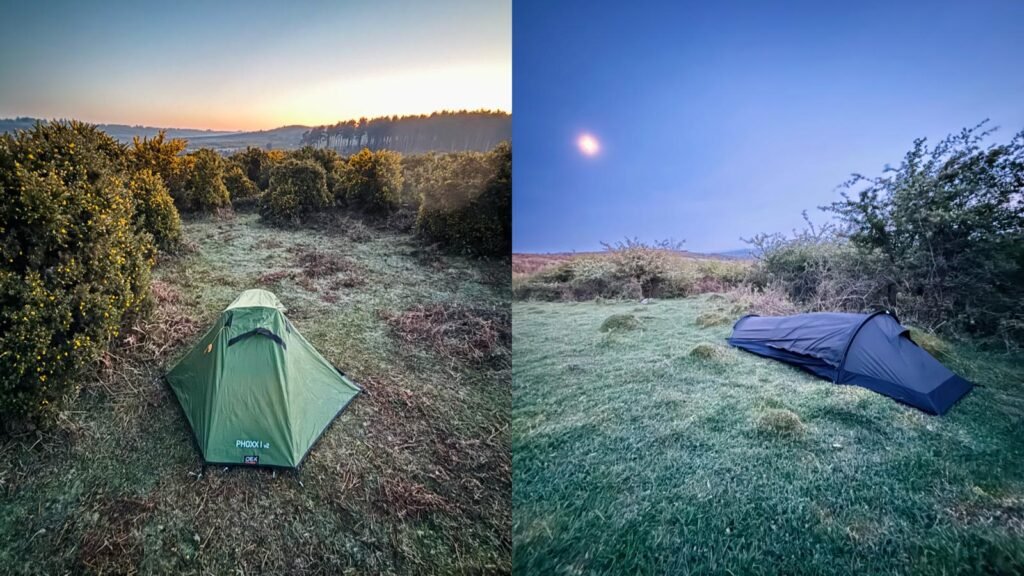
If you’re debating between a bivvy and a small tent for wild camping in England, this post shares my year-round experiences navigating the notoriously unpredictable British weather in both shelters
When I say that I use a bivvi instead of a tent, it’s usually followed by comments about sleeping in a coffin or not being able to sit up inside it.
I totally understand why bivvis put some people off and why they are not for everyone.
They are smaller, more confined and less comfortable than most tents. You can’t properly sit up in them, storage is limited and in bad weather they can feel pretty rough and exposed.
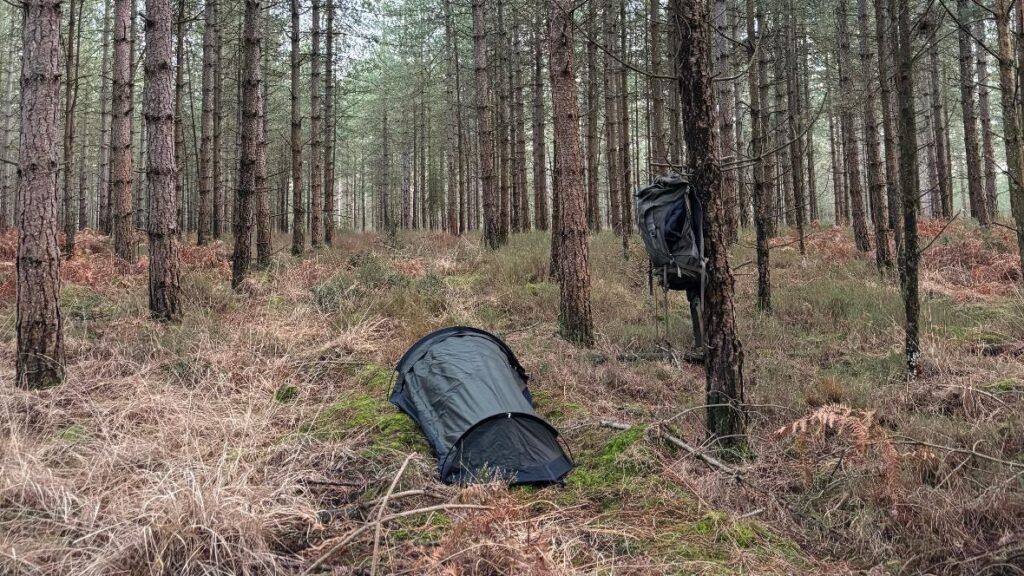
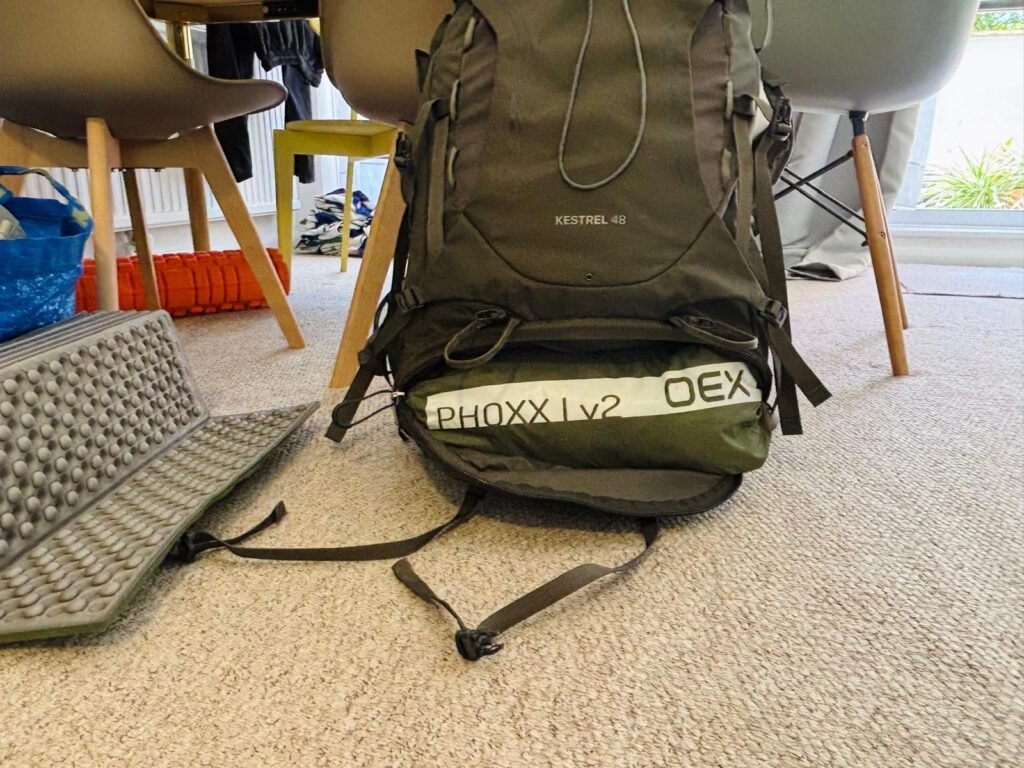
Despite all that, bivvi camping is still my first love. I’ve used bivvis for years, from a six-week cycling trip through northern Spain, the Pyrenees and southern France in my younger years, to regular wild camps around Dorset and southern England today. Over time, I’ve also used a large tent to camp around the USA, and small stealth tents like the OEX Phoxx 1 V2, during colder months and rougher weather conditions in England.
Personally, it isn’t about which shelter is “best”. It’s about which shelter is the best for the environment you’ll be visiting, the conditions when you get there and the style of camping that makes you happy.
Why I Naturally Prefer a Bivvi
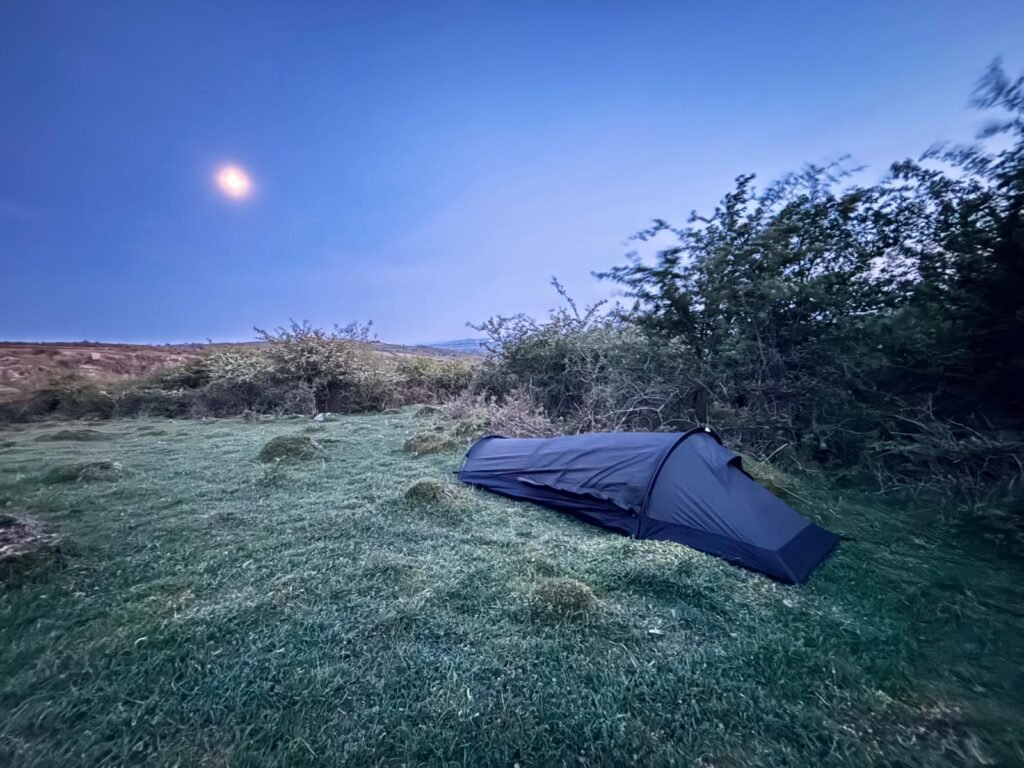
The biggest reason is probably simplicity. A bivvi feels stripped back and basic. It’s lightweight, quick to set up and easy to hide. I like the fact that it sits low to the ground and can disappear in the landscape.
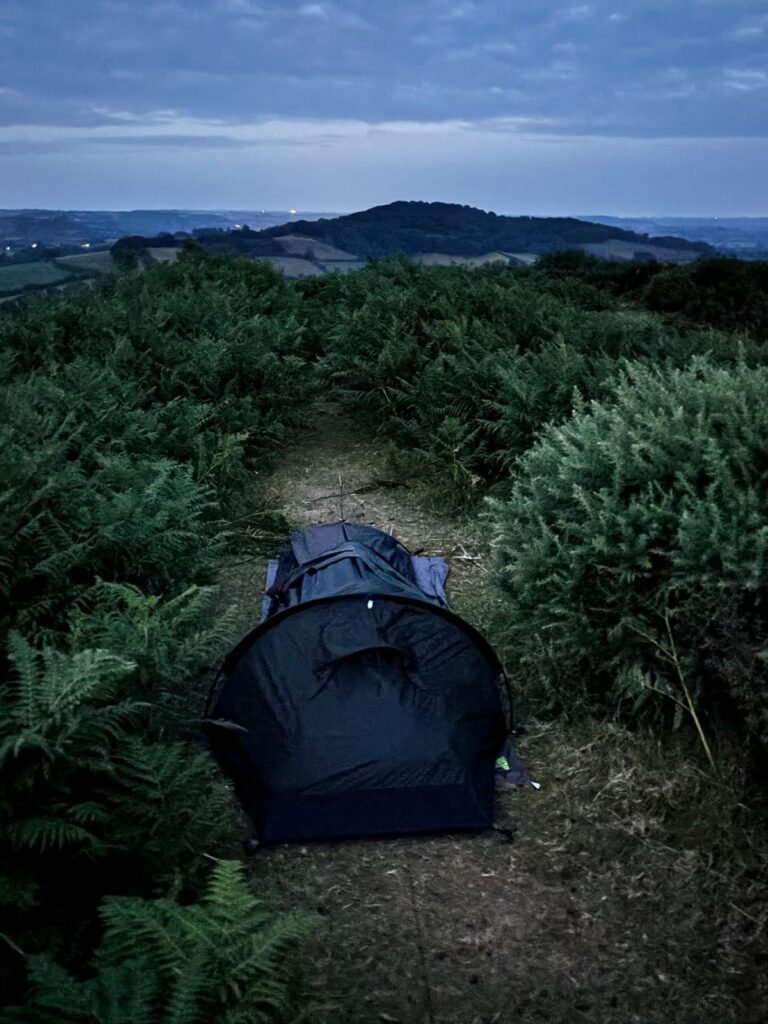
Stealth is very important to me. I live in Dorset, which doesn’t really have large wilderness areas found in some counties, you are never very far from a road, house, village or footpath. Even on quiet camps, I often see lights from towns or farms in the distance.
I don’t want to be seen and I definitely don’t want to be moved on. But more importantly, I don’t want to negatively affect how people view wild campers.
If someone sees a large tent in a prominent position at a beauty spot, it’s going to annoy them and possibly change their opinion of people camping outdoors. That may eventually lead to some kind of action taken, in the form of more restrictions, patrols or problems for future campers.
My approach, a bit like me- is pretty simple: I arrive quietly, I stay quietly and I leave without anyone knowing I was there. Using a bivvi really suits that style perfectly They fit into places a tent simply cannot.
Some of my favourite camps would not have worked with a tent at all. Narrow paths along the Dorset coast or on the sides of hillforts simply would not be able to accommodate a tent properly.
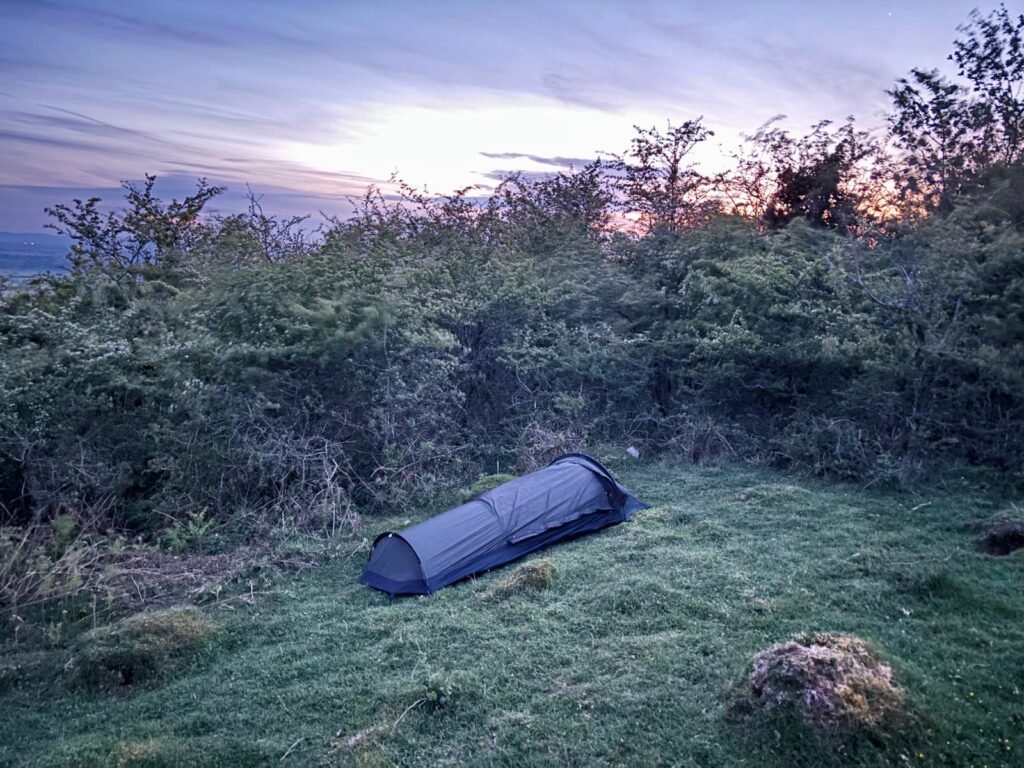
Camping on the top of Golden Cap, the bivvi sat below the height of the bracken on a narrow coastal path. Had I used a tent, I would have had to camp on an exposed patch of ground along the main path, which would have made me a bit too visible for my liking. The same happened at Hambledon Hill and Pilsdon Pen, where the bivvi blended into the grass and terrain far better than a tent could.
That low profile is one of the things I love most about bivvi camping.
You can read more about that here: The Way I Wild Camp – Quiet, Stealth and Low Impact
The Feeling Is Completely Different
A tent and a bivvy aren’t just different versions of the same thing. They feel like completely different experiences, both physically and emotionally.
A bivvi feels more exposed and more connected to the environment around you. There’s less separating you from the outdoors. You feel lower to the ground, more immersed in the landscape and more aware of everything around you.
That’s actually something I enjoy. With the Nortent Skjul, especially when the top is peeled back and the large bug mesh opens up the landscape and sky, the feeling is incredible. Lying there and looking up at the night sky makes it feel totally different from being inside a tent.
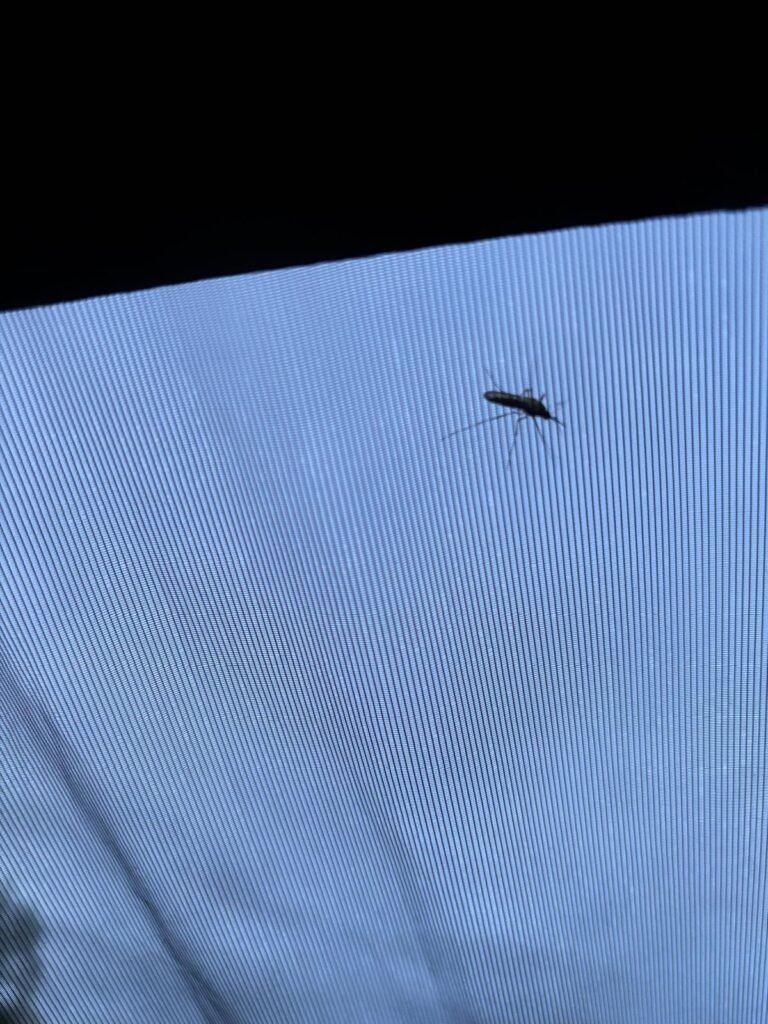
I recently wrote a full long-term review of the shelter here: Nortent Skjul Review (UK Wild Camping Test)
I find a tent separates me more from the area I am in. I know the material of both shelters is very thin, but the double-layer design of the Phoxx makes it feel more enclosed and slightly more secure and protected. A flysheet and inner section separate you from the outside, whereas the bivvi feels far more open and connected to the environment that surrounds you.
That’s the best way I can describe it. A bivvi feels like being part of the landscape, and a tent feels more like sheltering within it.
Why I Still Use the OEX Phoxx 1 V2
Even though I naturally prefer bivvis, there are definitely times when the Phoxx is the better option. The main reason being bad weather.
At the end of February 2026, I camped roughly 200 metres up on exposed ground in the Purbeck Hills during strong winds and heavy rain. Gusts that night were measured at around 44 mph (70 km/h), and the weather was relentless for most of the night. The Phoxx handled it brilliantly and I had no issues, and a great time.
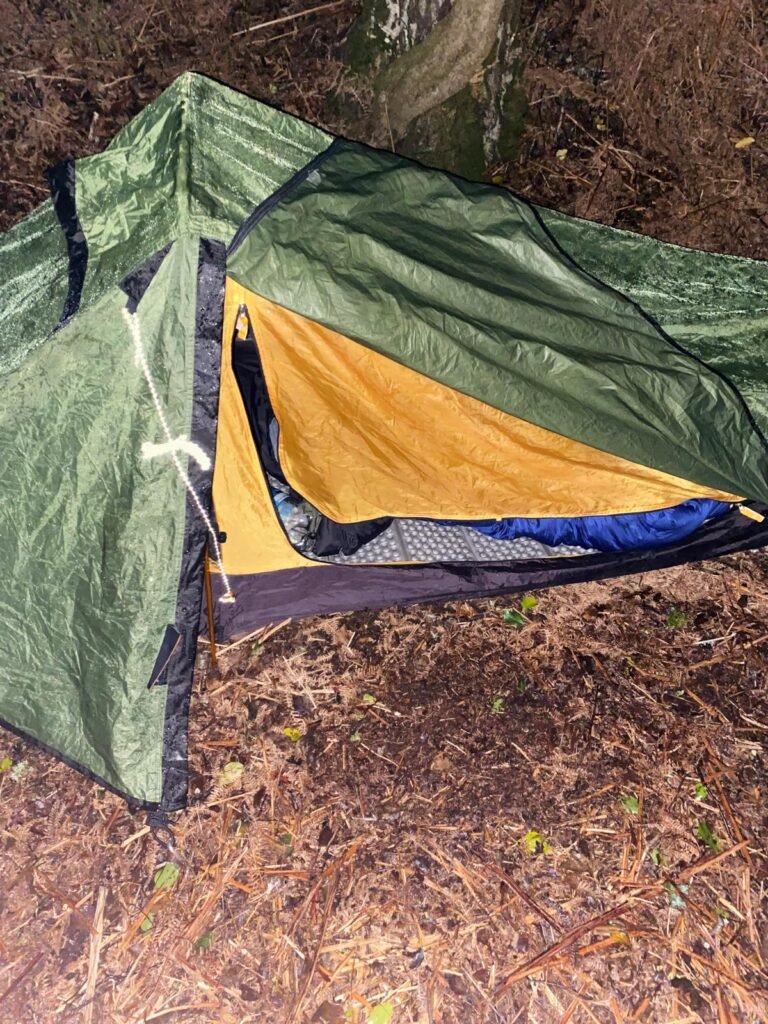
The extra interior space make a lot of difference in bad weather moments. Even though it’s still a very small tent, it allows a little bit more movement and comfort than a bivvi. I could prop myself up slightly more, organise gear more easily and keep my backpack and boots inside the vestibules, out of the weather and also away from me.
Being a tent helps the Phoxx to feel warmer in very cold weather. I read about the interior of a tent being warmer than the outside temperature, all this despite just being a thin layer of material. In the Phoxx, the two layers between you and the elements does help to trap a little warmth and create a bit more protection from the climate outside.
The bivvi can feel rough in bad weather conditions. The tent is pretty noisy in high winds, but the bivvi louder. I have no complaints with the Skjul as it performs well in wind, but it can flap around and become very loud. The Phoxx is not silent, but it definitely feels more rigid and is slightly quieter during rough weather.
For multi-day trips, my decision usually depends on the forecast. If conditions are dry and fairly calm, I’d happily choose the bivvi. If strong wind, heavy rain or freezing conditions are expected, I’d go more with the Phoxx.
You can read my long-term review here: OEX Phoxx 1 V2 Review – Worth It in 2026?
Condensation in Real UK Conditions
Condensation gets talked about a lot online, but honestly, I think people may sometimes expect too much from shelters in the wet UK conditions. I’ve experienced this a lot, when cold, wet and damp air from outside, hits the warmer air on the inside of the tent, it creates condensation which sits on the inside of the flysheet. That’s just reality. I’ve had condensation in every bivvi and every tent I’ve ever used.
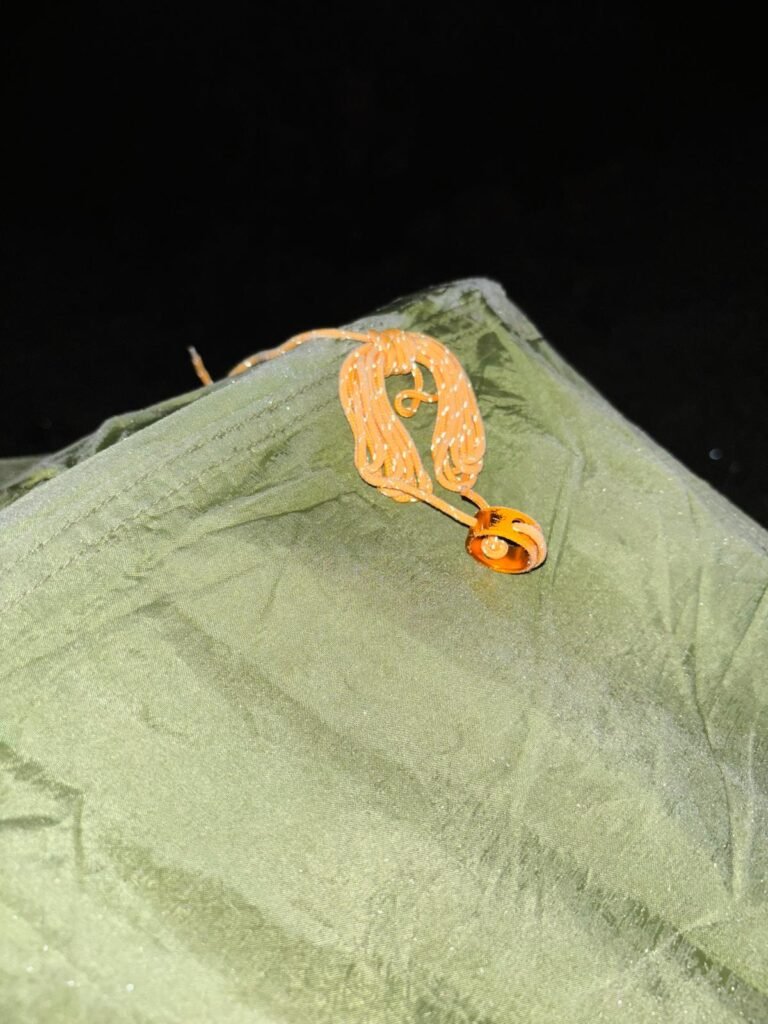
In the Skjul, condensation normally appears as a fine layer of moisture on the inside fabric, mainly around the head area where I’m breathing. Because it’s a single-layer shelter, your sleeping bag will be in contact with that moisture.
In the Phoxx, condensation builds up on the inside of the flysheet rather than the inner section. The inner section does help to separate you from the flysheet and the moisture.
The only real issue is at the foot end of the Phoxx on cold and damp nights. The foot end of the tent is very low, and my thick winter sleeping bag presses against the inner section, which then makes contact with the damp flysheet. That transfers a little moisture onto the outside of the sleeping bag.
But honestly, neither shelter has ever caused serious issues for me. There are no large drips that fall on me, the moisture only dampens the outside fabric of the bag, never soaking it or penetrating inside it. Once home, both shelters dry quickly when hung up.
Are Bivvis Really Like Sleeping in a Coffin?
My answer is yes, , and I do understand why people say that. Compared to most tents, bivvis are very narrow and confined spaces. But I also think some of it comes down to what people are used to.
Some tent users are used to enjoying lots of space, large sleeping mats, pillows and the ability to sit comfortably inside their shelter for hours. The beauty is that we all enjoy the same past time, and we all do it in a slightly different way, in our own style and with our different requirements.
I don’t require much in the way of space and creature comforts. I’m used to small spaces because bivvi camping is what I’ve known for years. To me, the OEX Phoxx 1 V2 feels more spacious compared to a bivvi.
Using the Phoxx to me is like upsizing from a bedsit to a studio flat. For somebody used to a large two-person tent, they’d probably think the opposite.
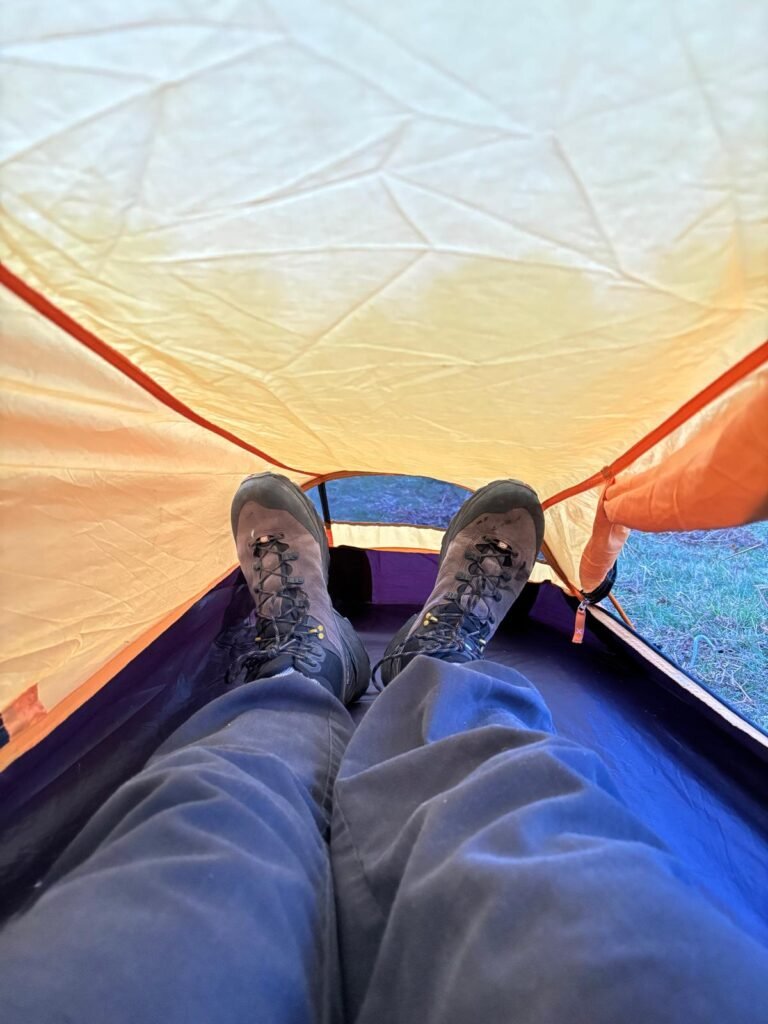
I think bivvis are like marmite – something you either like or dislike. But I think they could be a slow burner for some, who slowly learn to appreciate over time.
Which Would I Recommend?
My honest opinion for someone starting out, I’d probably recommend a small tent like the OEX Phoxx 1 V2 at first.
It gives you some of the simplicity and low-profile feeling of a bivvi, but with slightly more comfort and forgiveness. It’s a happy middle ground. If someone enjoys camping in the Phoxx and are happy with the space, perhaps a move towards a bivvi could be an option. If after using the Phoxx and deciding you like camping, but didn’t enjoy the lack of space, perhaps a move in the opposite direction to something larger would be better.
A massive advantage of the Phoxx is that it is incredible value for money and cheap enough that trying it doesn’t feel like a massive financial mistake if you realise small shelters aren’t for you. In some cases, bivvis can actually cost more than small tent.
If I Could Only Keep One
This would be a very difficult choice, but I’d keep the Nortent Skjul. Not because it’s perfect. But because it suits me perfectly. It fits my style of camping, my preference for stealth, my enjoyment of simplicity and my connection to being outdoors.
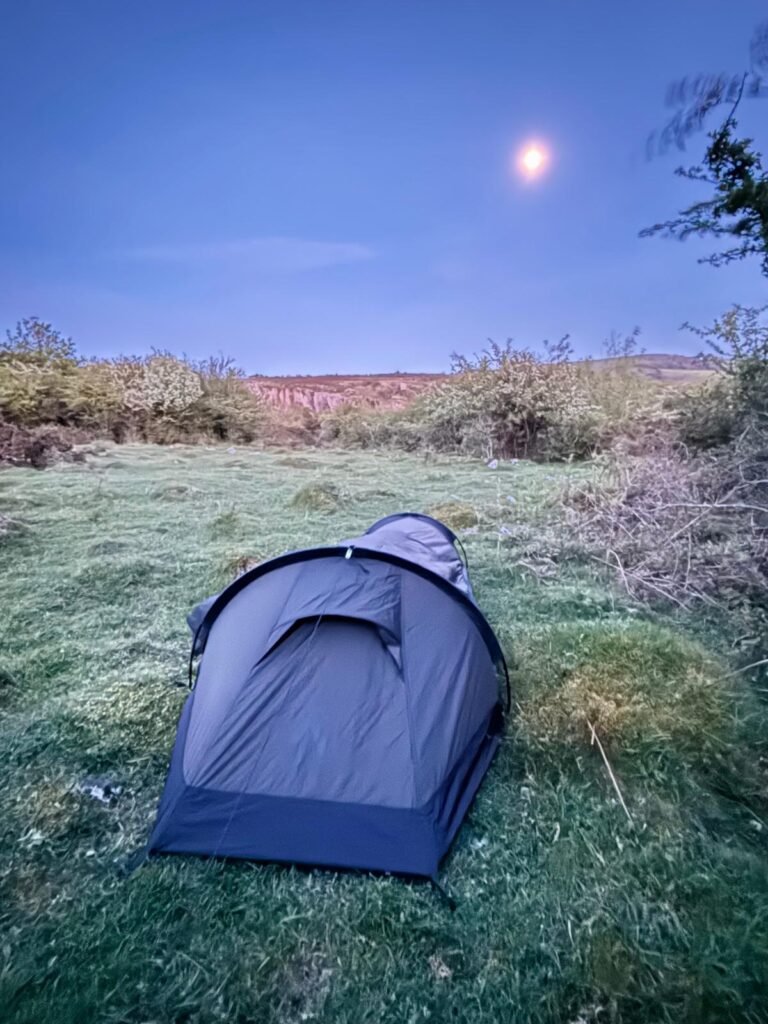
The biggest advantage to a bivvi for me is its ability to adapt. With a tarp, the Skjul can become something more and offer similar weather protection to the Phoxx. But unfortunately, the Phoxx can’t go the other way and become smaller or more discreet.
The Skjul also weighs around 600 grams less than the Phoxx, which does make a difference when carrying my bag.
Most importantly though, I just genuinely enjoy using it. That feeling matters a lot to me.
Final Thoughts
I don’t think bivvis are better than tents. And I don’t think tents are better than bivvis. I think they simply suit different people, environments and ways of camping.
For me personally, bivvis suit the way I like to wild camp in England. Quiet, low-profile, simple and unnoticed.
But I also appreciate the extra protection and comfort that a small tent like the OEX Phoxx 1 V2 offers when conditions become rough.
I’ll probably continue using both depending on the trip.
But if the weather is calm, the location is discreet and I have the choice, I’ll almost always reach for the bivvi first.
Because for me, that feeling of lying low, hidden away and the connection to the landscape around me is what I really love about wild camping.
Further Reading
- Nortent Skjul Review (UK Wild Camping Test)
- OEX Phoxx 1 V2 Review – Worth It in 2026?
- Where It All Began: My Love Affair With Bivis
- The Way I Wild Camp – Quiet, Stealth and Low Impact
Thanks for taking the time to read this.
If you’ve ever been curious about bivvi camping, I’d genuinely recommend trying it at least once before dismissing it.
It won’t suit everyone. But for some people, especially those who enjoy simplicity and stealth, it can completely change how camping feels.
If you have any questions, feel free to get in touch through social media or the contact page.
Thanks for taking the time to read this.
Dan

[…] It’s one of the reasons I eventually wrote about whether I prefer a bivvi or tent for wild camping in England. […]
[…] If you’re interested in my personal preference, I covered that in Bivvi vs Tent for Wild Camping in England – Which Do I Prefer? […]
[…] I’ve written more about why I choose one over the other in my article, Bivvi vs Tent for Wild Camping in England – Which Do I Prefer? […]
[…] you’re wondering why I usually choose a bivvi over a tent, I’ve also written Bivvi vs Tent for Wild Camping in England, where I compare the strengths and weaknesses of both after using them for […]
[…] That’s something I discussed further in Bivvi vs Tent for Wild Camping in England – Which Do I Prefer? […]
[…] That same approach is why I still enjoy simple shelters. If you’re wondering whether a bivvy or a tent is the better choice, I’ve shared my own experiences in Bivvi vs Tent for Wild Camping in England. […]