
Nortent Skjul Review (UK Wild Camping Test) – Worth It After 15 Camps?
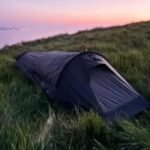
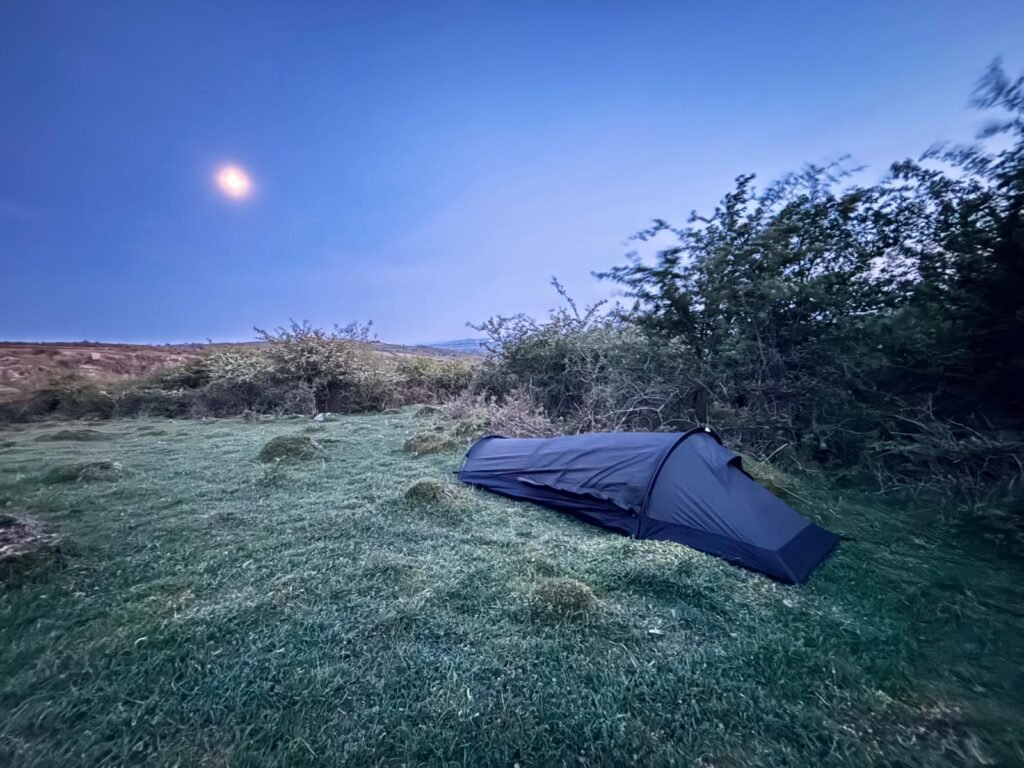
Updated after 15 camps across different UK conditions
Quick Verdict
I’ve used the Nortent Skjul regularly across the UK in forests, on coastal cliffs, hilltops and exposed ground in all four seasons, and this is what it’s actually like in real use.
The Nortent Skjul is the best bivvi I’ve ever owned.
It’s lightweight, low-profile, stealthy and feels far more connected to the outdoors than a tent. The airflow is excellent for a bivvi, the side access works really well and it handles UK weather without any issues.
It’s expensive compared to budget bivvis, but for me, it has been worth every penny.

Why I Bought the Nortent Skjul
After years of using bivvis, I knew exactly what I was looking for. My first bivvis were simple British army drawstring bivvis that I used during a cycling trip through Spain and France many years ago. Later, I upgraded to a Dutch hooped bivvi, which I used for years across the UK.
I absolutely loved that bivvi. It was the bivvi I aspired to own once I returned from France and Spain. It was simple, reliable and it couldn’t be beaten for its stealth properties. But over time, and as I got older, I started to notice a few negatives.
The Gore-Tex fabric was heavy, and the bivi weighed around 1.7kg, airflow wasn’t brilliant in the warmer weather and in winter the cold fabric would sit directly on my sleeping bag, allowing the cold to penetrate.
When the zip eventually failed, it became almost unusable in summer because it had no ventilation. I also felt that it was time for something a little more comfortable in my older years.
This is when I started researching alternatives and looking for a possible upgrade. Like most of the gear I buy, this wasn’t an impulse purchase.
As an frequent bivvi user, I knew exactly what I wanted from a bivvi, and what I didn’t want. I spent a long time researching and comparing different options before deciding on the Skjul.
I don’t usually spend large amounts on camping gear, but bivvi camping is something I genuinely love and do on a regular basis all year round, so I decided it was worth investing in a piece of equipment I’d actually use.
The Skjul felt like a calculated purchase rather than a gamble. I honestly haven’t had any regrets and I’m happy I made the right decision.
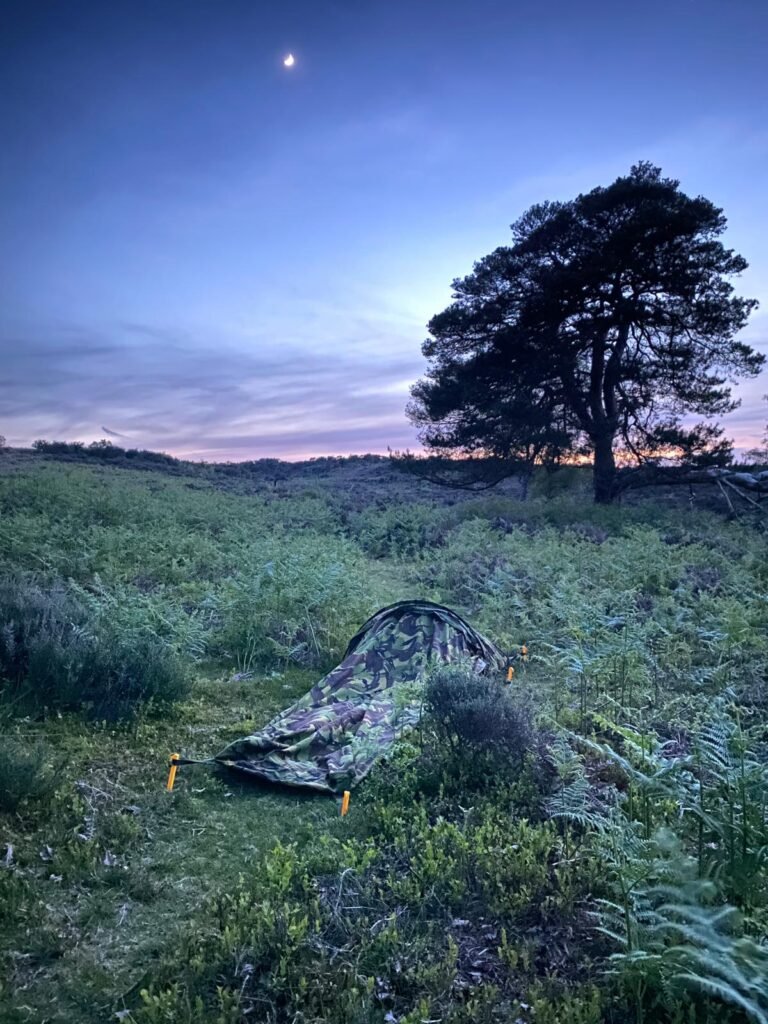
Nortent Skjul Specs
- Weight: Around 980g
- Structure: Double-hooped bivvi
- Entry: Side access
- Bug mesh: Large integrated mesh section
- Use: One person
- Seasons: Four season capable
The weight was one of the things I immediately picked up on. Compared to my old Dutch hooped bivvi, the weight difference was very noticeable.
It’s not the cheapest bivvi on the market, but it’s also nowhere near the most expensive. For the amount I use it, I’ve been very happy with the value.
What Makes the Skjul Different
The biggest attraction for me is the huge bug mesh section. Bivvis can get hot and stuffy in warmer weather. Some have small mesh areas around the head section that don’t ventilate well. But the Skjul is completely different.
Around a third of the total length is bug mesh, which allows far more airflow than any other bivvi I’ve owned.
In colder and dryer weather, and where there’s no risk of biting beasties, I will unzip the top and sleep with it completely open. In the summer I leave the bug mesh zipped up, and lying there looking directly up at the stars while still being protected from insects is honestly one of the best parts of using this bivvi.
That connection to the outdoors is something tents lose. A tent separates you from the environment. A bivvi makes you feel part of your environment, and connected to your surroundings.
The best comparison I can think of is travelling by bike compared to travelling in a car. On a bike you feel the air, temperature and smells around you. In a car, you’re protected from it, but also disconnected from it.
That’s exactly how bivvi camping feels to me.
That connection to the outdoors is one of the main reasons I still prefer bivvis over tents for many of my camps, especially quieter overnight trips in England.
Setup and Ease of Use
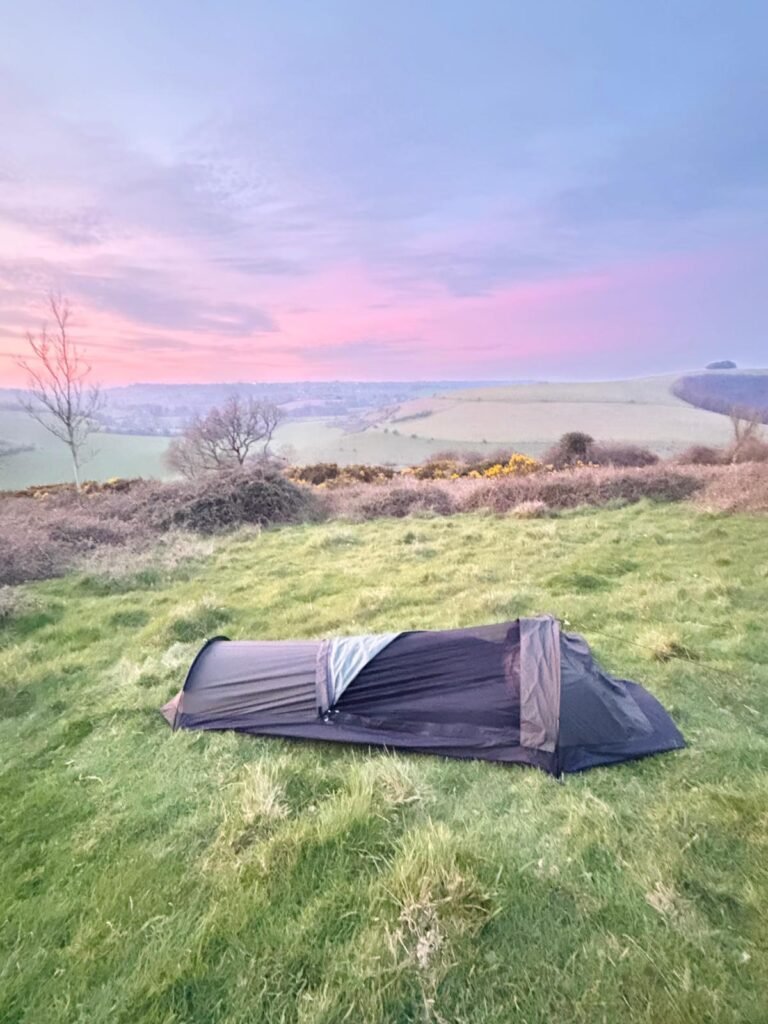
The setup is very simple and similar to other bivvis and tents I’ve used. After a couple of uses it becomes second nature and can be done in the dark. Slide in the poles at both ends, then peg it out.
The side entry is one of the best features and makes getting in and out very easy and less awkward. Some bivvis open from the top section, requiring you to slide in. Whereas the Skjul side entry makes everything much easier.
I also like the double-hooped design because it helps keep the fabric away from your sleeping bag more than the other bivvis I’ve used.
Storage is obviously limited compared to a tent, but that’s normal for bivvi camping and not something that bothers me personally.
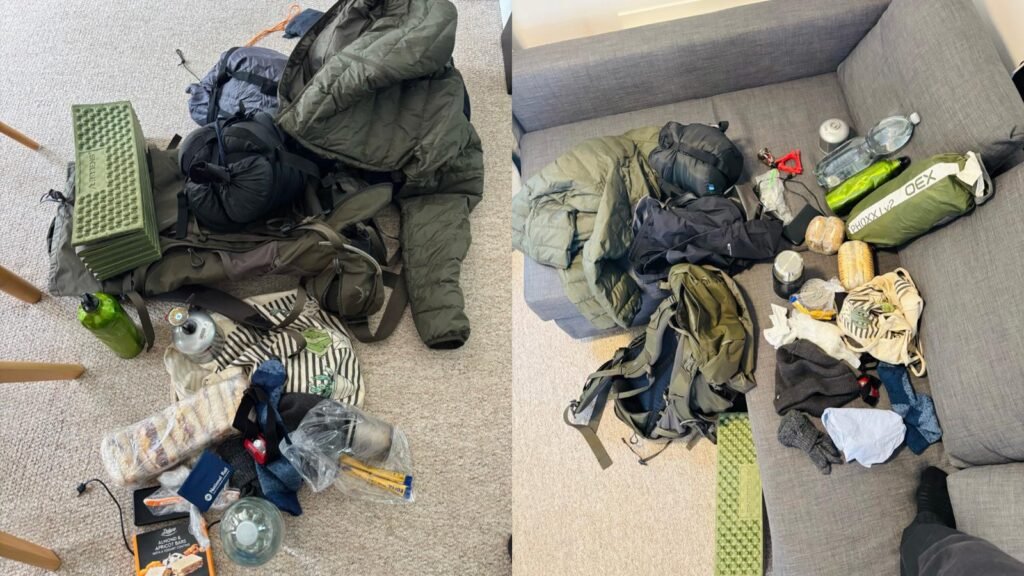
I normally keep my backpack at the head section and use it as a base for my homemade pillow. My boots either stay at the top end or outside depending on conditions. If conditions are wet, I’ll put them in a bag first. I’ve done this with all my bivvis.
Real UK Wild Camping Performance
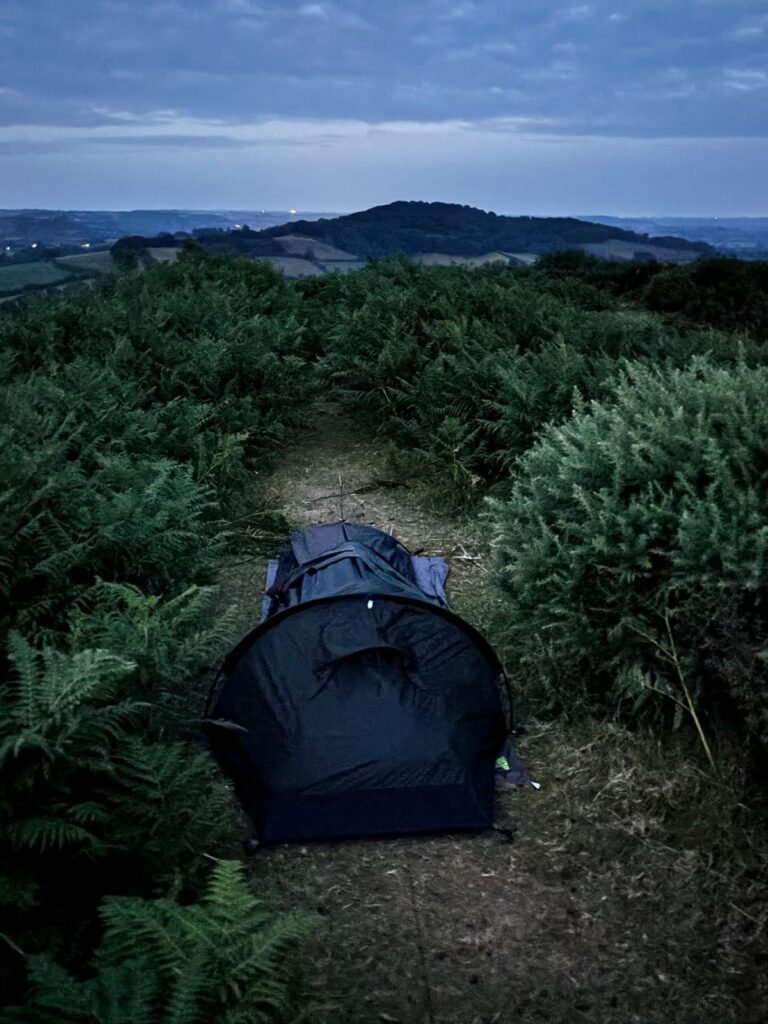
Wind Performance
This bivvi handles wind really well, but I’ve never used it in full-on winter storm conditions.
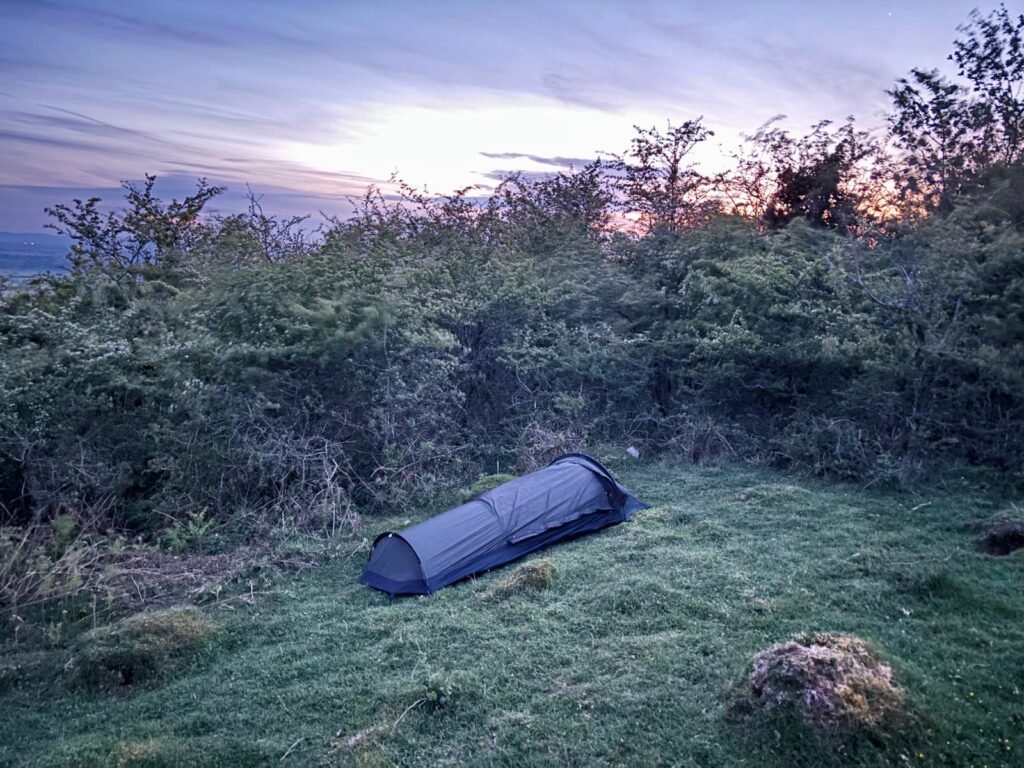
I’ve used it on exposed hilltops, along the Dorset coast and recently on top of Cheddar Gorge where overnight wind speeds reached roughly 25–30 mph (40-48 km/h).
The low-profile does help. Unlike larger shelters, there’s very little of the shelter to catch the wind. Tucking it close to the protection of a bush can really help too.
Because it sits so low to the ground and is rounded, it feels pretty secure in rough weather. It does flap around in high winds and makes quite a bit of noise. This is mainly because the middle section doesn’t have a support, but rather relies on the guidelines at either end to pull it taut.
The low-profile design of a bivi is one of the main reasons I enjoy bivvi camping so much. For me especially, stealth is very important.
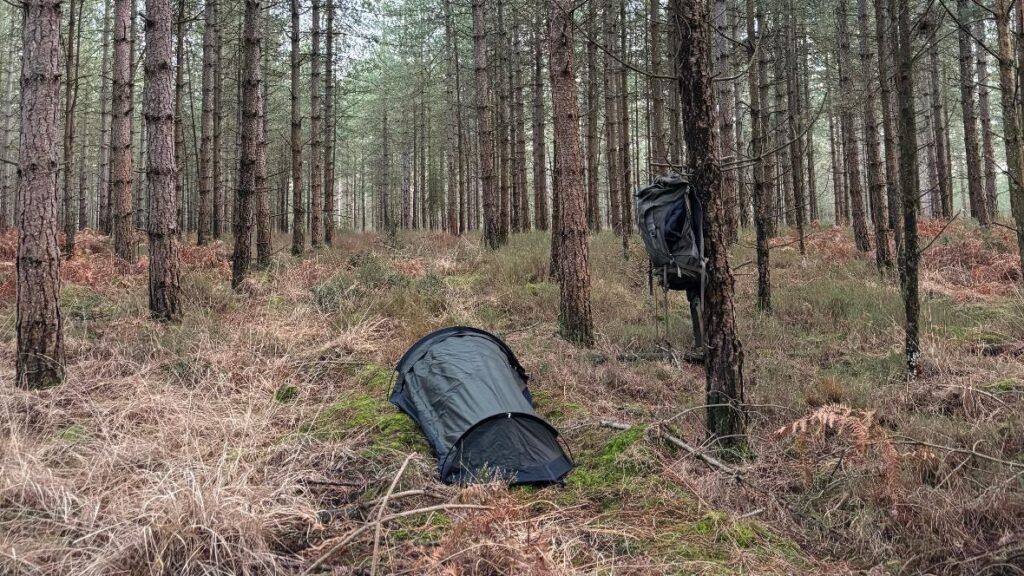
I’m not fortunate to have huge empty wilderness areas where I live. Many of the locations I camp, require a certain level of discretion and a stealth approach, which the Skjul suits that perfectly. It fits into places larger shelters can’t.
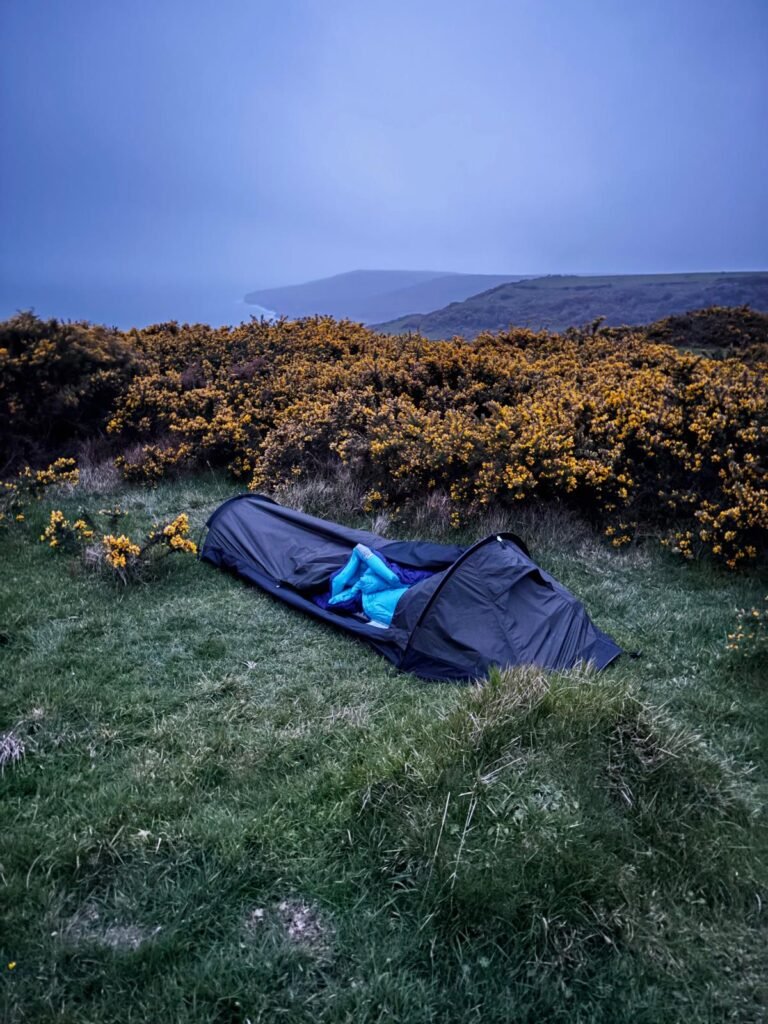
Rain and Waterproofing
I’ve used the Skjul in heavy rain, coastal weather, mist, damp woodland, cold and freezing overnight conditions. And, I’ve haven’t had an issue with leaks.
Even during poor weather camps on the Dorset coast where everything around me was damp and saturated, the bivvi itself was perfectly waterproof. It did its job as shelter and kept me dry.
Condensation
Yes, it gets condensation.
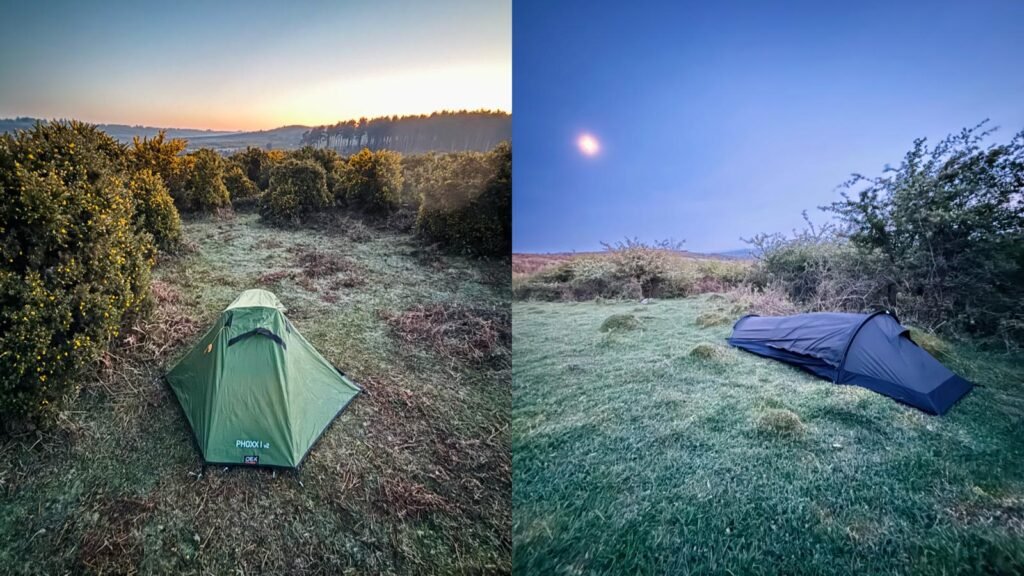
But so has every shelter I’ve ever used. I had condensation in my Gore-Tex Dutch hooped bivvi. I get it in the OEX Phoxx 1 V2. I’ve even seen people report it happening to their expensive expedition tents.
Cold, damp UK conditions create condensation. That’s just reality. The worst conditions tend to be when it’s wet, cold, damp and still nights with little airflow. If there’s moisture in the air and I’m producing heat inside the bivvi, condensation will build up.
One of my Dorset coastal camps was cold, misty and wet, and because I had everything zipped up against the weather, condensation built up inside.
To put it in perspective, it’s a fine dusting of moisture on the inside, rather than actual dripping. Personally, it doesn’t bother me and it has never penetrated my sleeping bag.
It’s manageable and part of camping in the UK. The airflow is still much better in the Skjul than other bivvis I’ve used.
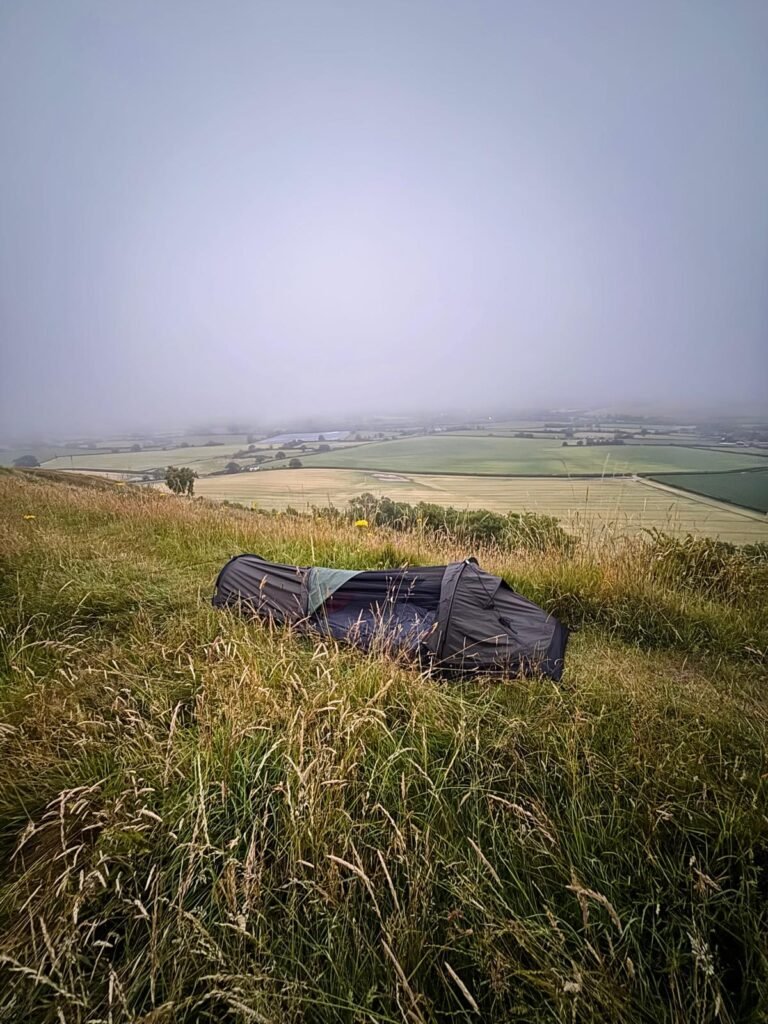
Why I Prefer a Bivvi
I know bivvis aren’t for everyone. A lot of people see them as cramped, uncomfortable and coffin-like, but I genuinely enjoy their simplicity.
They’re quick, quiet and low fuss- they’re also fun. And more importantly, bivvis complement the way I camp. I don’t usually stay in busy places. I prefer hidden woodland edges, grassy hilltops, behind gorse bushes or quiet areas where I can stay unnoticed.
A bivvi works perfectly for that. They fit into tiny spaces where a tent simply can’t fit. The stealth and low-profile approach is a huge part of what I enjoy about wild camping.
It’s very similar to the quiet, low-impact approach I wrote about in my post on the way I wild camp. The Skjul suits my style perfectly.
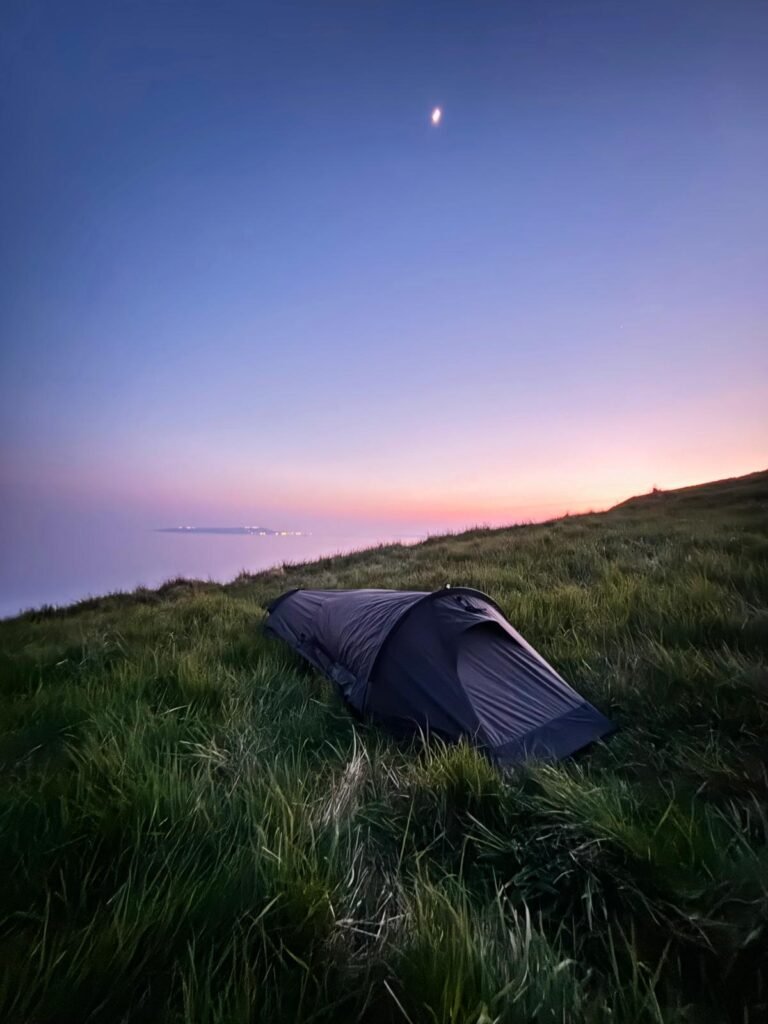
What I Like About It
It’s lightweight, low-profile and very comfortable by bivvi standards.
The airflow is excellent, the bug mesh is fantastic in summer and the side entry makes everyday use much easier. It does well in the UK’s finest windy and rainy conditions, packs small and genuinely feels amazing to use.
Most importantly, it suits exactly how I like to camp.
What I Don’t Like About It
Like all bivvis, space is limited. You obviously can’t sit upright properly and storage is restricted compared to a tent.
It also gets condensation in certain conditions, although I personally don’t see that as a major issue. The price will probably put some people off too.
Is the Nortent Skjul Worth It?
For me, absolutely.
I use bivvis a lot, especially during spring, summer and quieter low-profile camps, so spending more on something I regularly use made sense.
It’s one of the few pieces of gear I’ve bought where I haven’t begrudged spending a little more money than usual.
The Skjul feels like a bivvi designed by people who actually understand bivvi camping.
It keeps the simplicity and stealth that make bivvis great, while improving on some of the biggest weaknesses bivvis have always had.
Who It’s For
This bivvi is perfect for people who enjoy low-profile camping, lightweight shelters and stealth camping. I also think it suits people who already understand bivvi camping and enjoy feeling connected to the outdoors rather than separated from it inside a larger tent.
It’s probably not for people wanting lots of space, comfort and the ability to spend long periods sitting inside a shelter.
Final Thoughts
The Nortent Skjul won’t suit everyone.
But for me, it suits my style of camping perfectly. It’s simple, quiet, lightweight and reliable. More than anything though, it keeps me connected to the outdoors in a way tents never quite do, and it’s fun and a pleasure to use.
And after 15 camps across all kinds of UK conditions, I can honestly say it has become my favourite shelter to use.
If you enjoy stealthy, low-profile camping and don’t mind the compromises that come with bivvis, I genuinely think the Nortent Skjul is excellent.
My long-term thoughts on the OEX Phoxx 1 V2 can be found here.
A Gentle Encouragement
If you’ve ever thought about trying bivvi camping but been unsure about it, I’d genuinely recommend giving it a go at least once.
It won’t suit everyone. But for some people, especially those who enjoy quiet and simple camping, it can completely change how you experience being outdoors.
If you have any questions, feel free to get in touch through social media or the contact page.
I appreciate you taking the time to read this and I’d genuinely like to hear your thoughts.
Thanks again,
Dan
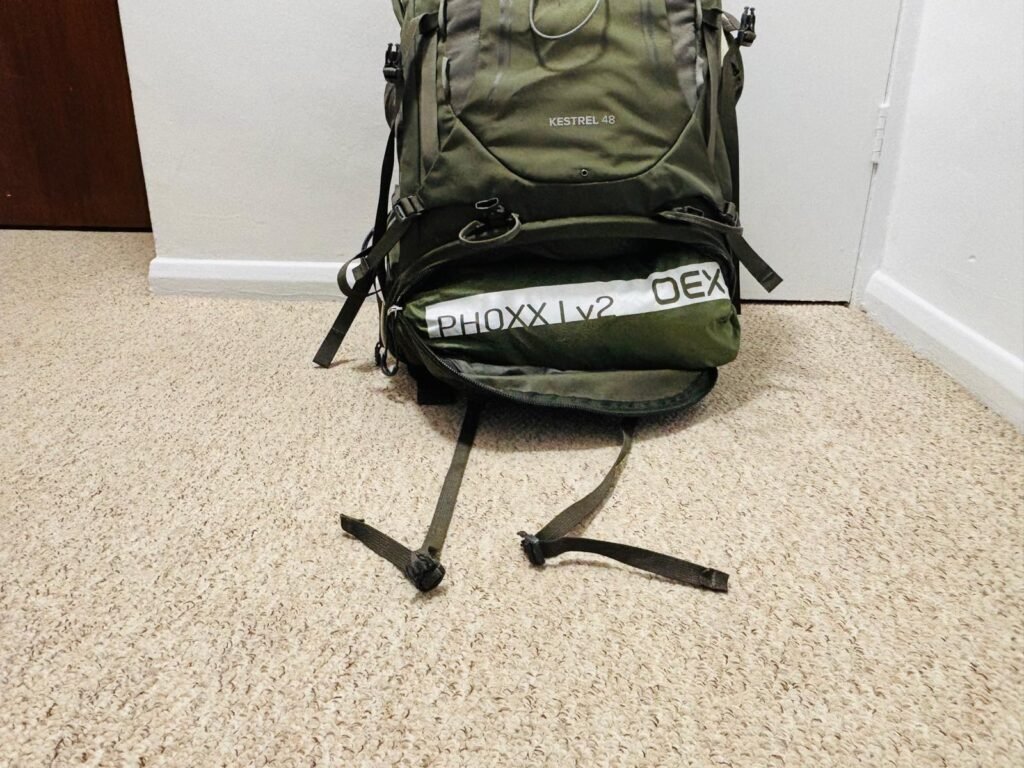
[…] I recently wrote a full long-term review of the Nortent Skjul after using it across different UK conditions. […]
[…] I recently wrote a full long-term review of the shelter here: Nortent Skjul Review (UK Wild Camping Test) […]
[…] If you’d like a more detailed look at the shelter itself, I’ve also written a full Nortent Skjul Review (UK Wild Camping Test). […]
[…] I go into much more detail about that in my Nortent Skjul review. […]
[…] spent a lot of nights using it over the last year, which is why I wrote this Nortent Skjul Review (UK Wild Camping Test) based on real camps rather than first […]
[…] Skjul on woodland camps, coastal trips and exposed hillsides, I’ve put together a full Nortent Skjul Review (Real UK Use) if you’d like a more detailed look at how it’s performs over […]
[…] using it across England in different conditions, I wrote a full Nortent Skjul Review sharing what I’ve liked and what could still be […]