
Wild Camping in Wind (What It’s Really Like)

Quick answer:
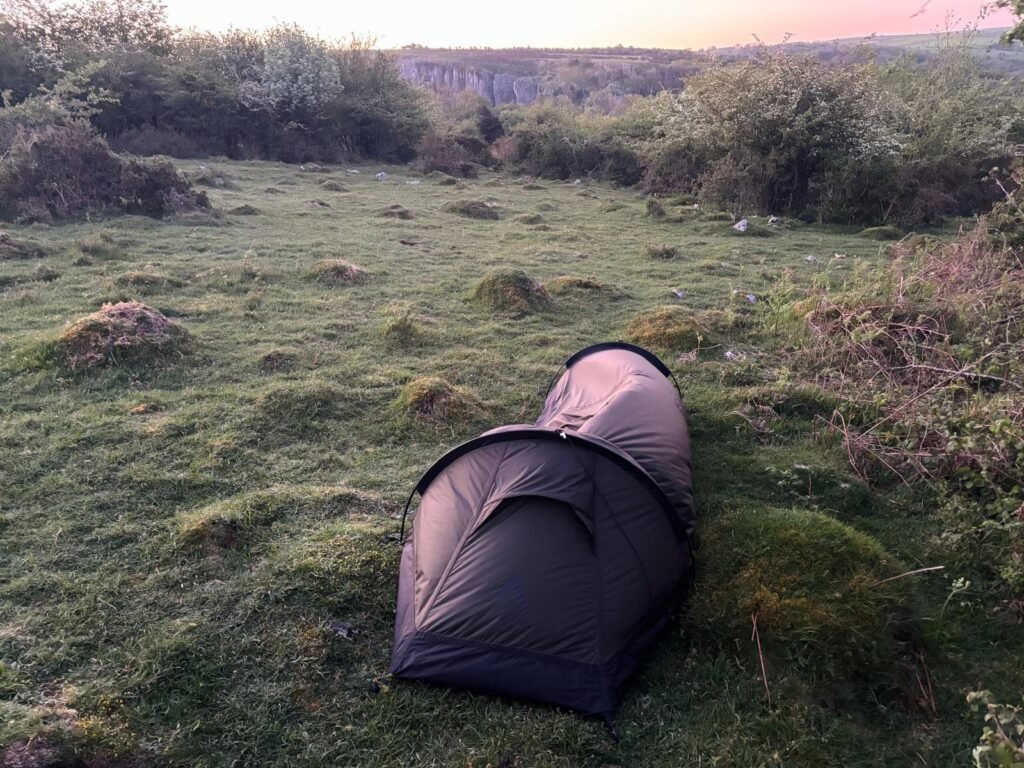
I’ve camped in plenty of windy conditions over the years. Sometimes because the forecast has been wrong, other times the forecast has been accurate and I’ve headed out intentionally because of it. What starts as a calm evening can quickly turn into a noisy night once the sun goes down and the wind hits.
Short answer:
It can be awesome. It can be fun and exhilarating. But it will definitely be noisy and memorable.
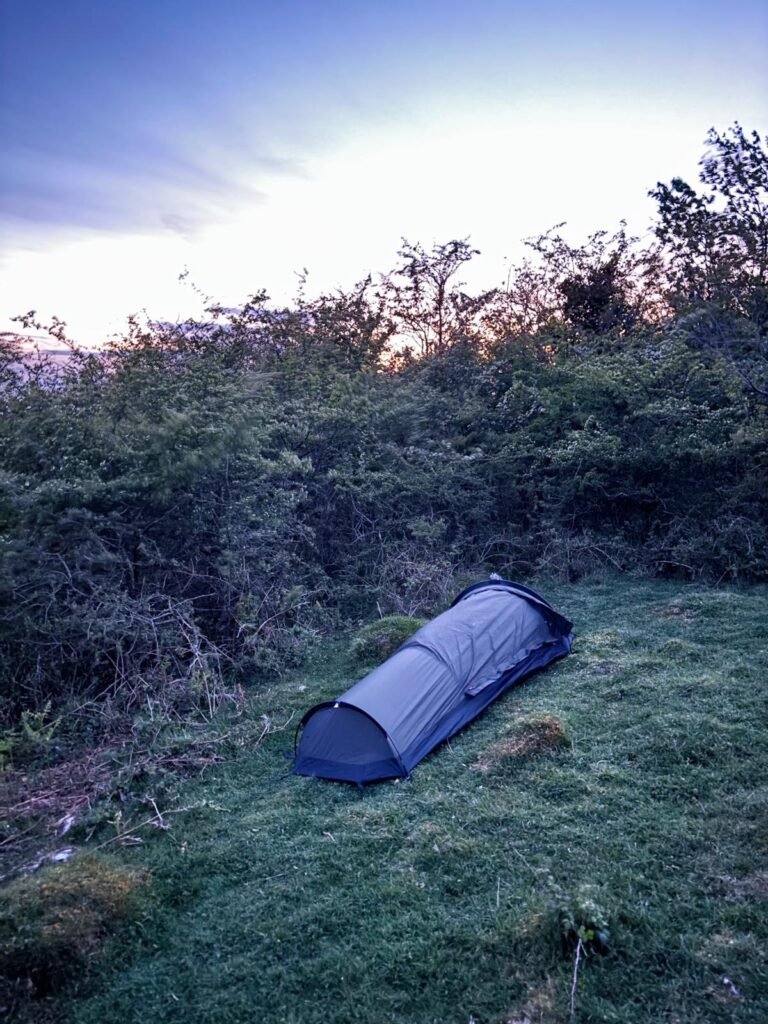
I’ve been out using tarps, tents and bivvis, and one of the first things you’ll notice is the noise. A shelter is doing well, but the sound can make it feel much worse than it actually is. The same also applies to rain. A little drizzle can sound heavier than it actually is.
I’ve written more about why I choose one over the other in my article, Bivvi vs Tent for Wild Camping in England – Which Do I Prefer?
With the fabric flapping as it’s hit by gusts, a shelter can make a safe windy night feel far more dramatic than it really is. Some of my fails have been tarps floating away after not being secured well enough, and I’ve struggled to put up shelters in the wind too many times to remember.
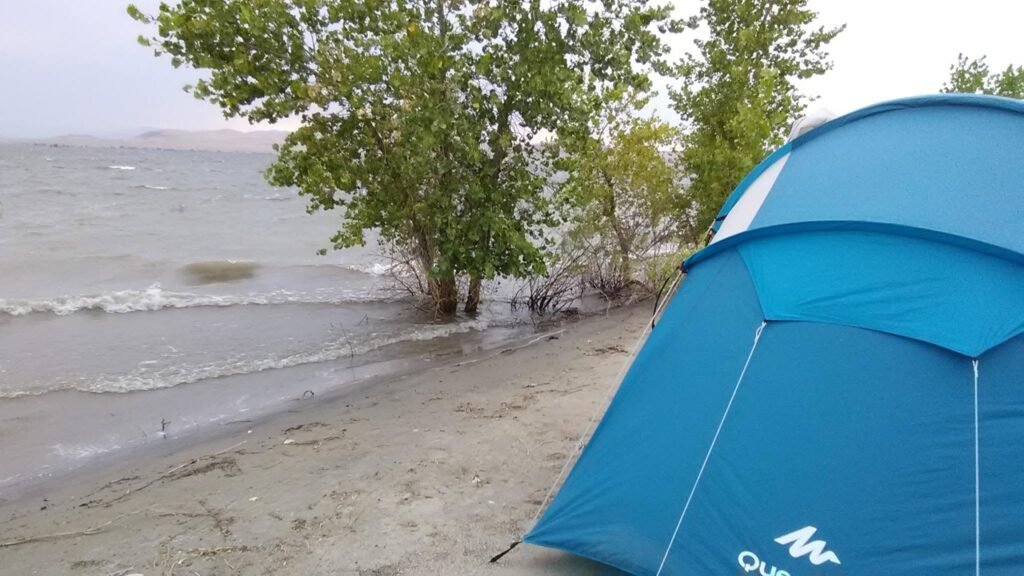
My biggest fail with the wind was shared with my wife and son. We pitched our tent on the sandy shores of a reservoir in Arizona in the USA. When we set it up, it was calm. Several passersby commented that they hoped it would stay up because of the winds that frequently hit the area in the evening.
While speaking to a lovely older couple, the wind picked up and we saw our tent break loose, flip over and begin to roll down the beach. It wasn’t all bad, because the couple we were talking to offered us a room for the night, so there was a happy ending to the story.
Picking the Right Spot
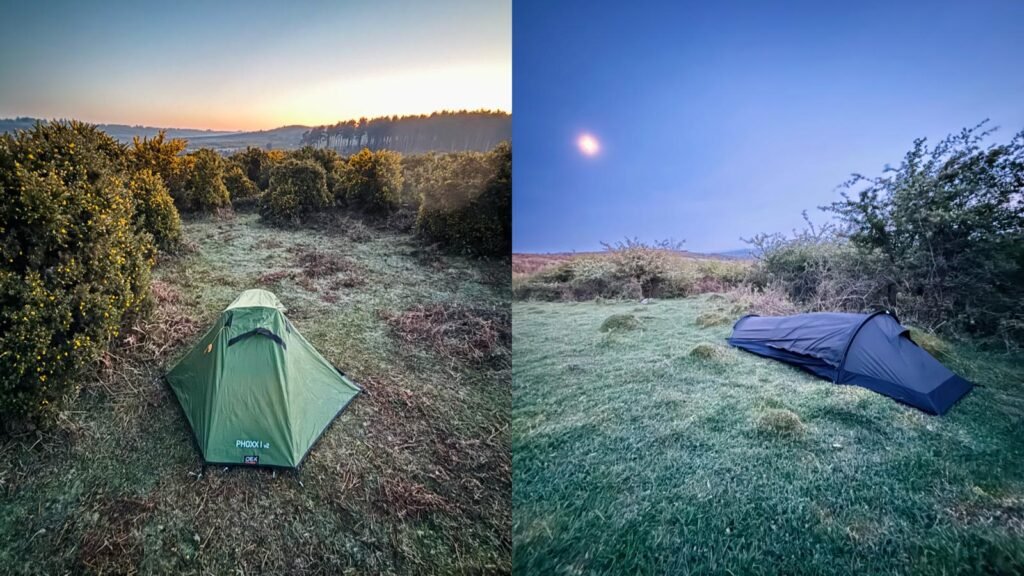
When wild camping in windy conditions, the position of the shelter helps a lot. A sheltered spot can make a huge difference. Tucking out of the way behind hedges, ramparts and other types of barriers can really help reduce the effect the wind has on you.
Finding quiet, sheltered places has become a big part of how I camp, and I talk more about that in The Way I Wild Camp – Quiet, Stealth and Low Impact
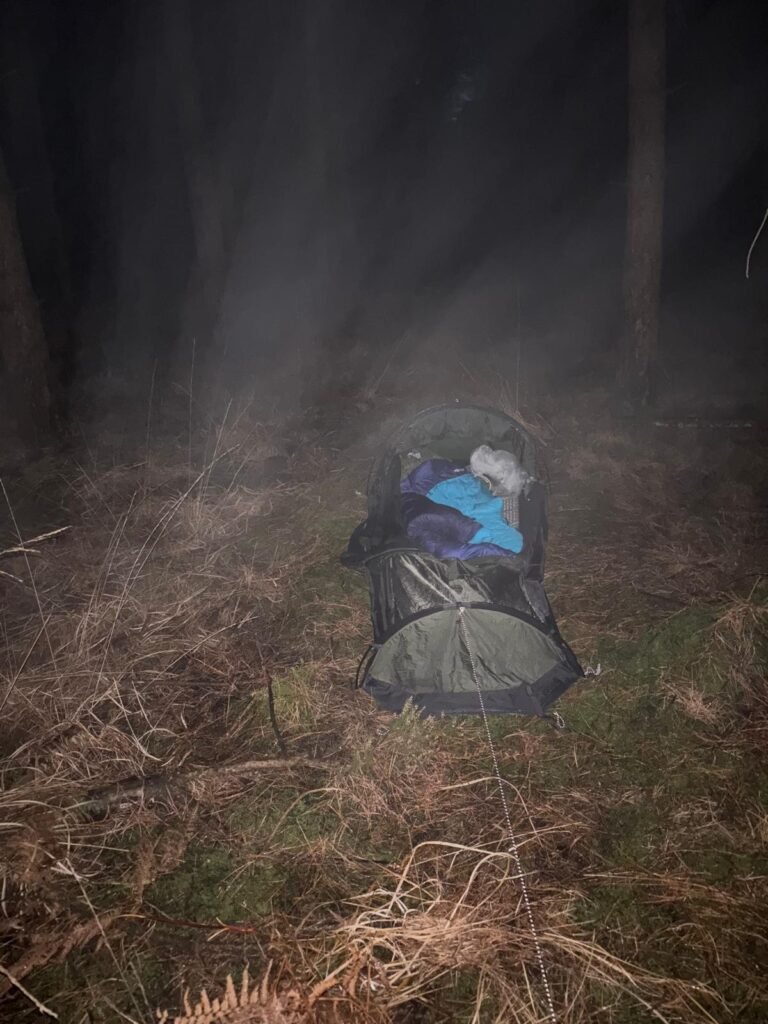
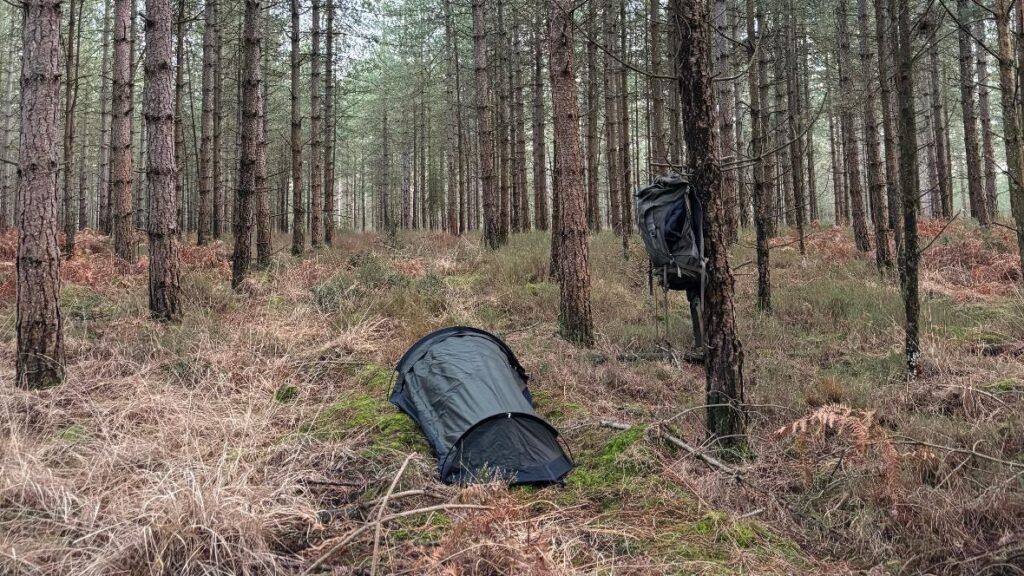
Forests and trees can add protection during high winds, but this comes with a risk. Large branches (called widow makers) are more prone to break loose and fall in these conditions.
If you do seek shelter in a forest, always check the canopy above where you plan to sleep. Look for any large or potentially loose branches that could fall on you during the night.
Even better would be to find a clearing in a forest with little or no canopy to set up under. Even a young tree with smaller branches to camp under is another option.
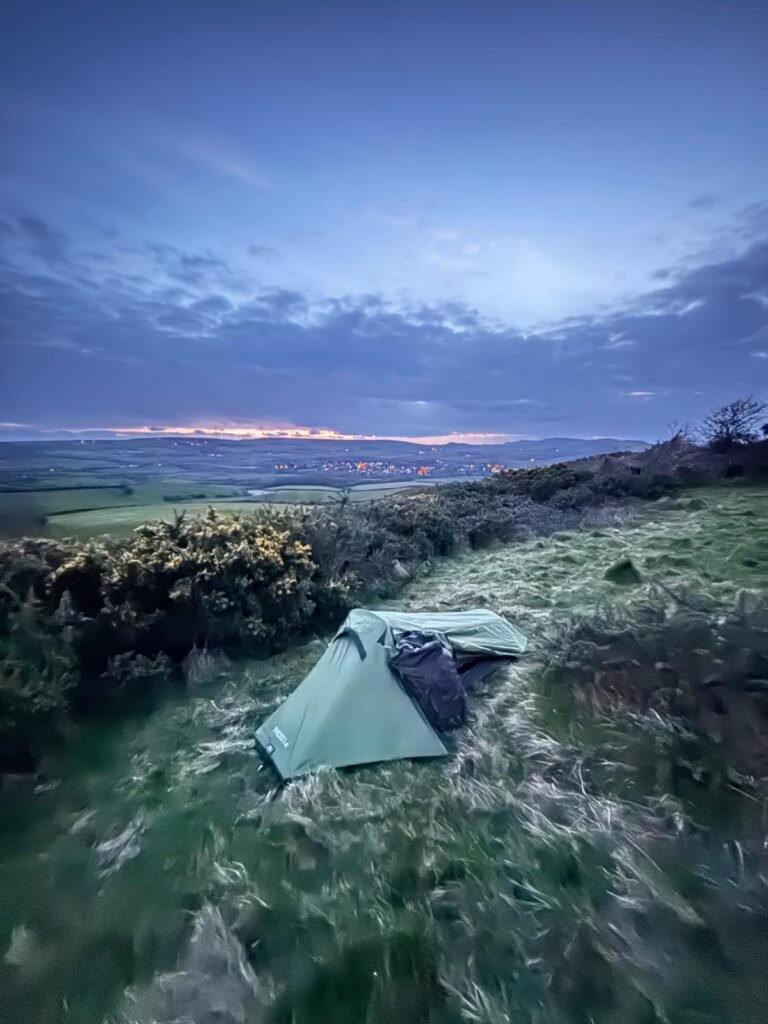
Camping on high or exposed ground in windy conditions is something I try and avoid if I can. I know some people like to test out their gear in these conditions, and even enjoy these moments, but they can become uncomfortable places to spend the night when the wind really starts to hit.
A few extra minutes spent finding a sheltered spot can make the difference between a reasonable night’s sleep and a long, restless night.
Sleep Can Be Difficult
One thing I’d like to mention, which may be obvious, is how tiring the wind can be. Even if your shelter remains secure all night, the constant noise of the fabric flapping will stop most people from having a restful night.
I know some resort to using ear plugs to solve this problem. I don’t, and I do have difficulty falling asleep in these conditions. By morning, I feel tired because I’ve hardly slept, despite spending plenty of time in my sleeping bag.
You find yourself listening to every gust and the chaotic lashing noise the material makes when the wind catches the side of your shelter. On the odd occasion when things have sounded really bad, I’ve even poked my head out just to make sure everything is still pinned down, even though there’s no reason to worry.
The Forecast Doesn’t Tell the Whole Story
Weather forecasts are useful, but they don’t always give a full picture. A forecast might predict some wind for the area, but local conditions can be surprisingly different.
The landscape has a huge influence on how the wind behaves. Camping in valleys, woodlands and coastal locations can all behave differently. Getting caught out is normal and something I expect from time to time.
It’s best to prepare for the worst. Take suitable gear for the conditions and spend time finding a good spot.
If you’re wondering how my own shelter has coped with cold weather, I’ve written about it in Can You Use a Nortent Skjul in Winter?
Sometimes It Isn’t Enjoyable
I enjoy wild camping and I enjoy being outdoors. I also enjoy the challenge of finding a great location to set up camp in. What I don’t enjoy is lying awake all night listening to fabric being battered by strong gusts.
There does come a point where the experience stops being enjoyable. For me, wild camping isn’t about proving how tough I am and how much I can survive in difficult conditions. It’s about enjoying time outdoors and spending a night in places I wouldn’t usually be spending nights in.
That quiet, low-impact approach is something I explain in more detail in The Way I Wild Camp – Quiet, Stealth and Low Impact.
If the conditions are going to be rotten and make the whole trip uncomfortable, I think there’s nothing wrong with postponing the trip and going another day. The countryside will still be there the following week.
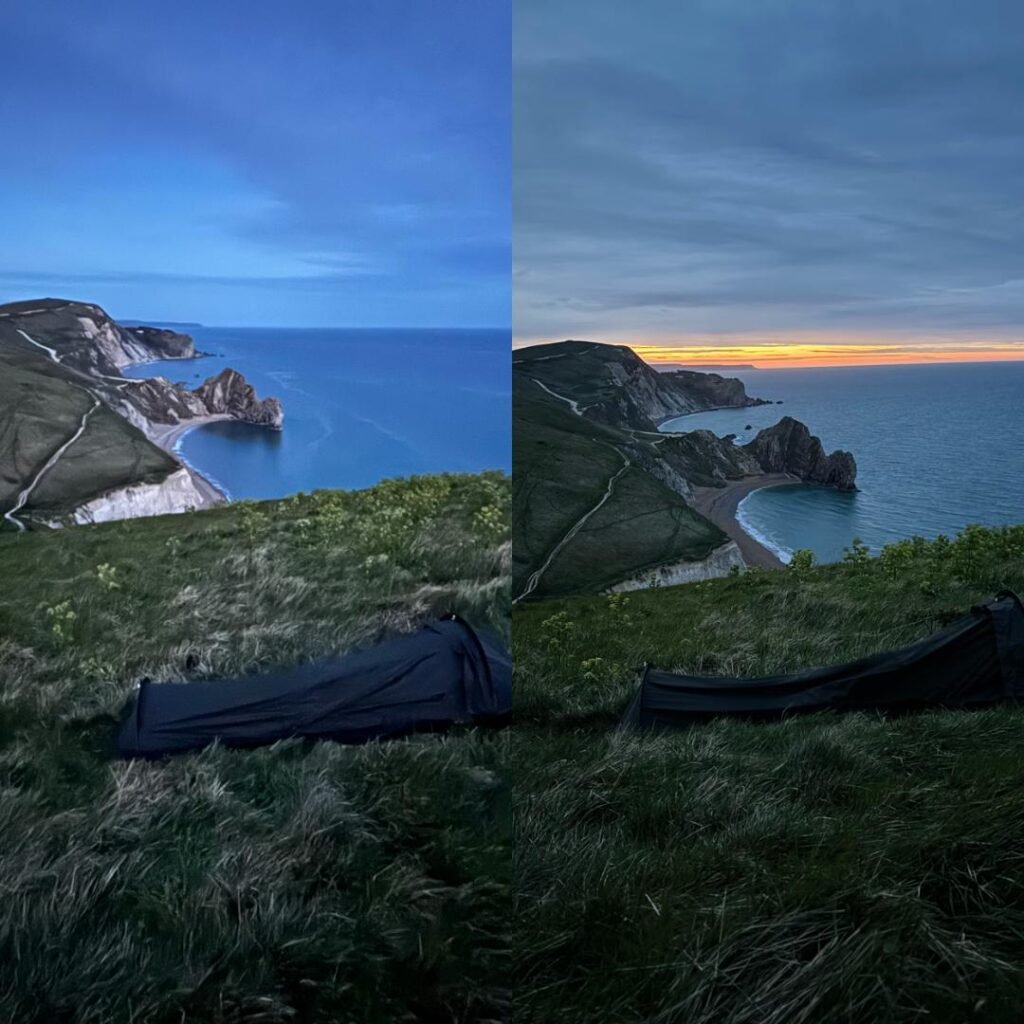
Having said that, there have been times when venturing out in wind and rain during the evening has been worth it. A walk to the cliff tops of Old Harry Rocks in Dorset was worth braving the wind and rain. It’s a popular place and easily accessible. I knew the wind and rain would keep the visitors away, and the storm that passed over during the night was worth sitting out, because I was going to be rewarded with an amazing sunrise the following morning.
Final Thoughts
Wind is part of wild camping in the UK, as wind is a pretty big part of the UK’s weather. Sooner or later you’ll experience it, whether you were expecting it or not.
The good news is that most windy nights aren’t nearly as dramatic as they appear online. Choose your spot carefully and use equipment that’s best suited to the conditions. It’s also wise to be realistic about the conditions and not put yourself at risk.
Wind is simply part of the camping experience in the UK. Sometimes it’s fun, sometimes it’s annoying and sometimes, despite the noise and lack of sleep, you’ll wake up to a view that makes the whole thing worthwhile.
Thanks for taking the time to read this.
If you have any questions, or you’d like to share your own experiences of the area, feel free to get in touch via social media or the contact page.
I’d genuinely like to hear your thoughts.
Dan
Responses