
A Tale of Two Dorset Hillforts
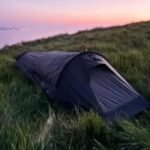
I began my journey in the village of Child Okeford in Dorset. It’s not the first time I’ve been here. Around the same time last year, I visited the impressive hillfort of Hambledon Hill, which overlooks the village. On this visit had a slightly different goal. Rather than camping on Hambledon Hill again, I wanted to continue a little further and spend the night on neighbouring Hod Hill.
If you’d like a quick summary of this trip, you can also read the accompanying Camp Note – Hillfort, Dorset | Nortent Skjul Bivvi Camp
I retraced my footsteps up the side of the hillfort, and instead of turning left to continue to the top of Hambledon Hill, I turned right and headed through the gate, past trig point TP3583 just off Hambledon Hill and continued on to Hod Hill.
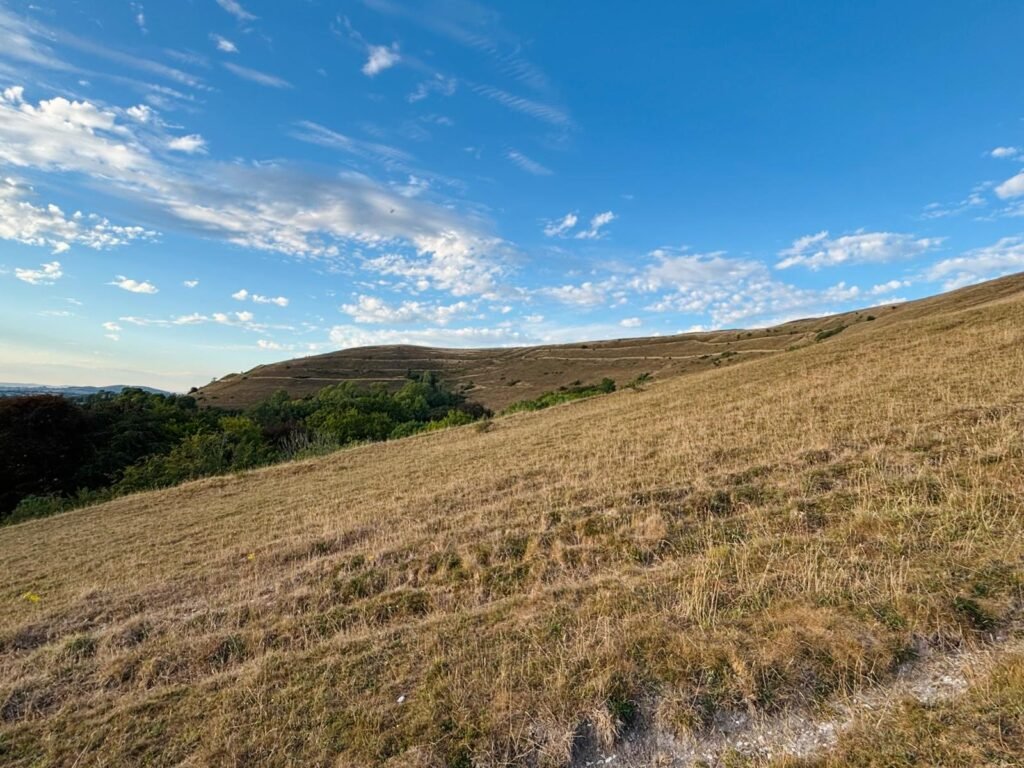
Hambledon Hill is very impressive at 192 metres, and the view of the side of the hillfort opens up the higher you go. The top also offers fantastic views of the surrounding area and amazing sunsets.
I entered the area from Duck St, and the climb, though not long, starts quite steeply. It soon had me puffing.
Once at the top, with the grazing cows nearby, I could see a couple of silhouettes in the distance. The ramparts are deep and again very impressive. It’s been a very hot and dry summer so far, and this has left Hambledon Hill looking yellow like much of the country.
Last time I was here, I remember the grass being a lot taller and slightly greener. I followed the path cutting through the ramparts and through a gate which leads past the trig point and followed the path between the Fields.
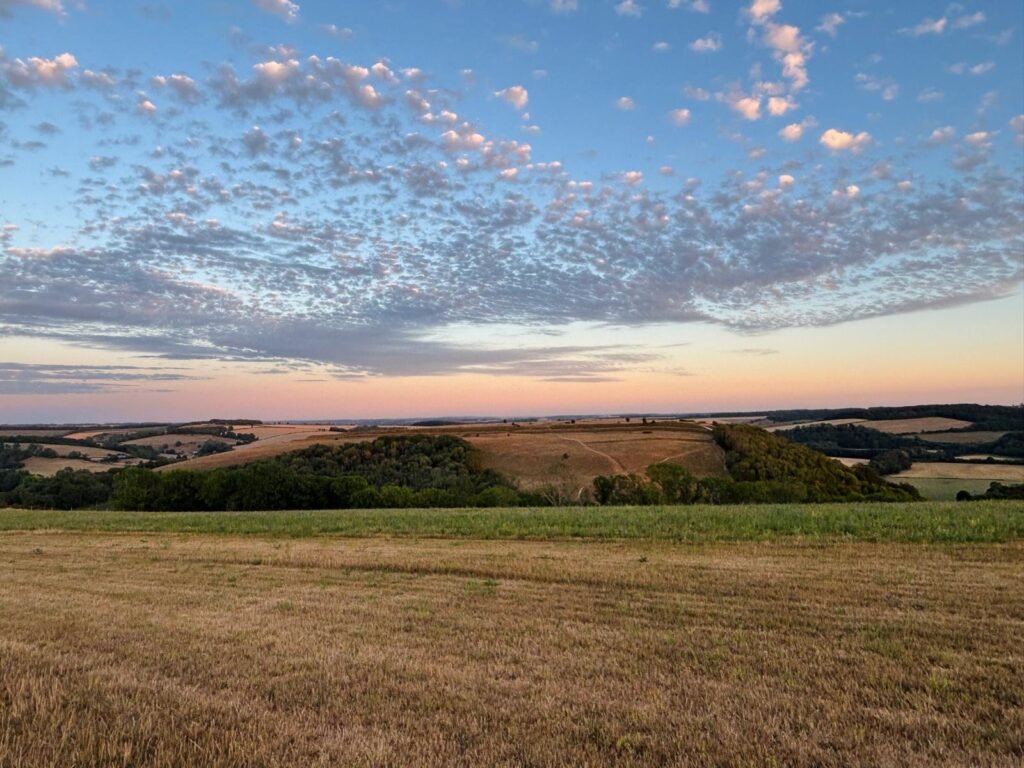
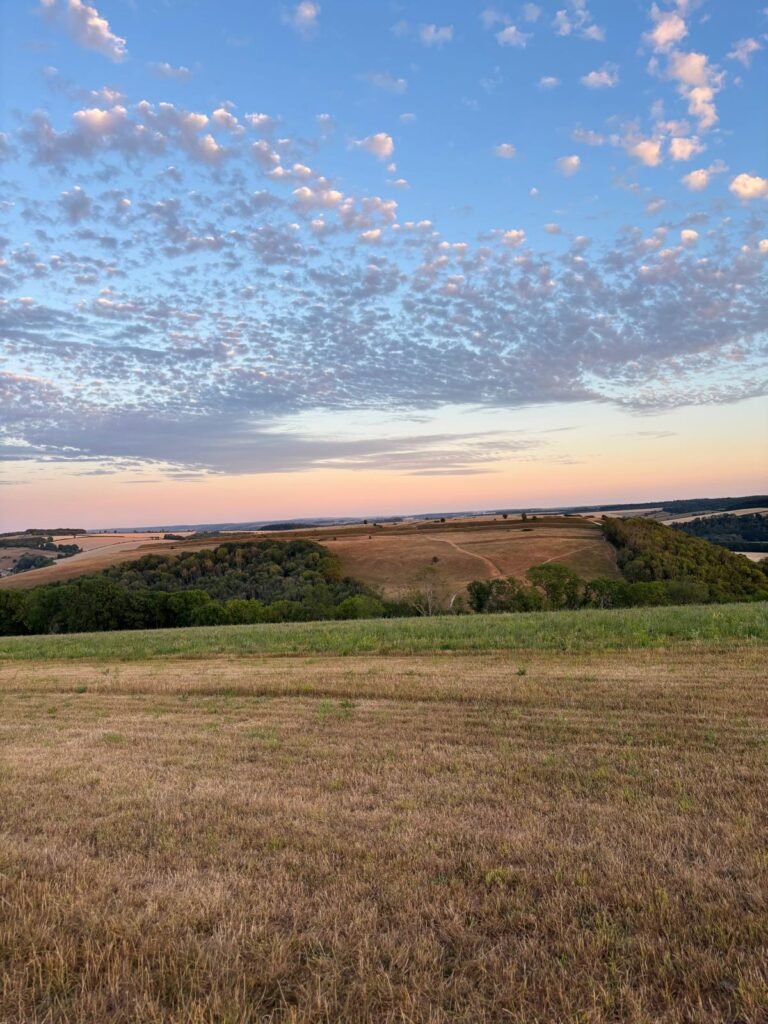
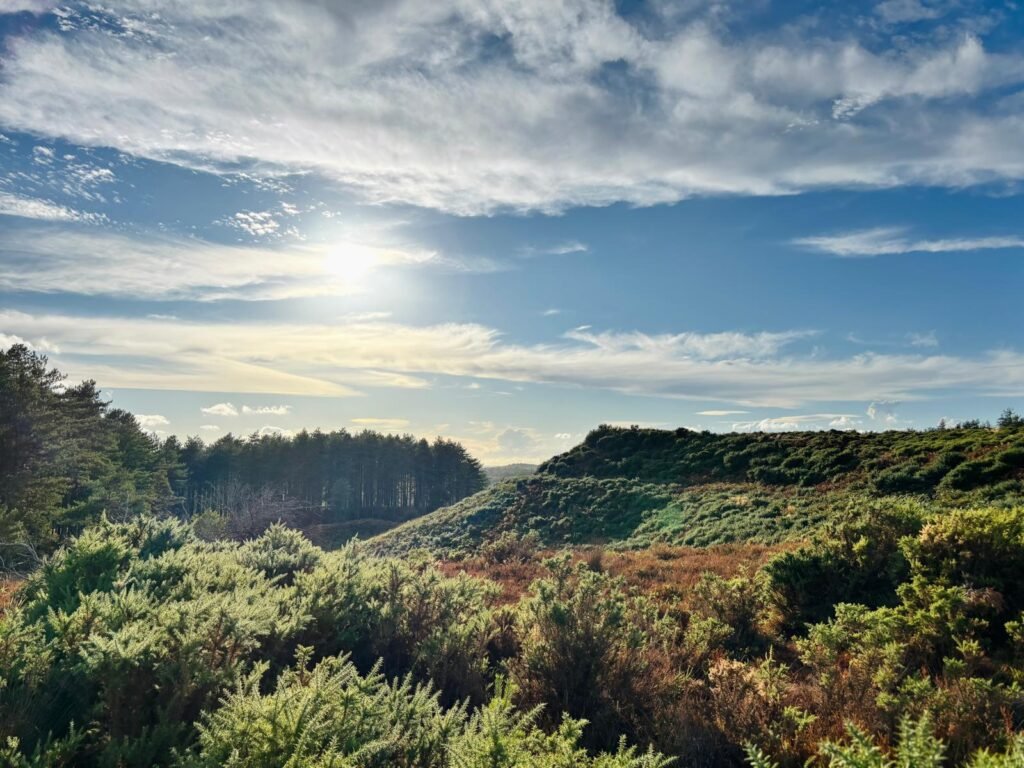
This time the colours were absolutely amazing. I’m not sure why, but the sky seemed more vivid than usual, the grass a rich yellow, and with the sun low behind me it illuminated the tops of the clouds while leaving their undersides in shadow.
The trip was already becoming memorable because of the beautiful colours, and they were only going to get better as dusk and dawn approached.
From the path, I could make out Stepleton House below on my left in the distance. In a field on my right was a large hare who was bouncing toward me. A bit further on and to my left were a couple of young deer in another field. Neither the deer nor the hare were bothered by my presence.
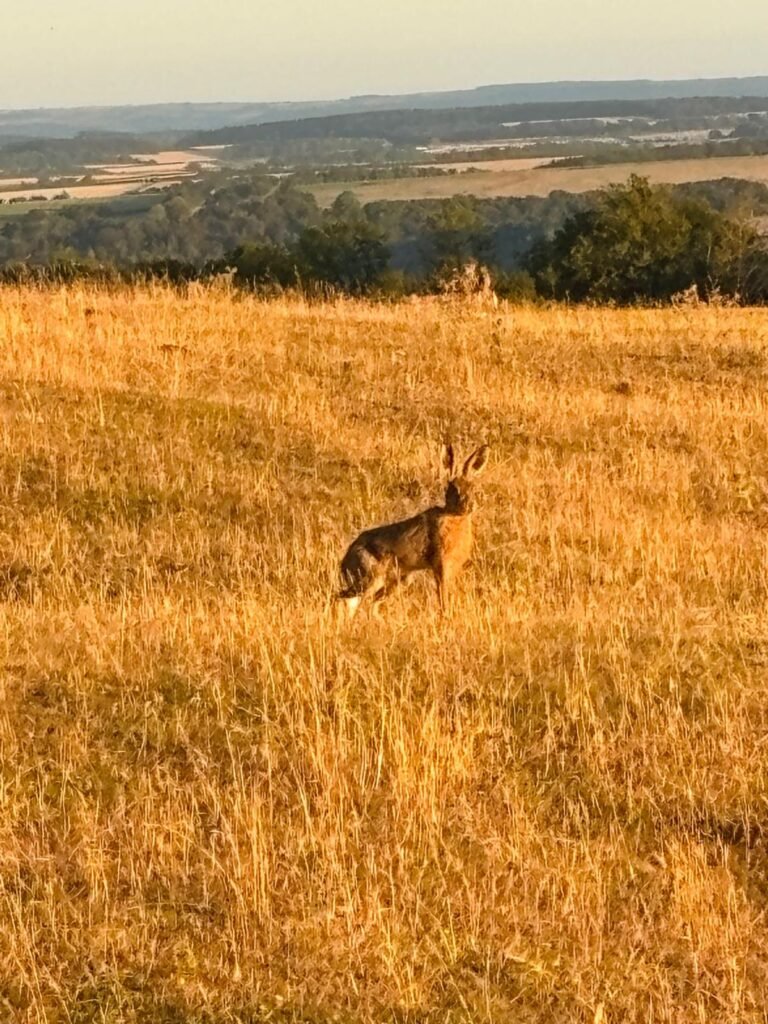
Hod Hill was beginning to come into sight on my right hand-side and it wasn’t long before I reached an open barn stacked high with hay. I turned right at the barn and followed the chalk trails down into the valley between the high fields and Hod Hill to where there’s a road.
Crossing the road and through the gate, I was on to Hod Hill proper. The mosquitos were out and I applied the bug spray. It was another steep climb to the top where I saw only the third person who was just leaving.
It’s one of a few items that now comes with me on almost every summer trip. What I Take on a One-Night Wild Camp
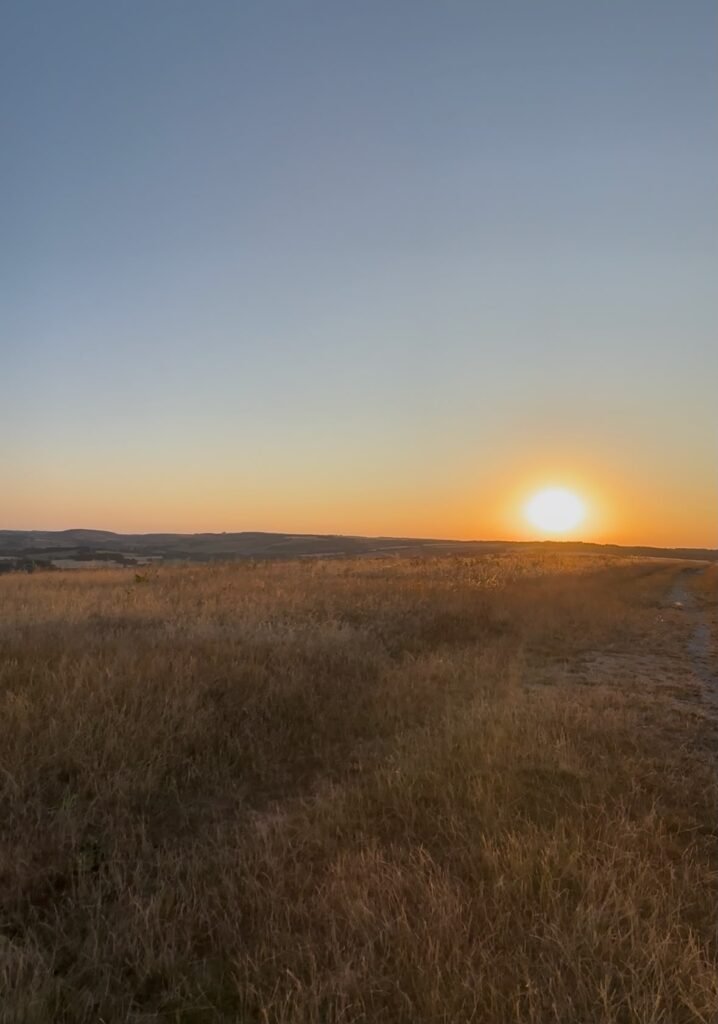
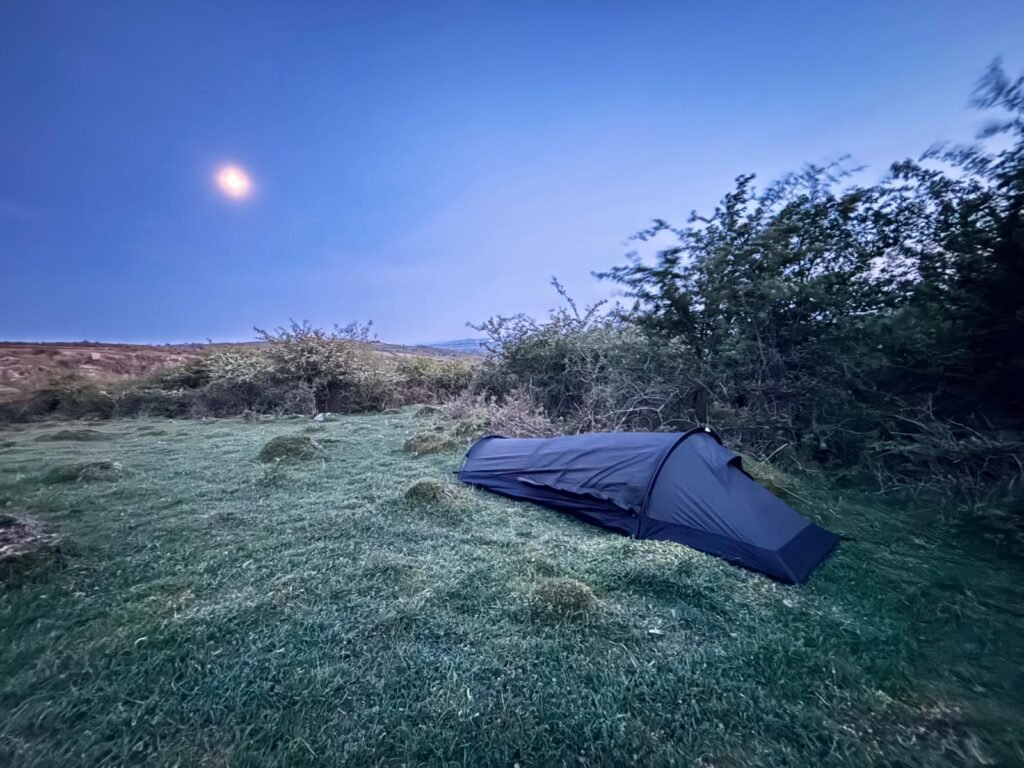
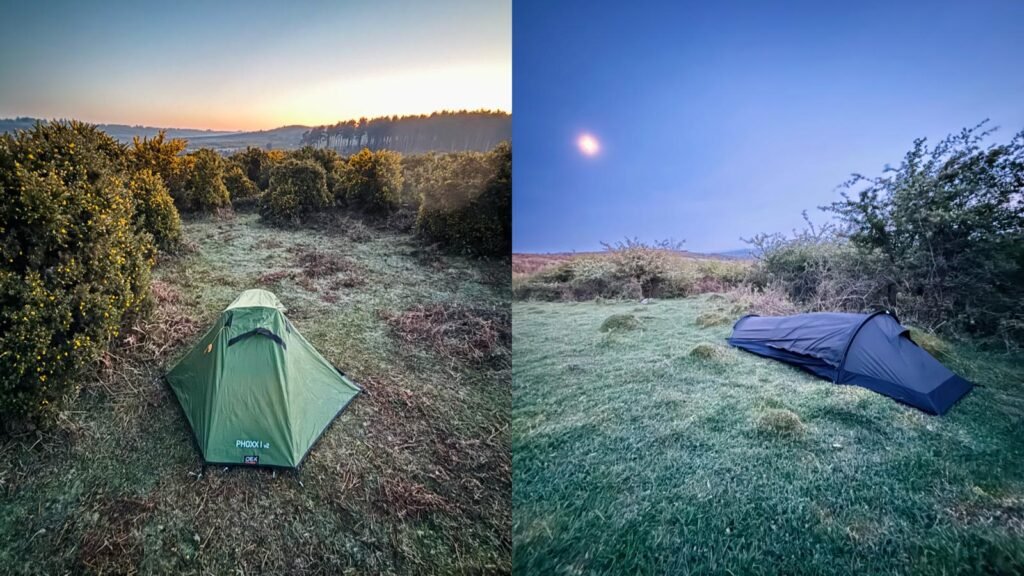
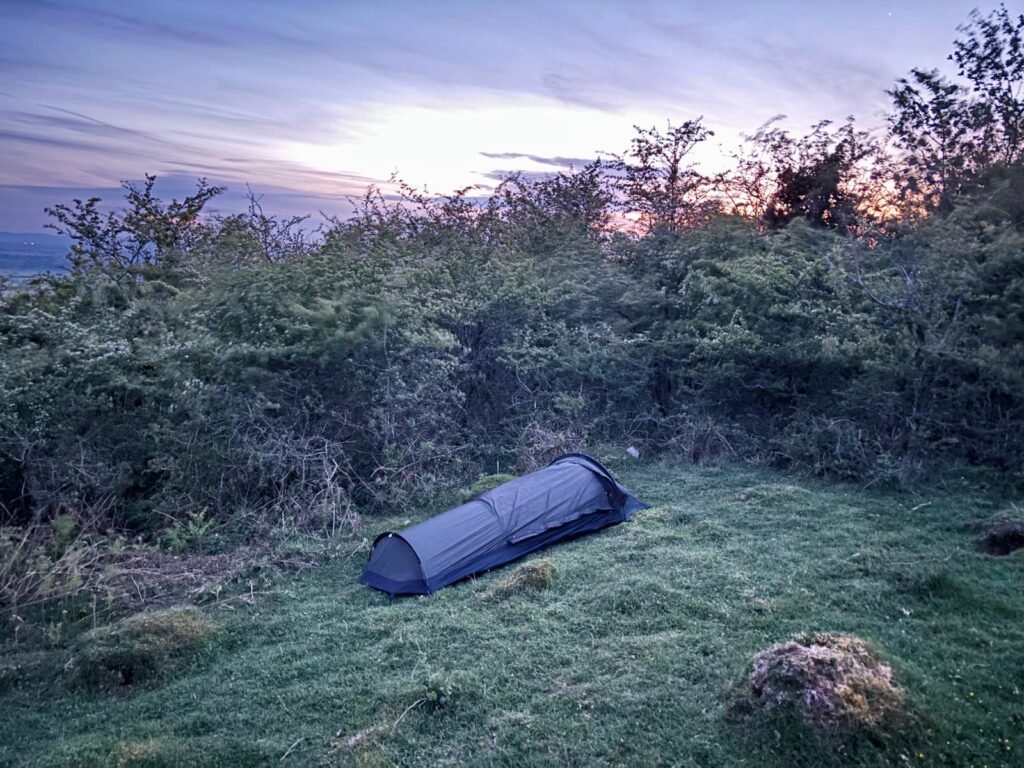
I was greeted by an almost full moon. It was just one night before July’s Buck Moon. The sky was almost cloudless and the horizon behind me was a deep red and orange, silhouetting everything between myself and the setting sun.
The top of Hod Hill stands at 143 metres and is quite bare. The grass was yellow like the surrounding areas, there were patches of brambles, along with a couple of trees.
The sun had gone down by now and I needed to find a place for the night. I walked over the ramparts which didn’t appear as large as those on Hambledon Hill, but still deep nonetheless.
Finding somewhere quiet and keeping a low profile has become an important part of how I camp. The Way I Wild Camp – Quiet, Stealth and Low Impact
I walked around the outside of the hill exploring the trees on one side, before climbing back to the top and settling for a spot alongside one of the bramble islands.
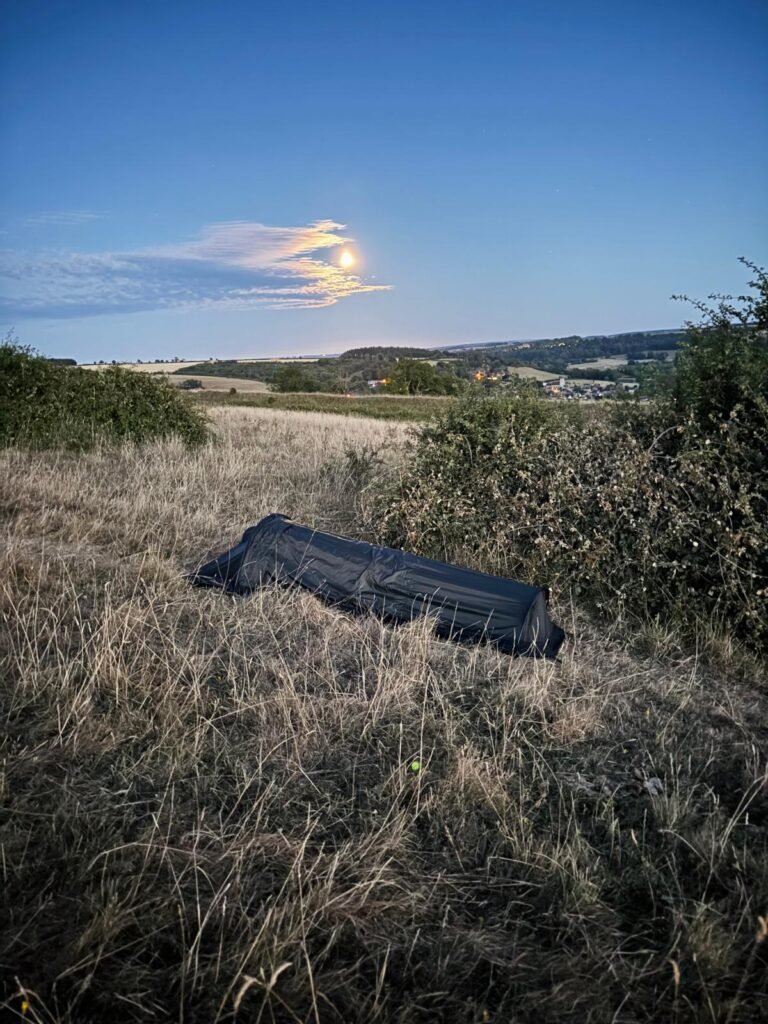
It was a busy and loud evening as light planes, then helicopters continued overhead until midnight. I think they were military helicopters on possible night-time training flights. Some were in the near distance, but others flew almost overhead.
The morning brought a fine dew to the hill top, and a colourful sky as wonderful as the evening sunset, as I retraced my route back to Hambledon Hill.
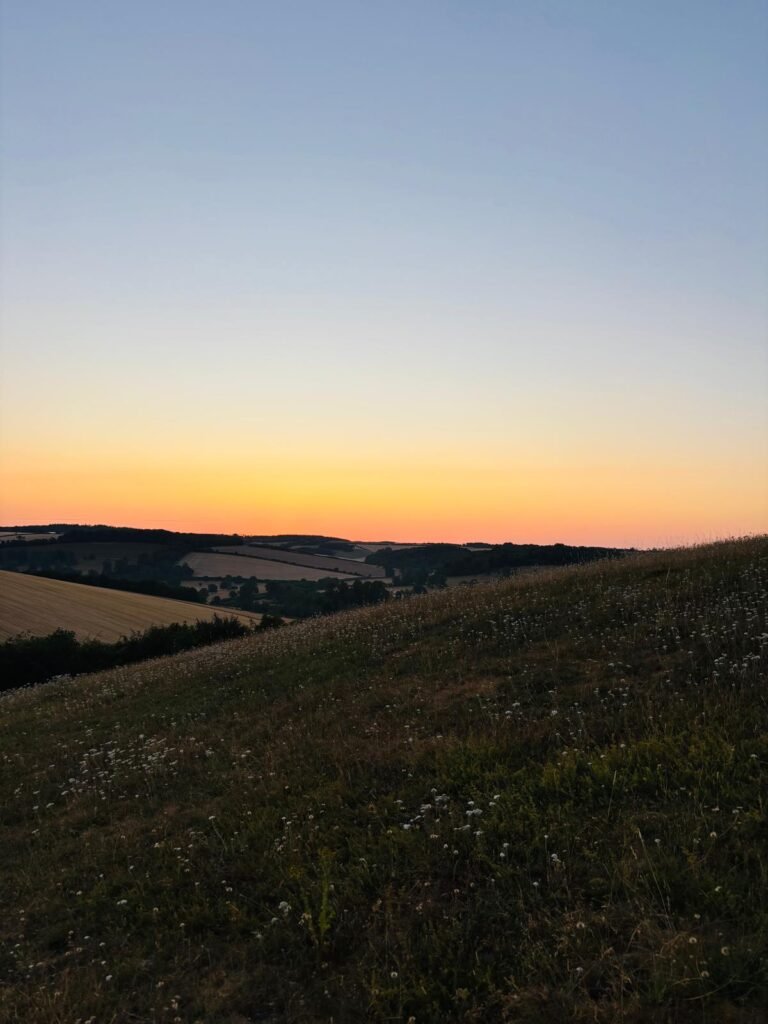
I didn’t see a soul on my way back. I was kept in good company by the brilliant dawn colours that hugged the tops of the hills and the horizon. Deep pinks and purples gave way to rich oranges as the sun was about to appear from behind the hills.
Possibly the same two young deer were still in the field where I had seen them the previous evening. I stood and watched the tall yellow grass rustle in the gentle breeze when I reached the trig point and Hambledon Hill.
Instead of heading back down the hill the way I had come, I followed a path behind the hill that led around the contour of the hill without the need to go up and over.
I had one more place I wanted to visit before I left. I roughly knew where this place was, but of course I got lost twice on the way.
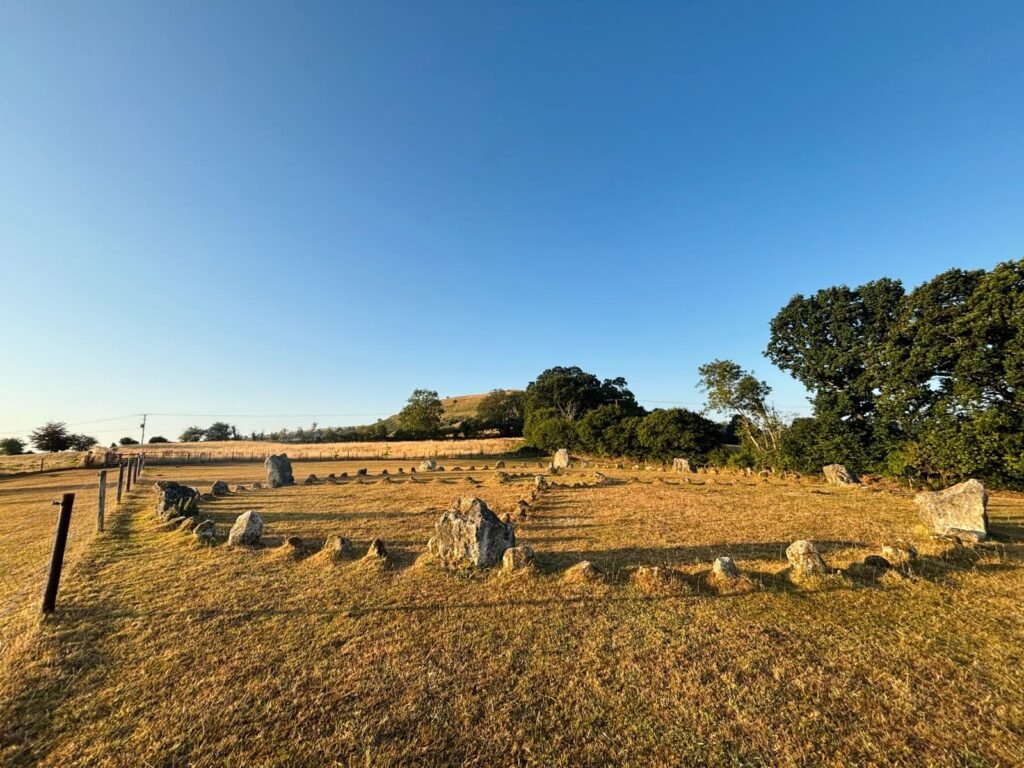
Eventually, I came through a gate and onto a field containing the Hambledon Hill Farm Stone Circle, which is not as old as it looks.
It was built in 2003 and is known as the Medicine Wheel. Designed by architect Hannah Katz, it is dedicated to spiritualists around the world on the winter solstice. It consists of 108 stones, including eight larger stones arranged in two circles. The outer circle symbolises the masculine, while the inner circle represents the feminine. The two circles are intended to represent harmony and balance and form part of a wider network of similar sites around the world that promote peace and love.
Though not old, it is a very interesting and a unique feature, and definitely one I would recommend visiting. Hambledon hill looks down upon it in the background, there are horses in an adjacent field, along with a group of either alpacas or llamas. It makes for a very interesting place.
After exiting the field, I made my way back to Child Okeford, where I had parked my car and ended my journey after a wonderful time spent exploring two hillforts and enjoying the colours, the views and the unforgettable dusk and dawn.
Thanks for reading.
Dan
Responses