
What I Take on a One-Night Wild Camp

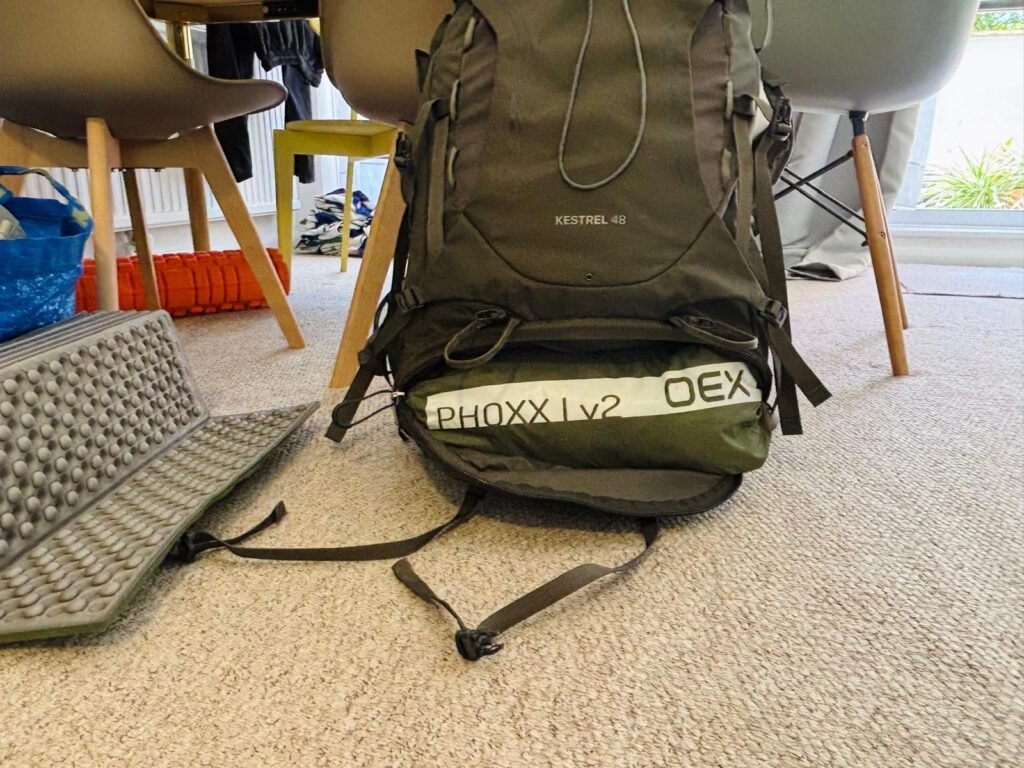
There is no perfect wild camping kit list. The gear you take depends on the season, the weather, the location and you, and I’m no different.
After years of camping and backpacking, I like to keep things simple and I know what works for me. I’m usually only spend a night outdoors, so I don’t feel the need to carry everything including the kitchen sink. I pretty much take the same gear for every camp, which makes things easier.
I don’t carry items such as a camping chair or a sitting mat. I don’t even use a pillow. The only reason I don’t carry these items is that I don’t need these for just a night out.
For me, just having the basics is enough. A warm sleeping bag, suitable shelter, enough food and water are pretty much everything I need for a quiet night outdoors. I can then just enjoy the trip and my time outside.
If I need or I’m missing something, it doesn’t matter – I’ll be home by the morning.
My Wild Camping Backpack
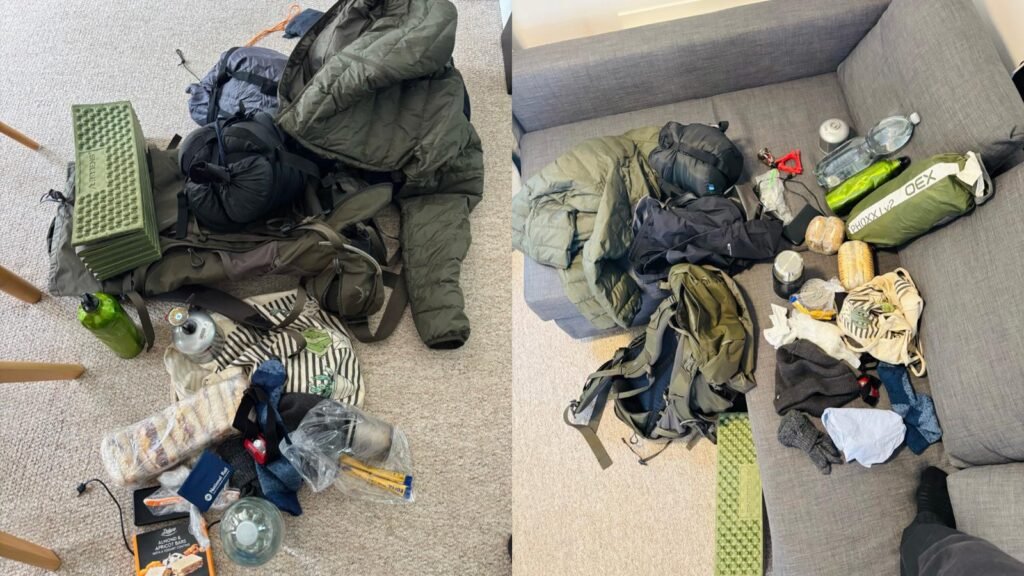
Everything goes into my Osprey 48-litre backpack. It is not an ultralight setup, and I’m not deliberately trying to keep things as light as possible. I just turns out that way.
I also filmed everything I packed for an overnight hammock forest camp in summer What I Packed for a Lightweight Hammock Camp | Wiltshire Forest (Video)
I’ve been using the same backpack for many years and it’s about the right size for what I need. It’s big enough to carry everything I need, but small enough that it stops me packing things I don’t.
Usually only my shelter, my sleeping bag and my food choices change, but everything else stays the same. A typical one-night camp will usually weigh around 9–10kg including water. Removing the water, and that brings the weight down to around 5–6kg.
Food and Drink
Food is one of the areas where I really like to keep things easy and fuss-free.
I love bread and rolls, so they have become my go-to camping food. They’re so convenient and make life really easy. I eat them while walking and they don’t need cooking. I also make mine heavy on the carbohydrates and protein, which is ideal when spending a day out walking and carrying a pack.
I usually eat before I leave home, so what I take out usually keeps me going for the rest of the trip and the morning. A typical summer camp is usually four rolls, two bananas, two apples, nuts and water. In colder weather, I will usually swap the fruit for heavy snack bars and add a flask of hot soup and even the odd dehydrated meal.
The food I take provides me with plenty of energy and warmth, without the need to carry cooking equipment.
Water
Water is something I always think carefully about. I decide how much I need based on the distance, weather and the location. I would rather carry extra than run out – I hate being thirsty.
I’ve learnt that lesson the hard way a few times in the past. One occasion was years ago while bikepacking in the Pyrenees. During a ride up and over Col d’Aspin, a mountain pass used on the Tour de France route, I ran out of water.
The climb was over 20 kilometres of zig-zag roads and I didn’t come prepared, and I ended up extremely thirsty. In the end, I was drinking water running down the rocks from the mountain. It was a good reminder that water is not something to be neglected.
For a one-night out in England, I usually carry around 3–4 litres depending mainly on the seasons. That includes the journey there, the trip, any cooking and the return journey home. I usually have some water left over on my return.
Choosing My Shelter
My shelter depends on where I am going and what the weather is doing. I use three different types of shelter:
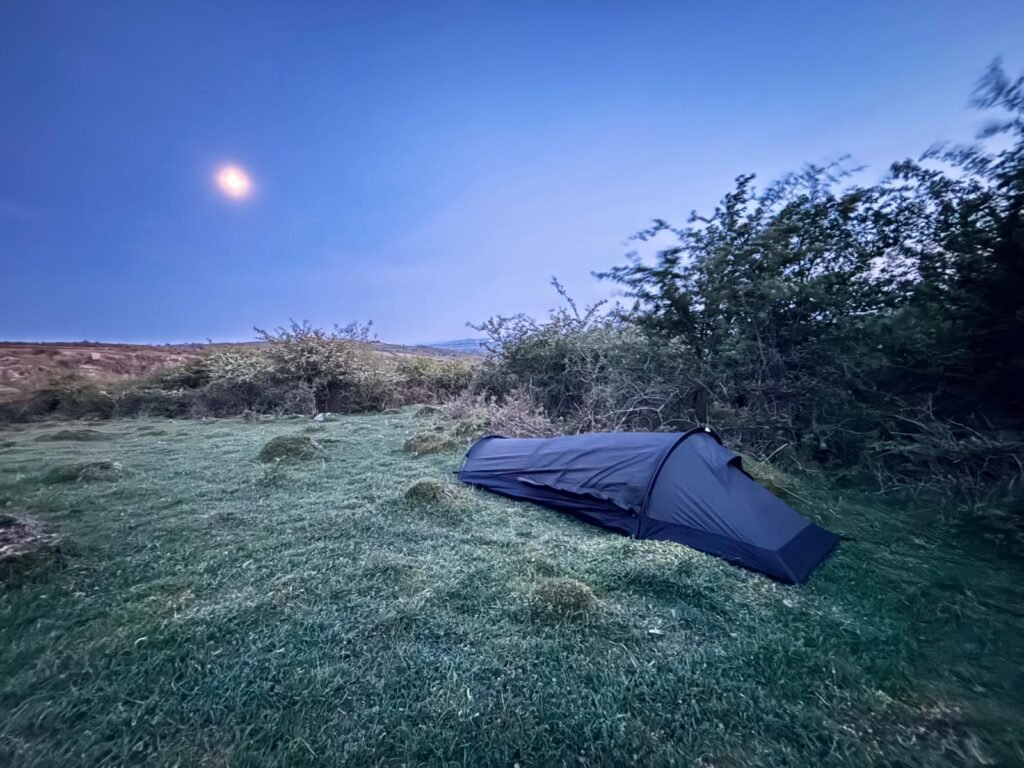
Nortent Skjul Bivvi
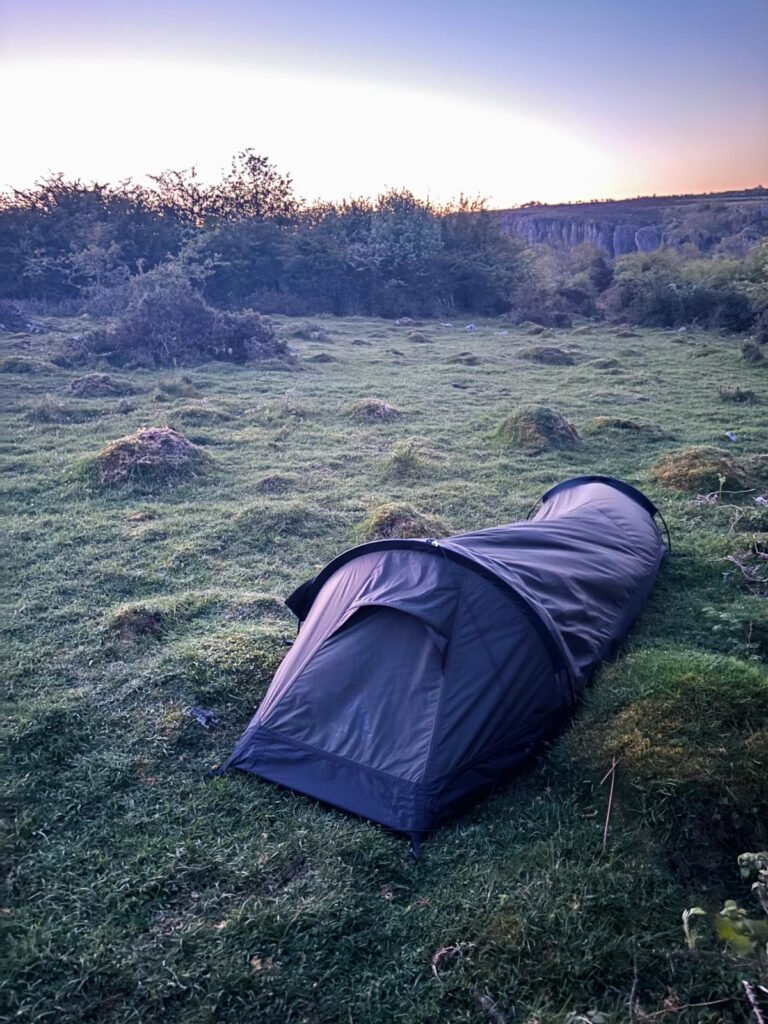
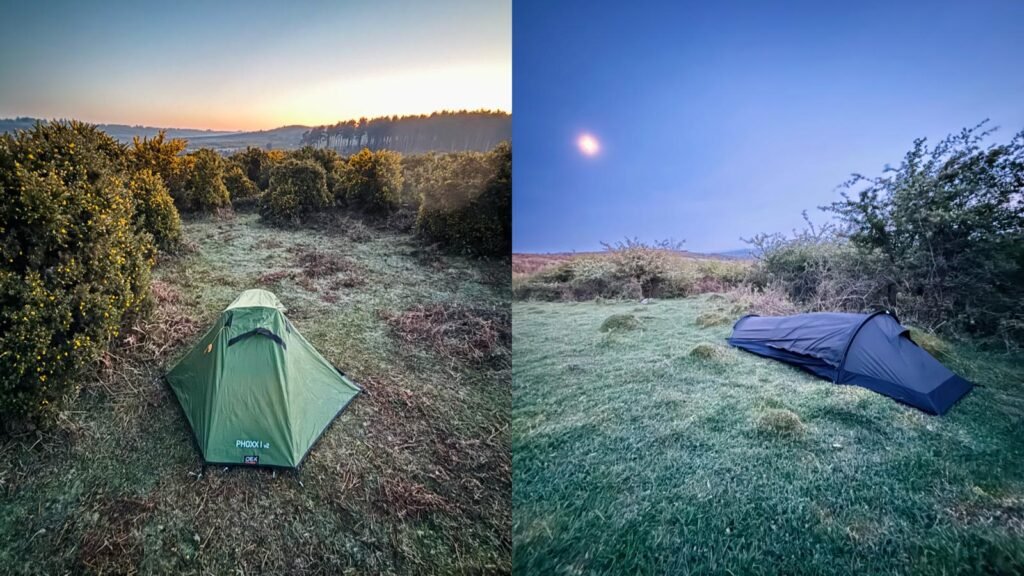
The Nortent Skjul is my favourite shelter. It is low profile, comfortable and works perfectly with the way I camp. If I am on open hills, heathland, low bushes or an exposed area, this is my first choice.
If you’re wondering why I usually choose a bivvi over a tent, I’ve also written Bivvi vs Tent for Wild Camping in England, where I compare the strengths and weaknesses of both after using them for years.
I’m a bivvi person first and foremost. One of the things I really love about the Skjul bivvy is being able to lie back and look at the sky through the bug net.
After using the Nortent Skjul on woodland camps, coastal trips and exposed hillsides, I’ve put together a full Nortent Skjul Review (Real UK Use) if you’d like a more detailed look at how it’s performs over time.
Bivvis keep things simple. I feel more exposed and connected with the surrounding in a bivvi, more so that other shelters. They’re also less fuss and make disappearing into the landscape a lot easier.
DD Hammock
The hammock comes out mainly during the warmer months. I enjoy woodland camps and setting up between two trees, surrounded by nature and the noise of the forest.
However, a hammock like my DD Hammock needs a little more thought in colder conditions. When you lie in a hammock, the underside of your sleeping bag gets compressed, which removes the trapped air that helps keep you warm.
That is why DD sell an underblanket to go with the hammock. I currently don’t have one, so instead, I’ve experimented with my sleeping mat, it works, but it also moves.
Without the blanket underneath the hammock to help with the cold, it’s more difficult to stay warm. I learned this lesson again recently. I used it in a July forest camp when the temperatures were really high. I went in shorts, T-shirt and I forgot a fleece. I took my summer sleeping bag as the nighttime temperatures were forecast to be around 20°C.
The forest at night was cold, and it also rained during the early hours. I was cold, and had to keep turning over to keep my temperature up as my underside got really cold.
OEX Phoxx 1 V2 Tent
The Phoxx 1V2 is my go-to shelter when the weather turns bad, especially heavy rain, storms and really low temperatures. It is a fantastic small, low-profile tent which has handled some terrible weather and it’s never let me down.
It is not the biggest tent, but for one person and the way I camp, it does everything I need.
I’ve also written a detailed OEX Phoxx 1 V2 Review after using it in wind, rain and winter conditions, rather than just giving first impressions.
Sleeping Bag and Warmth
My sleeping system stays the same, except for sleeping bags which change depending on temperature.
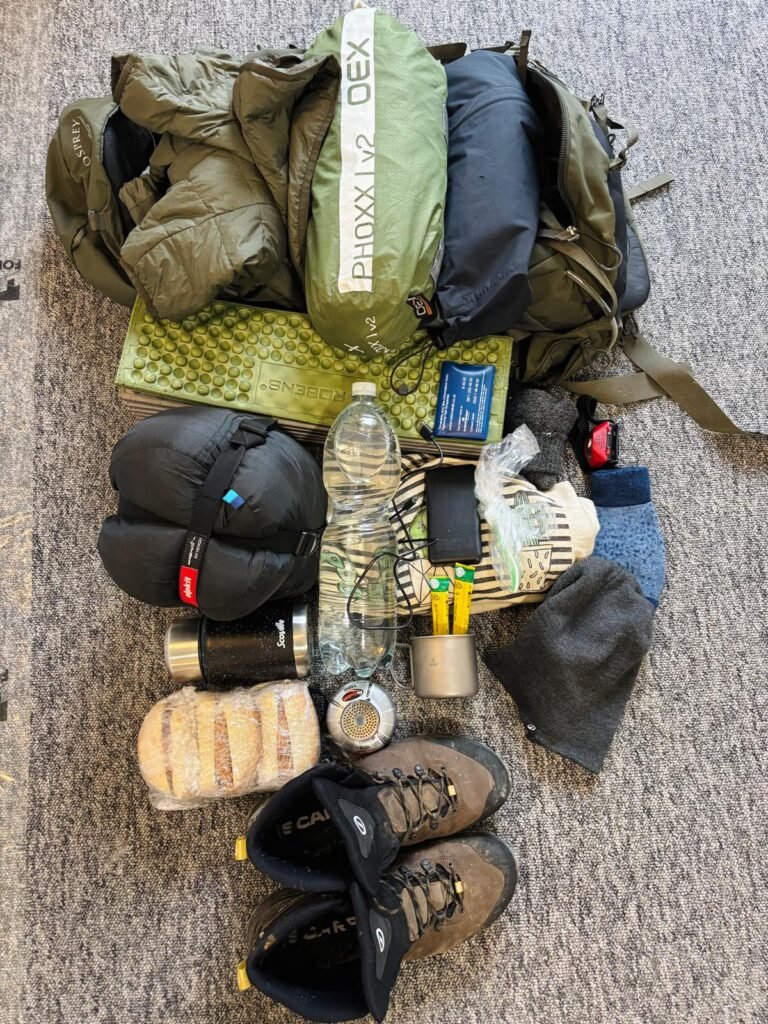
In the summer and when temperatures are over 10°C, I’ll use my Mountain Warehouse down sleeping bag. For colder conditions, or temperatures below 10°C, I’ll turn to my Alpkit SkyHigh 700 sleeping bag.
The Alpkit is more of a three-season bag rather than a full-on winter bag. When temperatures do drop below zero, I double-bag and use both sleeping bags together. This means I can stay warm without needing to buy an expensive winter sleeping bag..
The last thing I use all year round is a Robens’ zigzag sleeping mat. It has a 2.5 R-Value and weighs in at 330g. I’ve had it for years, it’s been dragged through scrub and will never puncture. It is a solid and reliable piece of kit.
Clothing and Layers
My clothing is simple and straightforward and depends on the seasons and conditions. I usually always take a down jacket which provides me with warmth. The waterproof jacket protects me from rain and wind.
Both the jackets also have another use, they double as my pillow. I don’t use a separate pillow. I normally put the jackets inside my sleeping bag sack and use that instead.
Everything has a purpose, and sometimes two.
I also use and carry suitable clothing like a hat and gloves, which I wear while sleeping from autumn to spring. In very cold conditions I wear thermals, both top and bottom, a fleece, down jacket, which I wear to bed if it’s really cold.
Being cold is miserable, and enduring a cold night camping is no fun. I would much rather carry the extra clothing than spend a night uncomfortable.
The Small Things I Always Carry
The essentials are the smallest items that I always carry.
My essentials pretty much always include a head torch, battery pack, charging cable, toothbrush and toothpaste, cash and bank card and blue roll for cleaning up. None of it weighs very much and it’s all useful.
In colder months, I also carry an old woolly sock which might sound strange, but it came from my experiences of trekking in Nepal.
We quickly learnt that cold temperatures drain batteries very quickly. The solution was to wrap phones and power banks up and keep them warm inside sleeping bags. So that’s what I still do today and it works.
My phone is important when I am outdoors. I use it for navigation, reading, writing and research.
It’s also an important part of how I stay safe while camping alone. Before every trip I let my family know where I’m going and when I expect to be home. I explain my full routine in How I Stay Safe While Wild Camping Alone.
Why I Don’t Cook Every Night
I enjoy fresh coffee in the morning and home cooked meals, but not when I’m out camping.
I don’t want to have to deal with all the fuffing around associated with camp cooking. It’s one less thing to worry about, and I can use my time enjoying the things I actually came for.
In the colder months, I do carry a stove, titanium cup and some instant coffee for a hot drink in the morning. Occasionally I take a dehydrated meal for a hot meal before bed.
However, during dry summer months, I often leave the stove at home. I am always worried about accidentally starting a fire.
I am clumsy, and the older I get, the clumsier I am getting. And the countryside is more important than a cup of coffee.
Litter Picking Is Part of Every Camp
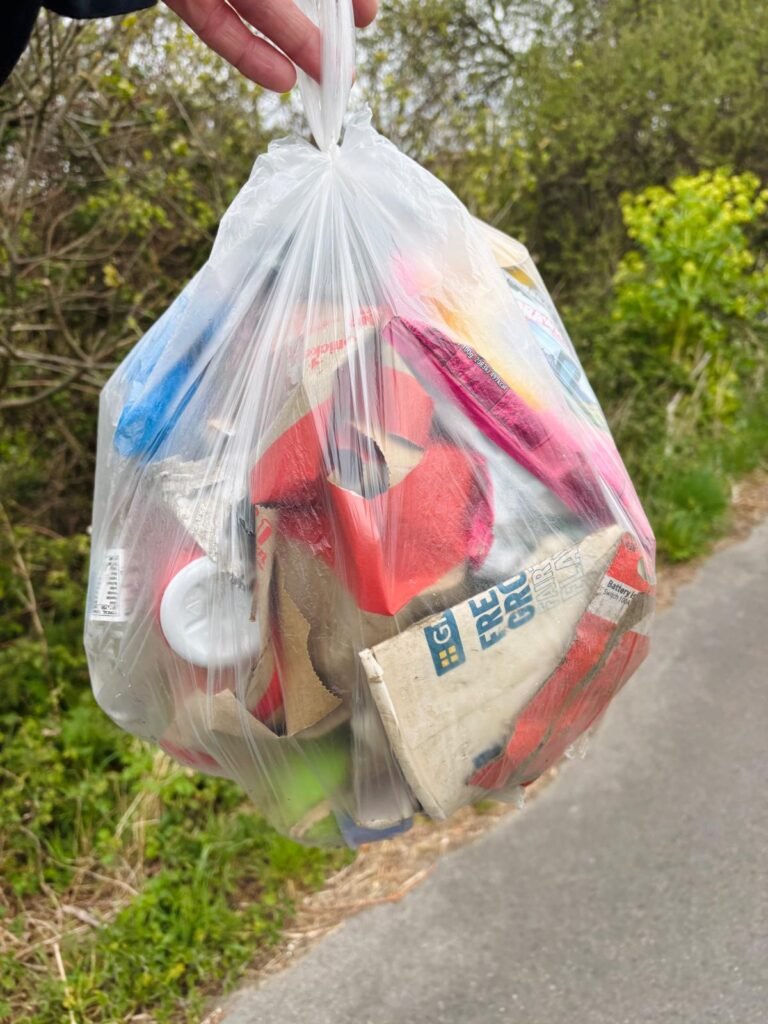
One thing that always comes with me is my litter picking kit. Every camp I carry some gloves, bags and now a pair of litter picking tongs.
It has become part of my routine and something I do every time I head out. I got the idea after watching a Canadian YouTuber called Steve Wallis clean up around his camps.
I thought it was an awesome idea and something I could do. Giving back to the place that gave to me, and taking a few minutes to leave them better is the least I can do.
Sometimes it is only a few pieces of rubbish. Sometimes it is a lot more. Every little helps, and I’d now feel strange leaving without doing it.
Litter picking has become one small part of the way I camp, alongside keeping a low profile and leaving as little trace as possible. I talk more about that in The Way I Wild Camp – Quiet, Stealth and Low Impact.
Why I Keep My Kit Simple
I am not deliberately trying to be ultralight or sacrificing comfort to keep the weight down. My kit is already stripped back but it contains everything I need.
I have always travelled light and always done it this way. When I backpack around the world, I always use a small rucksack. I am a creature of habit. And after years of travelling and camping, I know what works for me.
My Final Thoughts
The best kit isn’t always the newest or most expensive. It’s the gear that works for you. And if you have an uncomfortable night, you’ll be home in the morning.
Thanks for reading.
Dan


[…] It’s one of a few items that now comes with me on almost every summer trip. What I Take on a One-Night Wild Camp […]
[…] If you’re interested in exactly what I currently carry and why, you might also enjoy reading What I Take on a One-Night Wild Camp. […]