
Exploring Grovely Wood, the Roman Road and Handsel Trees

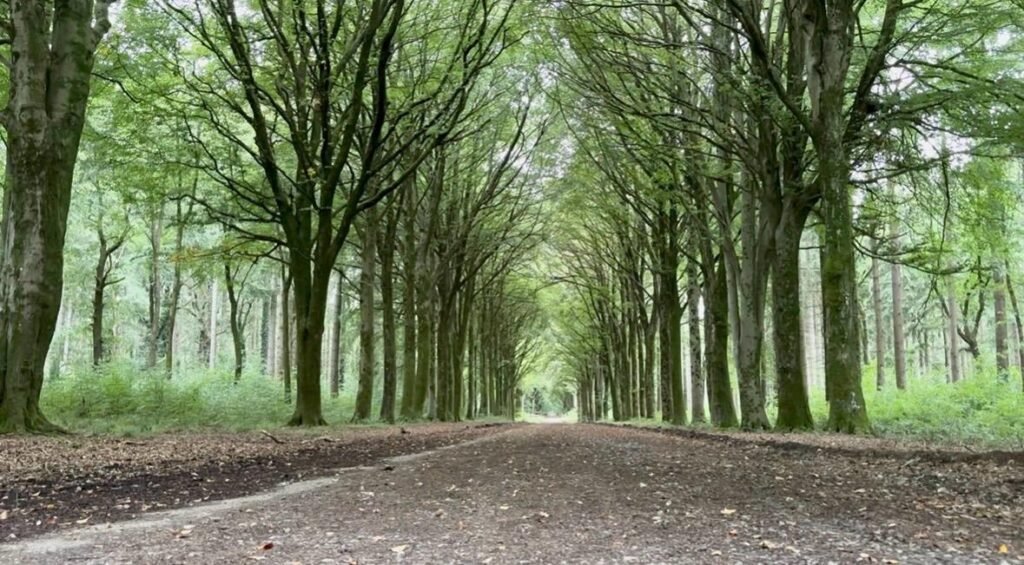
Grovely Wood, the nearby Roman Road and the Handsel Trees make this a very interesting part of Wiltshire to explore.
My first visit to Grovely Wood was a magical experience. I’m not sure whether it was a case of being in the right place at the right time, or whether I needed a quiet and varied woodland after a busy week. Whatever the reason, I felt good to be there from the moment I arrived until I left.
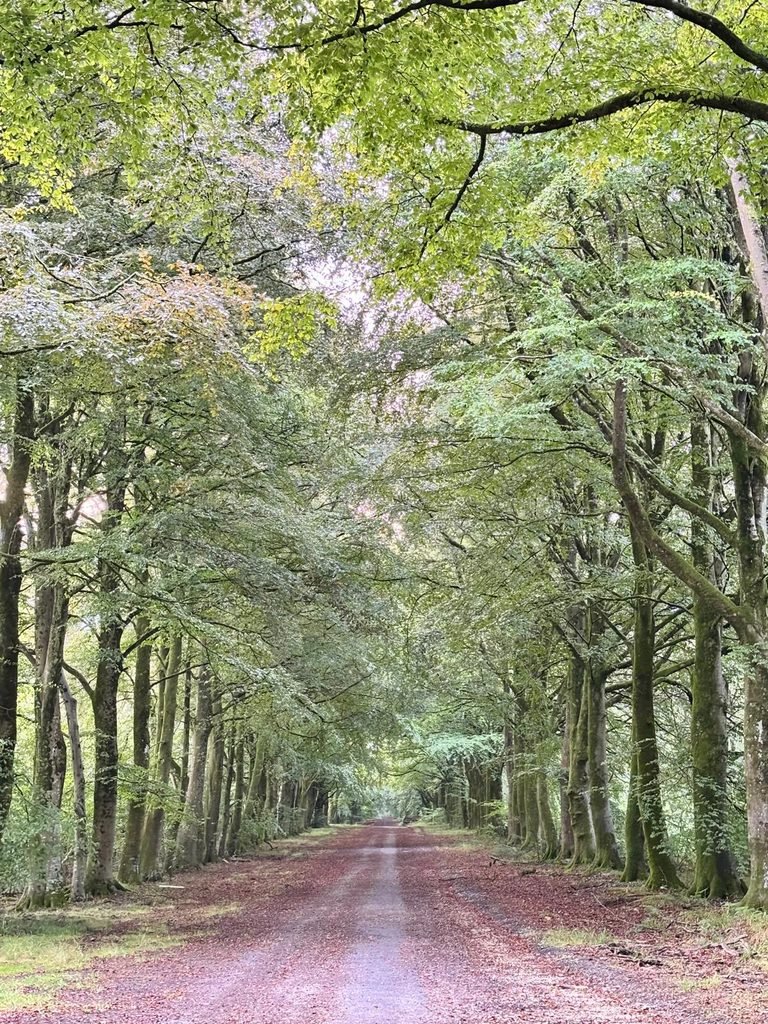
My return was no different. I retraced my steps, walking along The Hollows, a lane that leads towards the entrance gate at the end of First Broad Drive, which is said to follow the route of a Roman Road. The route passes through the Wilton Estate and is lined with stunning mature beech trees.
They look impressive at any time of year, but this visit was during the first week of September, when the leaves were still on the branches and the woodland was full of colour. Previously, I had visited at the end of winter when the trees were bare.
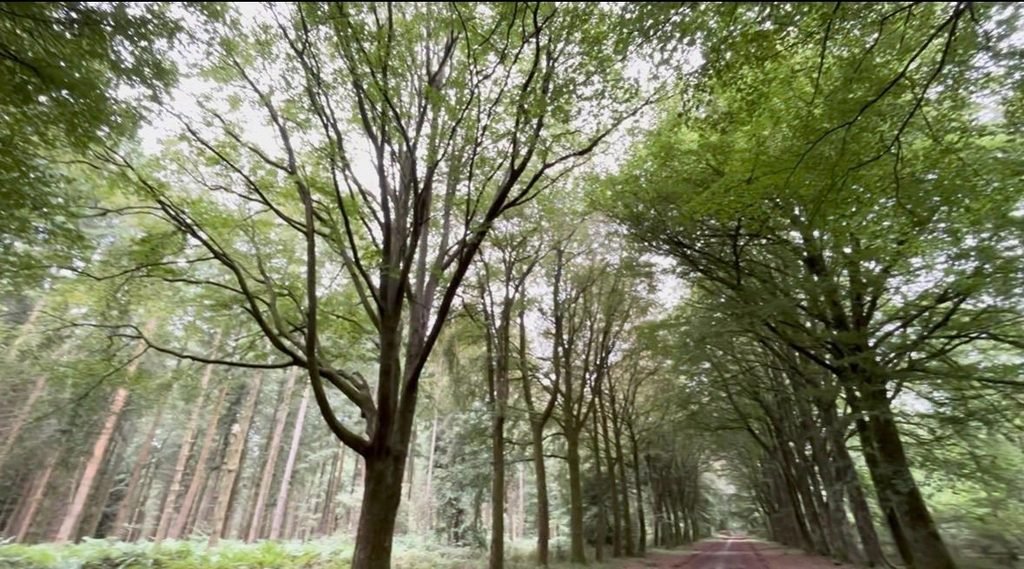
I was completely alone as I wandered along, taking in the sights and sounds of the forest. To my right, behind the beech trees, was an area made up mainly of mature native woodland. To the left, the trees were largely plantation trees grown for commercial purposes.
There are a few exceptions. A little further along the road stood three enormous old beech trees. Their trunks were gnarled, and they had a very different appearance from the trees around them. These were the Handsel Trees.
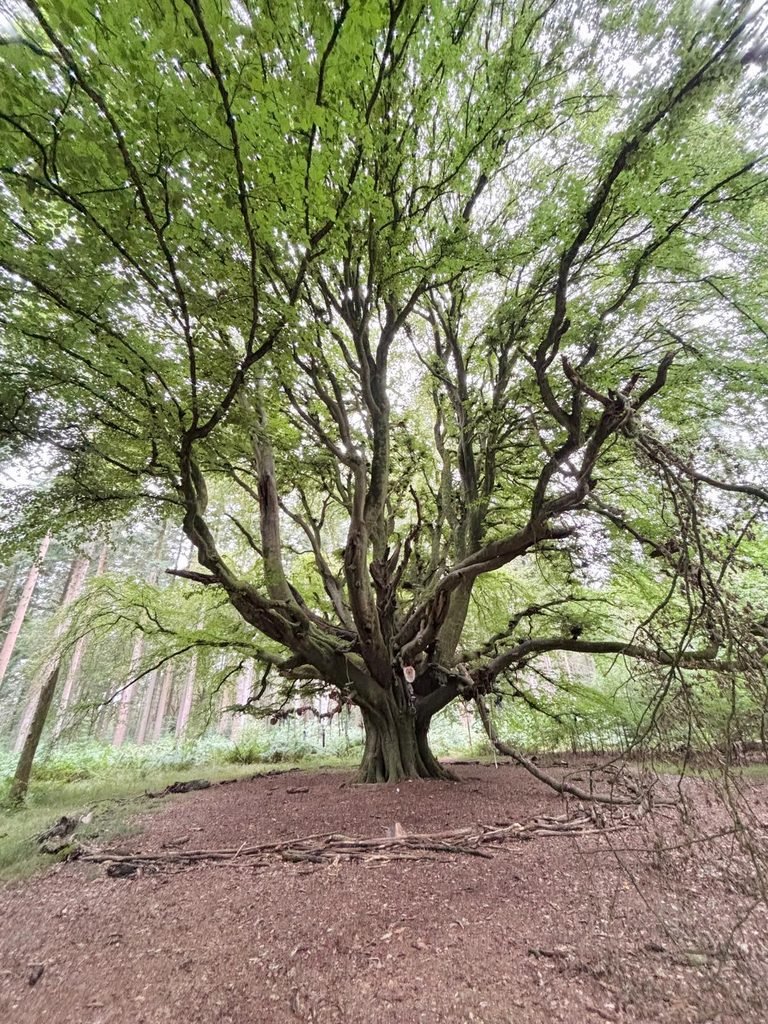
The Handsel Trees
When I first visited Grovely Wood, I knew absolutely nothing about the Handsel Trees. I didn’t even know they existed until I came across them by chance.
On that first visit, I found two of them. It wasn’t until I returned home, searched for more information and read about them that I discovered there were three trees still standing. Apparently, one fell in a storm.
A small trail leads from one tree to another. Two of the trees have charms and ribbons hanging from their branches. One is particularly well decorated, with a border around its base of branches and twigs. There are also small trinkets placed in hollows in the trunks and around the roots.
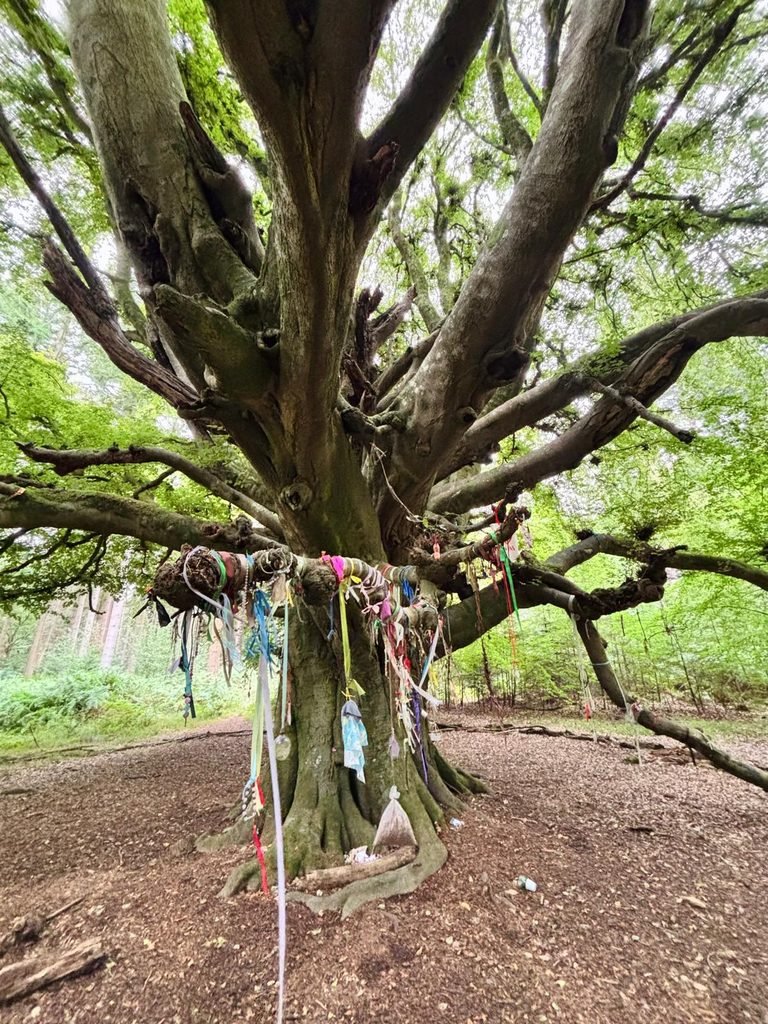
The trees are connected to a local legend about the Handsel sisters. There are conflicting details surrounding the tale, or folklore, but many stories say that four sisters were of Danish origin and had moved to the Wilton area with their parents around 1737.
The story goes on to say that shortly after the family moved to the area, an outbreak of smallpox appeared, killing 130 people in the local community. The local people supposedly blamed the sisters and accused them of witchcraft.
The legend says that the sisters were taken into the forest and murdered, with some tales saying the trees sprouted by themselves where the sisters met their end, while others say they were planted over the graves.
There are different and conflicting versions of the story, but whatever the truth behind it, there’s no denying the trees are striking and it makes for an interesting tale. Standing among them, looking up at their massive branches reaching outwards, and seeing the ribbons and offerings, gives the area a wonderfully unique and magical atmosphere.
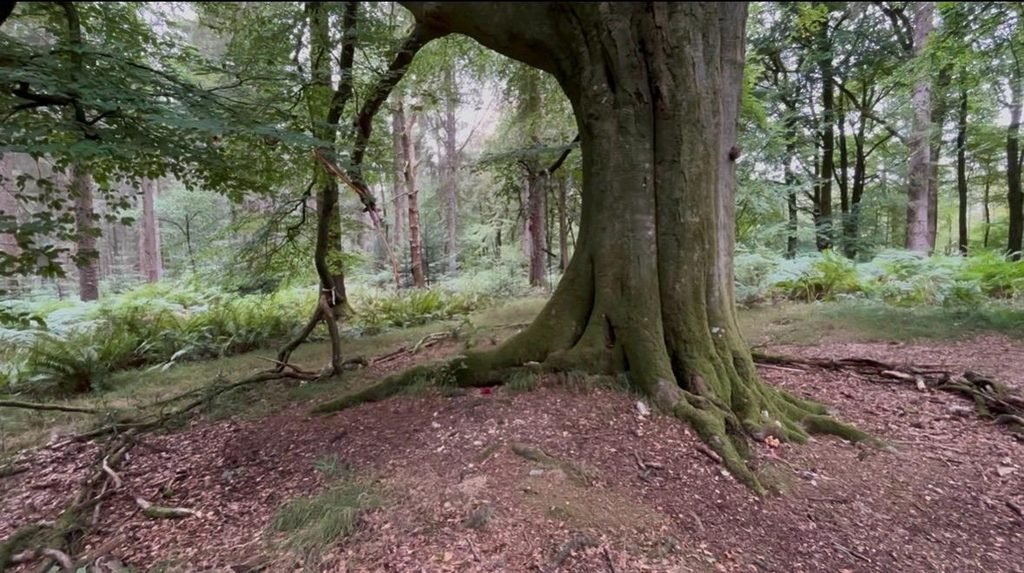
With not a soul around on either of my visits, the area had a very quiet, enclosed and slightly mysterious feeling. I spent some time walking between the trees before returning to the Roman Road.
Along the Roman Road
I saw and heard no one as I continued on my way. The long road stretches through the trees and into the distance, and I felt pretty small. The mature beech trees stood on either side, creating a long, enclosed passage through the woodland.
The further I walked into the woods, the more noticeable the sounds of the forest became. There was very little in the way of background noise from the surrounding roads. Instead, the birdsong and the movement of the trees in the wind became the dominant sound.
The woodland also shows signs of being a working forest. Old tree trunks that had been felled were piled up in sections beside the road. At the far end of the road, near another gate, an old, rusting piece of farm machinery lay in the grass.
There are many paths and tracks to follow that lead in different directions. There were also many signs attached to trees along the road, marking rights of way and private property. From all the signs, I presume people venture off into places they shouldn’t.
During the whole time I was there, I saw only two cyclists and nobody else the whole time I was there. Both late in the day and along the Roman road.
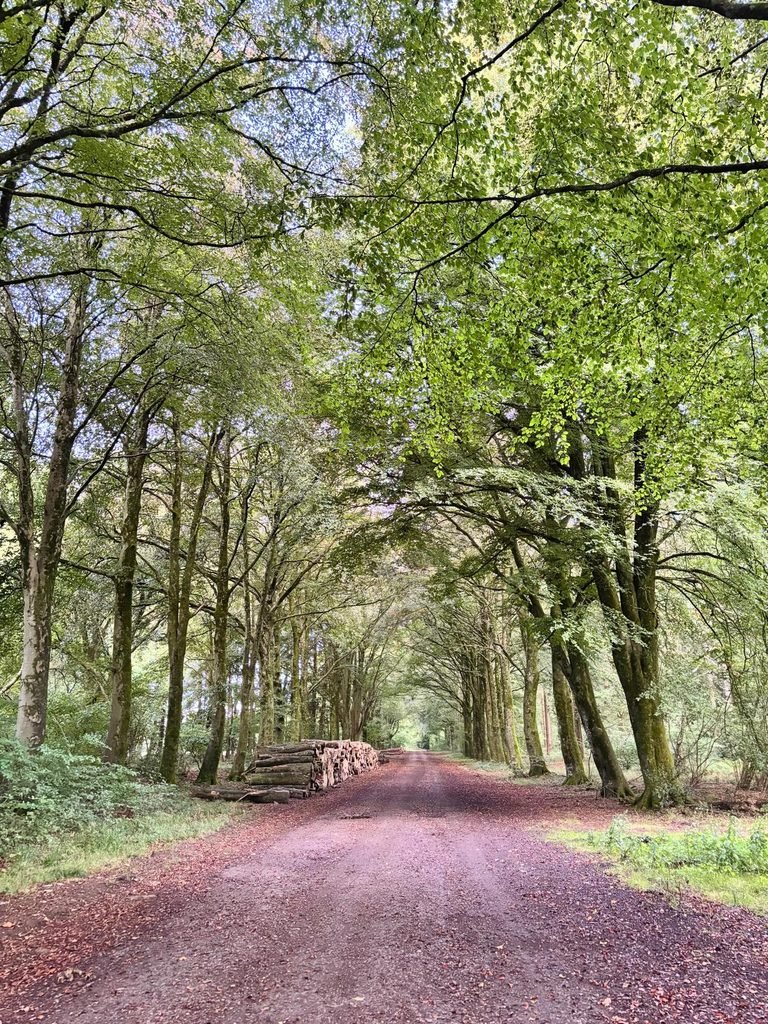
At the end of the Roman Road and past a gate, the track leads right to a bend in a road, but where I turned left and followed a trail into more woodland that was filled with the noise of birdsong. The trees here were more mature and mainly native woodland.
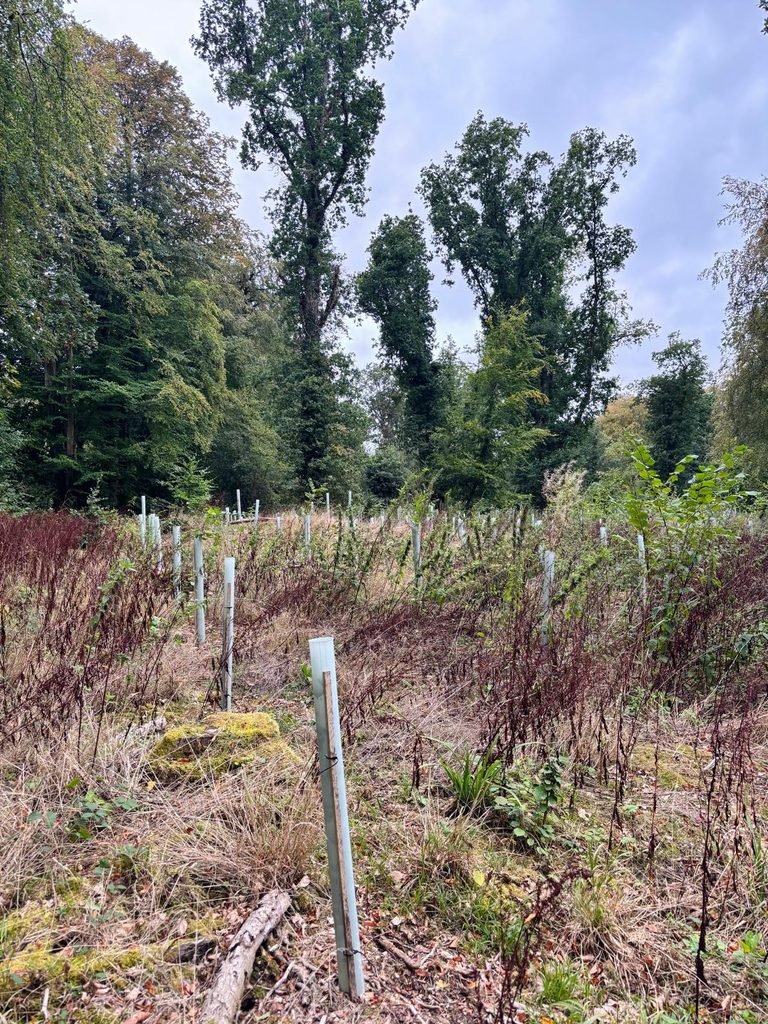
To my right was a large area of young planted trees, including beech and birch, which were protected from the deer by cylindrical plastic tree guards. It was great to see new native tree species being planted, rather than a commercial crop.
The trail eventually brought me onto a road that curved through the woodland, with two properties. I took a turning, passed through another gate to prevent vehicle access and followed a hard dirt and stone road that continued further into the trees.
It wasn’t long before I took a right turn that took me deeper into what felt like a dense, wild woodland, with branches encroaching onto the narrow path. The woodland had changed and the birdsong increased in volume.
Muntjac in the woodland
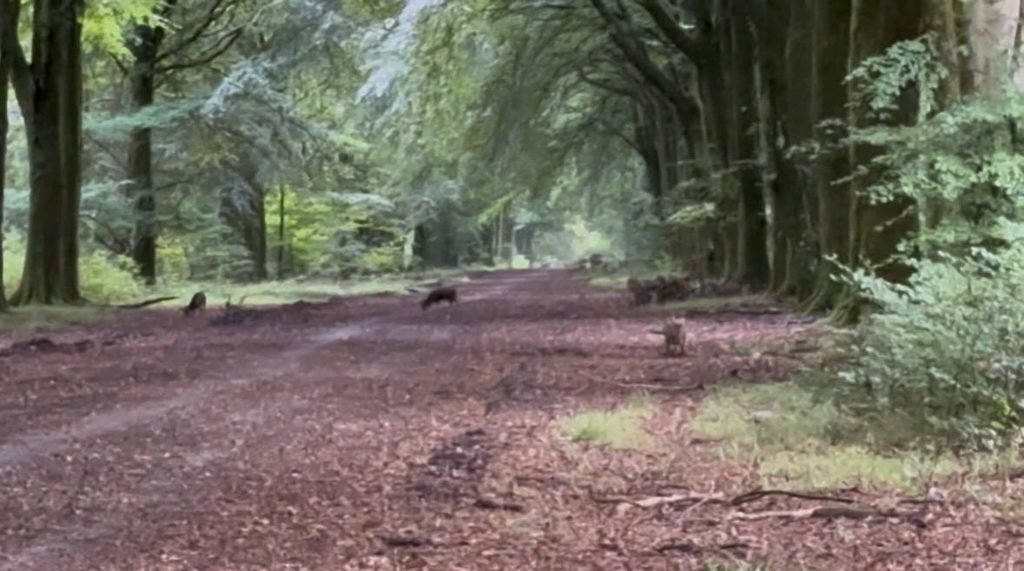
I could hear muntjac deer being startled by my presence in the thick undergrowth. My first encounter with these small deer had been an interesting and memorable one on my previous visit.
During the night, I had heard this unfamiliar sound and I had no idea what was making it. In the morning, and on my walk back, I kept catching these glimpses of a small animal with a white, fluffy-looking tail that kept disappearing into the undergrowth as I approached.
I tried many times to film one, and I finally managed to capture a brief, semi-clear video of the back end of one bouncing as it disappeared into the undergrowth.
I still had no idea what it was. I thought it might have been a wild pig. When I returned home, I posted the footage online and tagged a few wildlife experts. I received a reply from wildlife cameraman Hamza Yassin, who informed me that the animals were muntjac deer.
I had never seen one before. Muntjac are not native to the UK. They were introduced to Woburn Park in Bedfordshire and escaped or were released, with the populations slowing spreading over time. They can now be found across much of southern England. Apparently they have been spotted in Dorset and Hampshire, but I had never seen, or even heard, one.
.
I was now entering an impressive part of the forest. The tracks became overgrown, with vegetation narrowing the grassy path. Large Scots pine trees towered above me on one side and dense bush and native trees lined the other side.
At this point I stopped and stood still to watch the birds and listen to them as they swooped down from the taller trees, and darted between the bushes that lined either side of the grassy track. They seemed completely unconcerned with me being there and just continued. I saw a very similar, and equally wonderful scene very recently in Exploring Bentley Wood, Wiltshire | A Quiet Night in the Woodland.
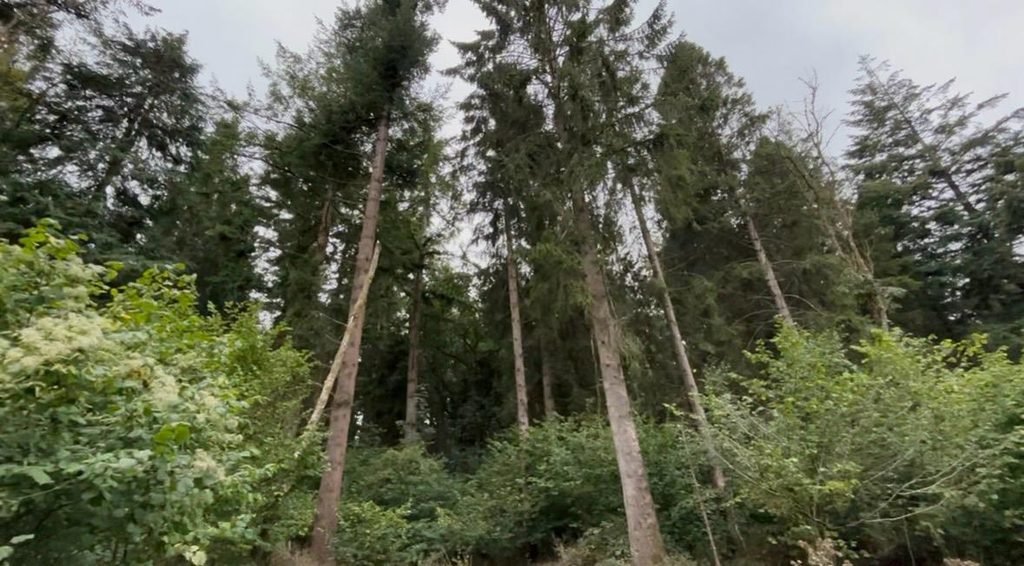
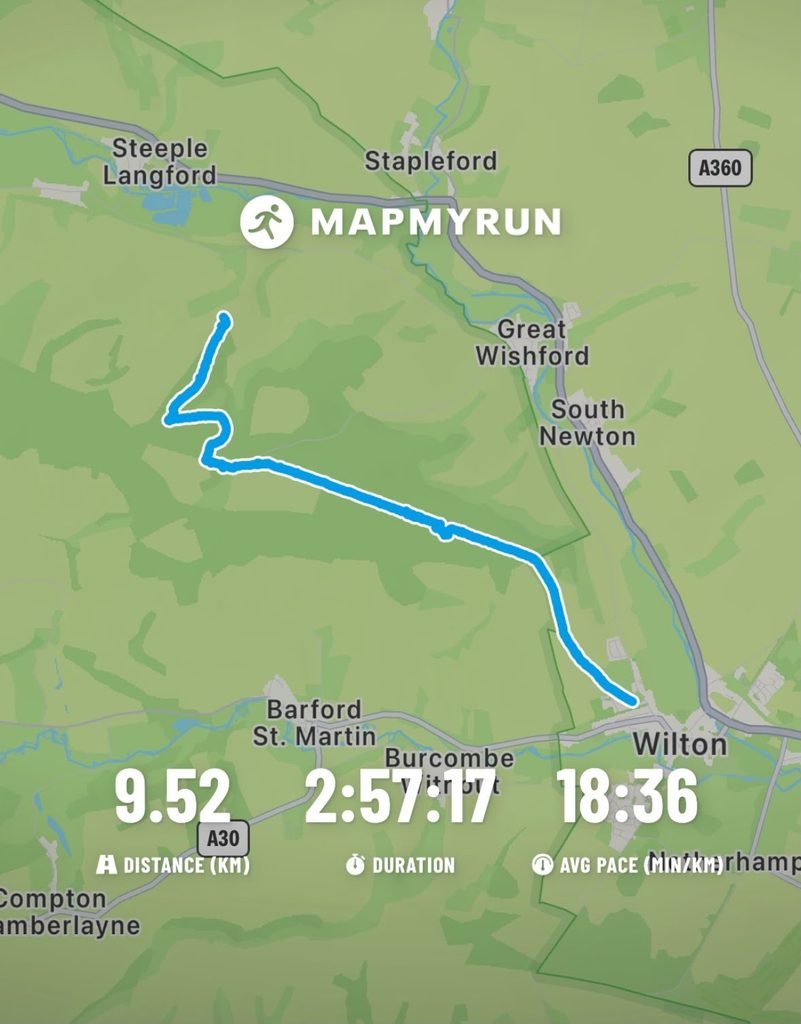
With only a few hours of daylight remaining, I was on the final section of track leading to Grovely Castle and the trig point of the same name.
I remembered this section well from my previous visit. It had been very overgrown, with many fallen trees blocking parts of the route. This time, most of the trees had been cleared and moved to the side of the trail.
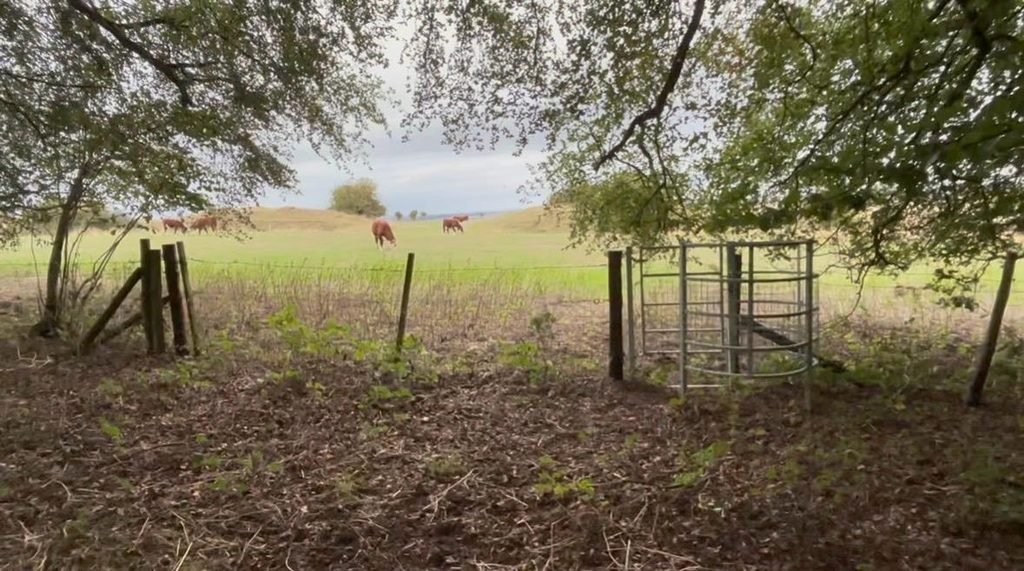
A couple of newly fallen younger trees were across the thicket-lined trail, which meant one climb over and a few short detours through the thicket. Eventually the trail brought me to the kissing gate leading out onto the grassy hillfort of Grovely Castle.
Grovely Castle
Once I reached the kissing gate that allows passage from the woodland onto the grass of Grovely Castle, I was greeted by a sight I didn’t expect. Instead of an empty and quiet hillfort, I found it full of young bulls.
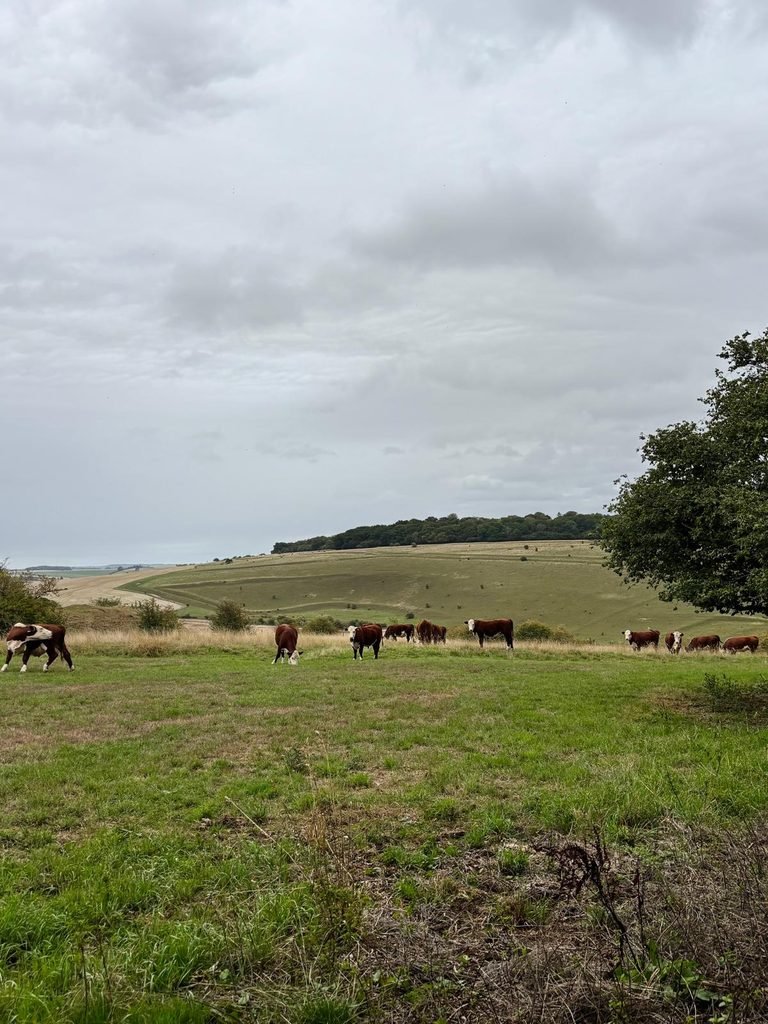
There were many of them grazing and playing about on the grass. A group of young bulls is not a sight I really wanted to see. I have always been cautious around cattle, as I have had a few unnerving encounters with groups of young males in the past.
I know that cattle can be inquisitive, and I always give them plenty of space and a wide berth. I’ve watched many videos on walking through cattle, and most of the time I’m fine. It’s only in late summer and with fields of males that I’ve had issues with.
They did notice I was there and looked in my direction. I watched them for a while as some were mounting each other, and some were locking horns in a tussle.
Eventually, I decided to go for it and head through the gate. My plan was to just walk across the flat grass and reach the ramparts where the trig point stands. In retrospect, I should have left my bag in the woodland and continued without it. I would have been more nimble and agile.
As I walked across the grass, the cattle all paused, staring at me. They didn’t make a move as I tried to look confident and calm as I scaled a small rampart.
Once at the top, I bagged the trig and thought to myself, “That was easy.” Then I noticed a group of cattle to my right getting very excited running and jumping as they ran through a gap in the ramparts to join others in the field on my left.
They seemed to be led by a larger, older-looking male as they paused. This is when I began to think about the route back to the gate. With the kissing gate in front and to the right of me, and all eyes on me – I took my chance.
I headed down the rampart and jogged towards the gate. I wasn’t going to wait for them to block my path. The cattle did noticed me, but they didn’t immediately follow. But it wasn’t long before they reached the edge of the field, where a flimsy wire fence separated us.
It was roughly an hour and a bit before sunset, and I definitely wasn’t going to be spending the night around here.
Finding a way back
Rather than follow the route I had taken earlier, I gambled on trying a couple of shortcuts that took me deeper into the woodland. One grass trail led into another, and finally I spotted some muntjac deer feeding on the grass of the path in front of me. They spotted me and darted off. But it was good to see them.
I continued through a mixture of young and mature trees. The forest floor was covered with fallen branches, brambles, bracken and other debris. It was a shortcut and looking at the map, I was about to emerge close to the gate at one end of the Roman Road. By now, it had started to drizzle, and the light was fading fast. I found a suitable place to stop and settled down for the night.
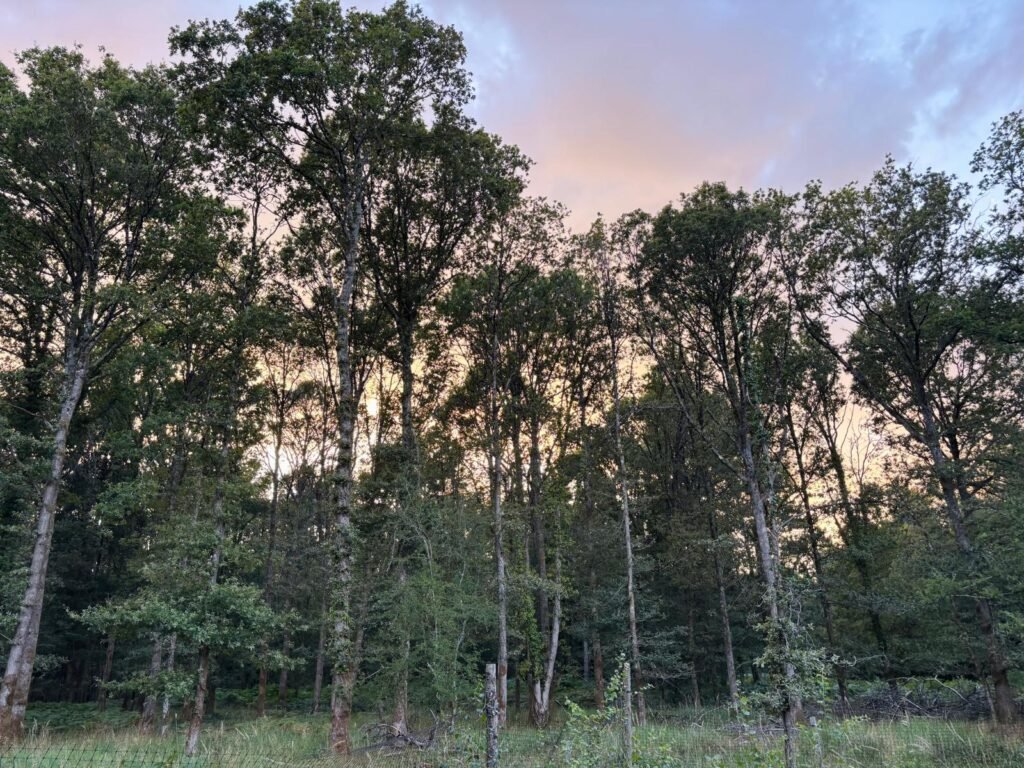
The morning after was a wonderful sight, as the rain had cleared and the dense woodland was alive with the sound of birdsong. The early morning light was hazy as it made its way though a slight mist.
After a coffee, I left the section of woodland and emerged onto the the Roman Road, close to the second gate I pasted through at the end of the Roman Road.
Once again, I was alone and I was loving the feeling. The beech trees stood along the road in the early morning light, and the sound of bird song continued all the way along. There was not a person in sight as I took my time and enjoyed the moment.
There was no reason to hurry. Moments like this are rare, and they are worth taking the time to savour them.
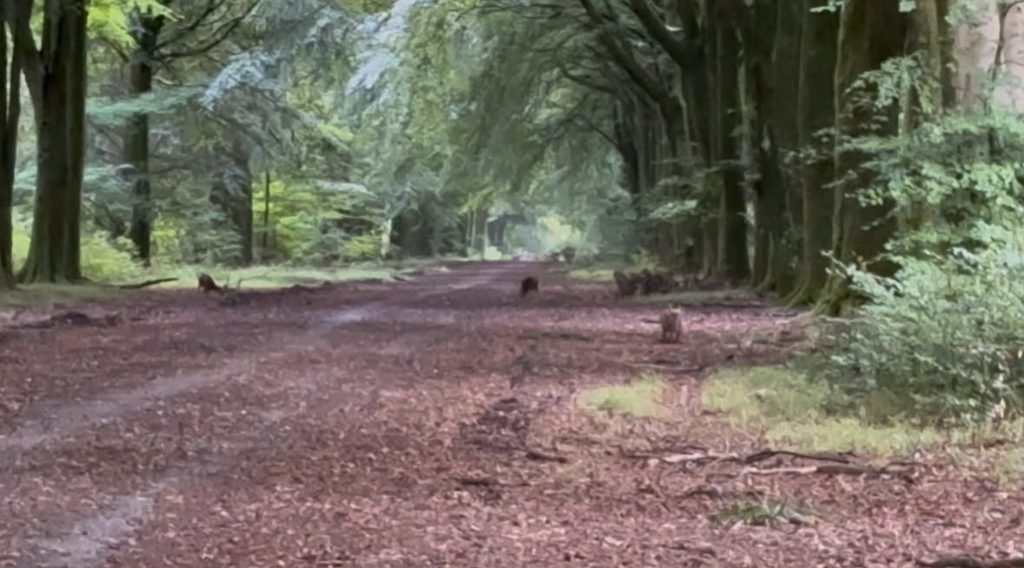
I began to see more muntjac deer feeding at the sides of the road, totally unaware of my presence. I was able to get closer at each encounter, until my foot steps or the snapping of a twig gave me away.
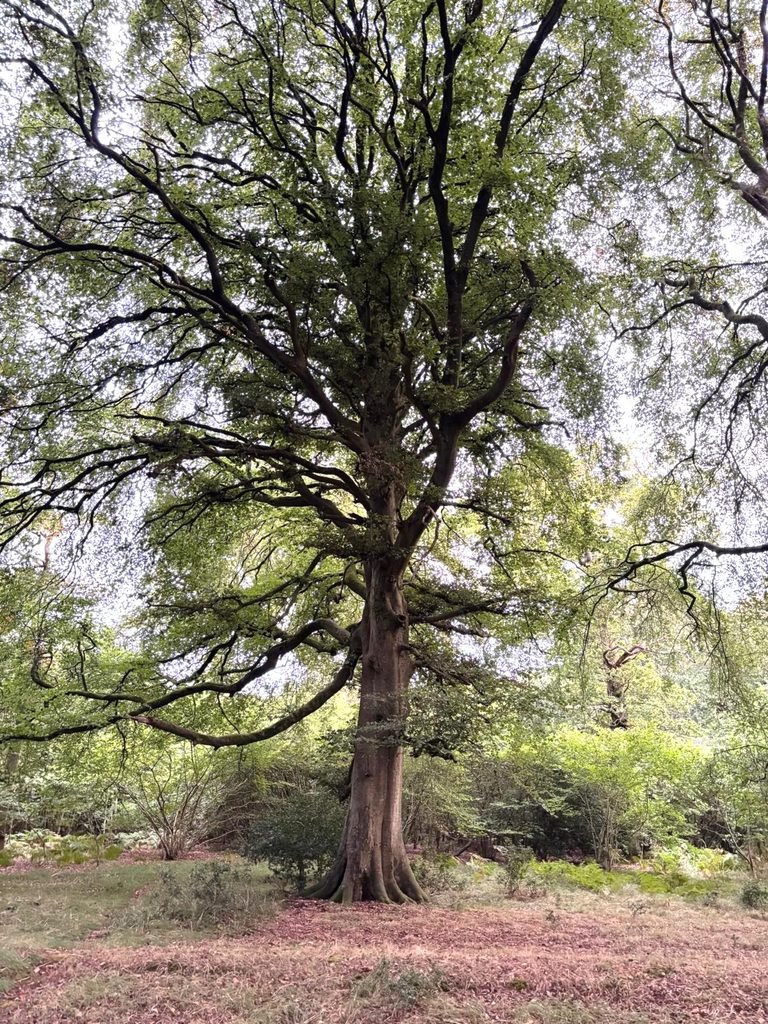
Before leaving this wonderful beech-lined road, I made one final stop at one of the Handsel Trees to admire it one last time, before exiting the woods and beginning the journey home.
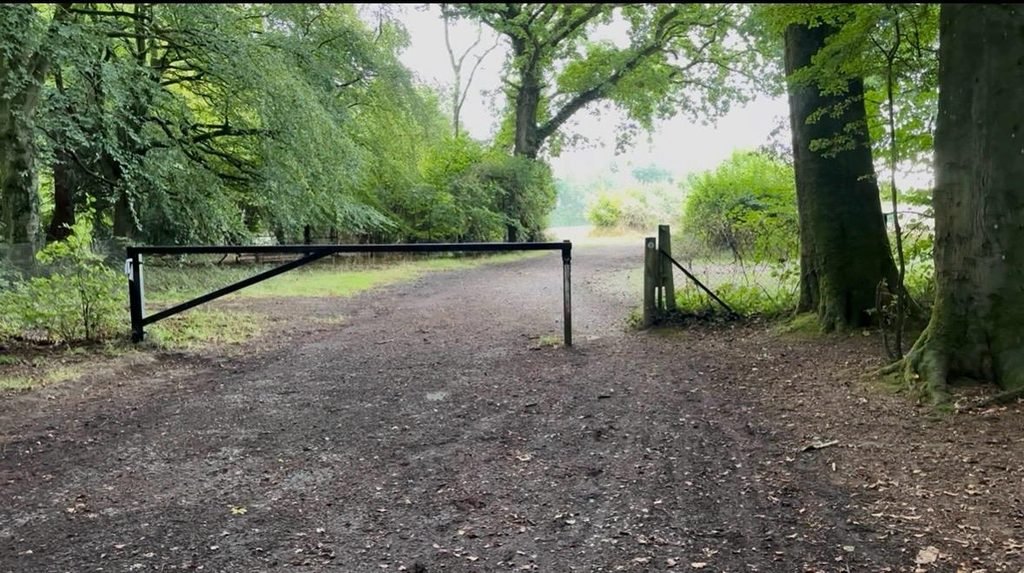
My return to Grovely Wood had been another wonderful experience. This place is absolutely magical. On the two occasions I have visited, I have hardly seen anyone, having the sights and sounds of the place almost entirely to myself.
The Roman Road lined with old beech trees, almost like sentinels standing to attention, the Handsel legend, the dense forest of Scots pine, the birds, the muntjac and the unexpected encounter with the cattle all made my time here memorable.
I’m sure I’ll return again, as I spotted some interesting hills I’d like to explore.

[…] hit and miss, but it’s not too serious and works for us. I took a similar approach when exploring Grovely Wood, following the paths and seeing where they […]