
Exploring Stoborough Heath and Hartland Moor
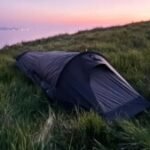
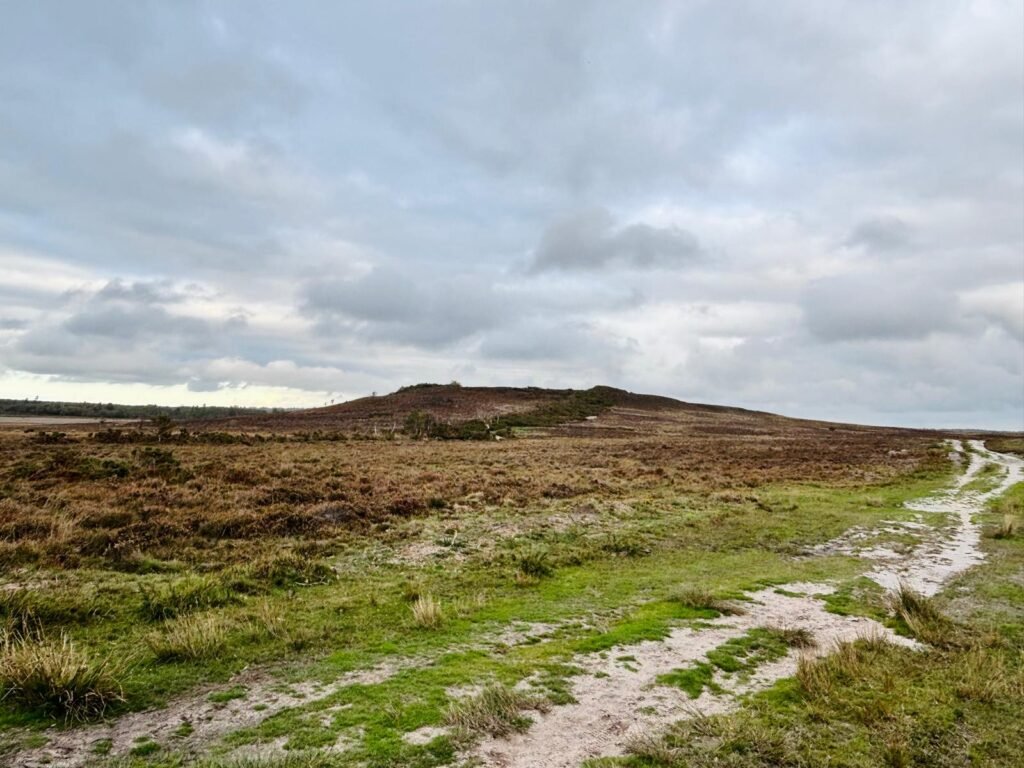
Stoborough Heath and Hartland Moor are familiar places to me, but usually as somewhere I pass through on the way to somewhere else. I have crossed Stoborough Heath on the way to other parts of the Purbecks and walked across Hartland Moor on the way towards Studland, Arne and the forests around Wytch Farm. This time, I wanted to slow down and take some time to explore them properly.
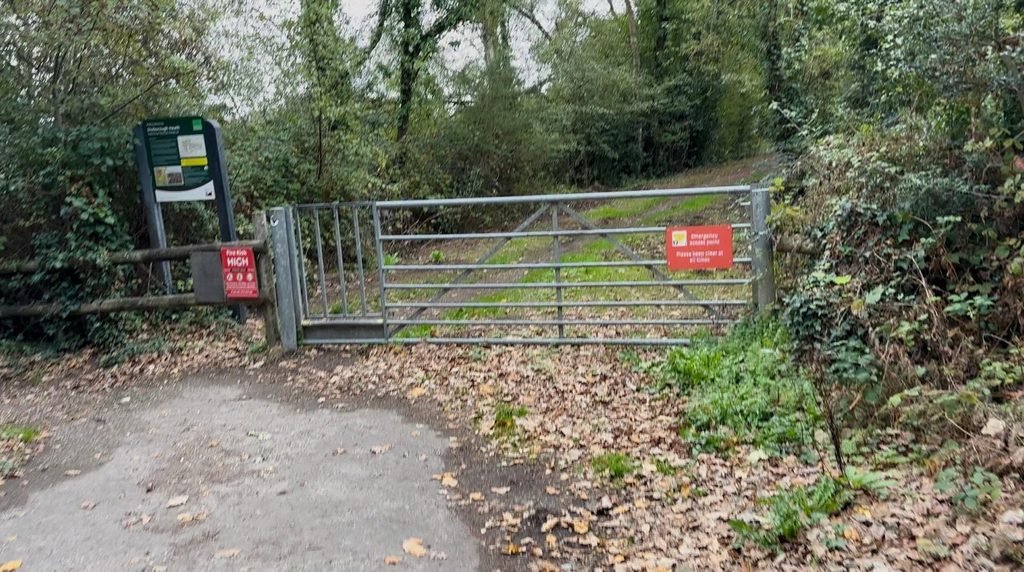
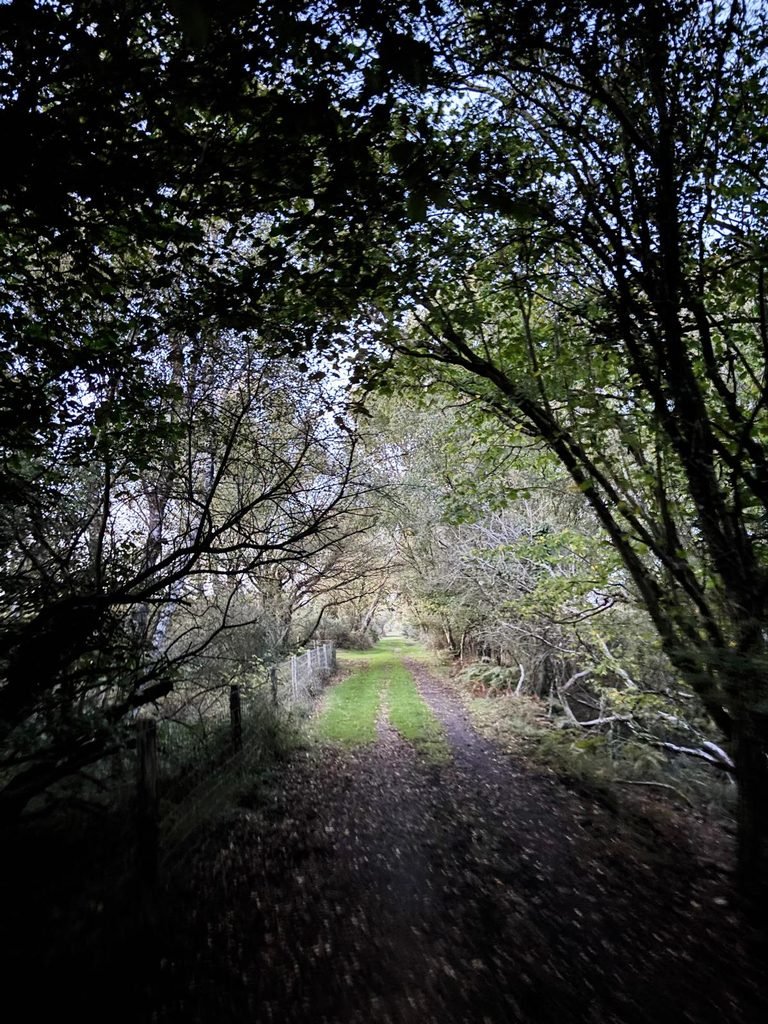
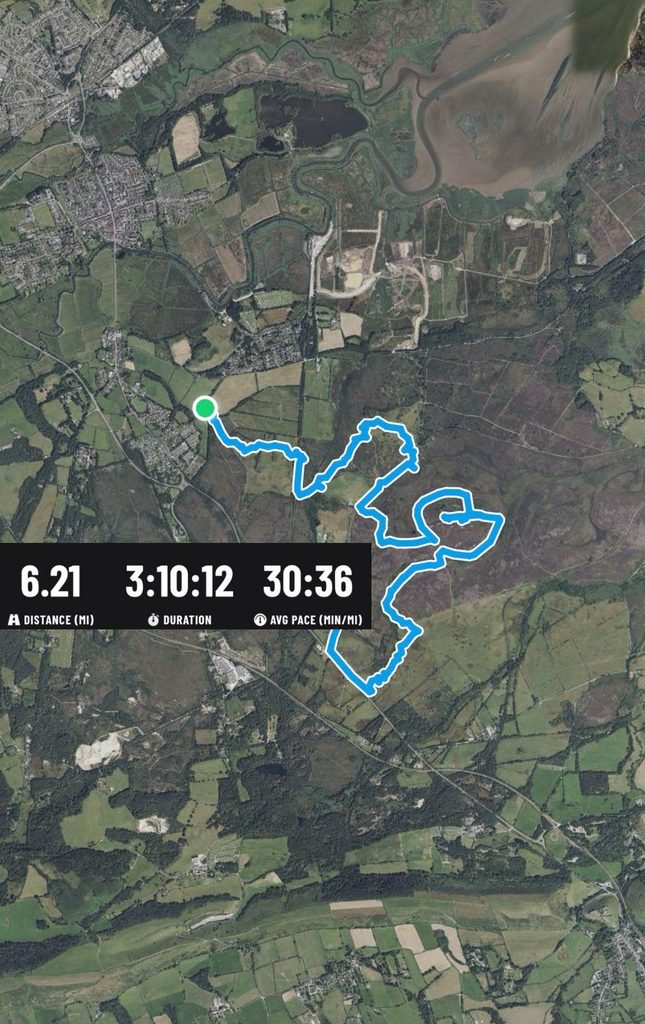
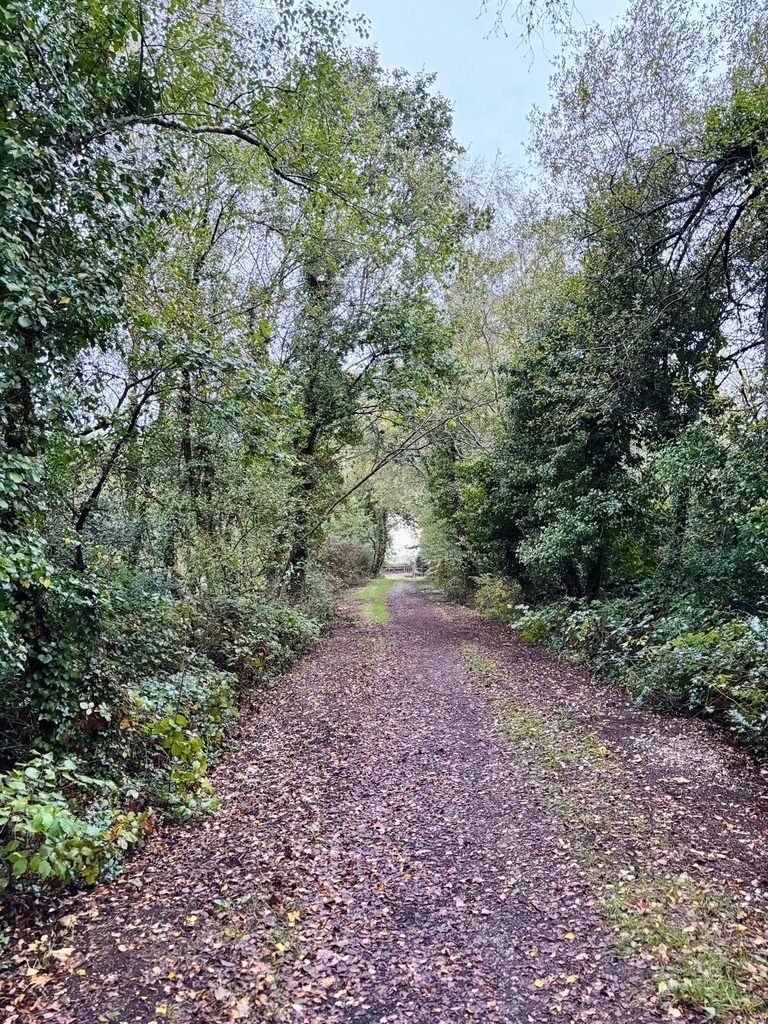
I let the train take the strain and got off at Wareham. From there, it’s around two miles to Stoborough Heath, following the road through Stoborough and Stoborough Green before turning onto New Road. A small entrance leads from the road onto a tree-lined path and out onto the heath.
It had been a while since I’d walked this route, but as soon as I stepped onto the heath, the familiar paths came back to me. I let muscle memory take over and followed the tracks straight up the first small incline, marked by a pile of white rocks. From there, I crossed patchy grass, walked through scattered trees and came out into a more open stretch of grassy ground.
A very straight, raised trail cuts across the heath from Arne Road towards the A351. This very striking feature is an old tramway which used to run from the clay pits close to Furzebrook and is known as Pike’s Tramway. The ground beyond this can be boggy. I followed the route around a hill towards Soldiers Road, which runs between Stoborough Heath and Hartland Moor.
Into Hartland Moor
I have crossed Hartland Moor many times before, usually keeping to familiar and dry paths around its edge. In the middle stands a raised mound or hill that I had never climbed. That was where I wanted to go.
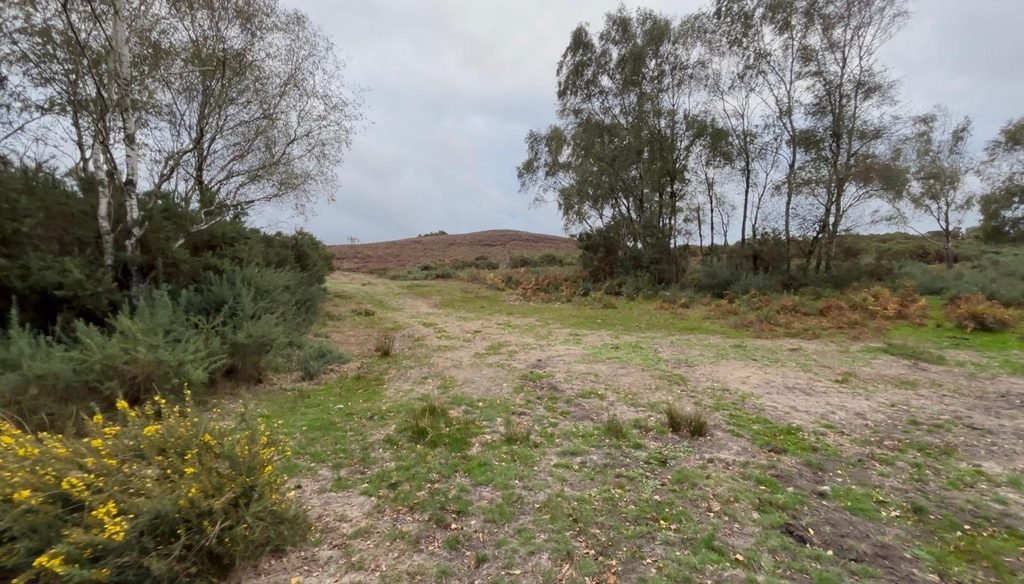
I wasn’t sure of the best way across, so I asked an older gentleman who was carrying a camera for directions. He pointed towards a line of willow trees and explained that I could find the path leading to the mound. I apologised for disturbing him, and set off with his helpful directions which made finding a route towards the hill a lot easier.
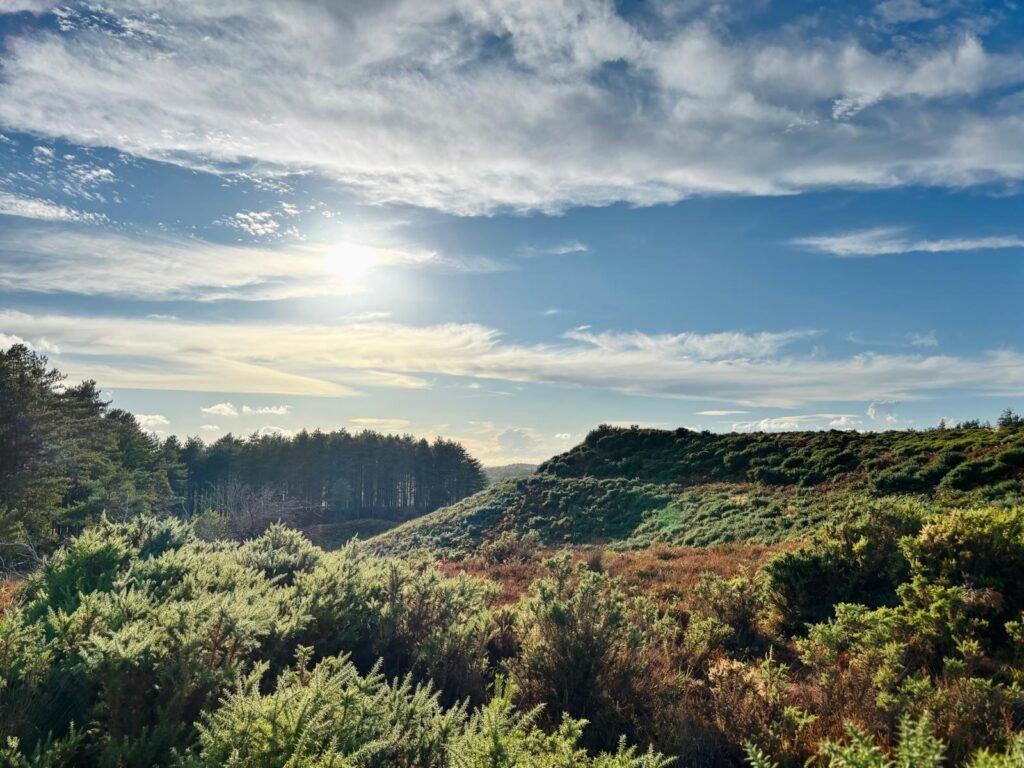
Hartland Moor has a different character from the greener, grassier areas of Stoborough Heath. It is open and exposed, with broad stretches of low heath and moorland grass. The odd silver birch and willow stand out across the moor. In other areas, clusters of trees grow around stagnant bogs and gullies that can become small streams in wet weather. Even when the surrounding heath looks dry, I think water lingers beneath the trees in these areas.
There is a path that circles the mound, and I followed it until I found a way up. What looked like a track had been cut through the tall gorse, with grass growing along its centre. The tall gorse bushes rose on either side, making the path feel like an enclosed passage to the top.
As I climbed, I looked behind me and saw the moor stretching in the direction of Arne. From the top, the Purbeck hills became more visible on the opposite side. Corfe Castle sat in the distance, in the gap between two hills.
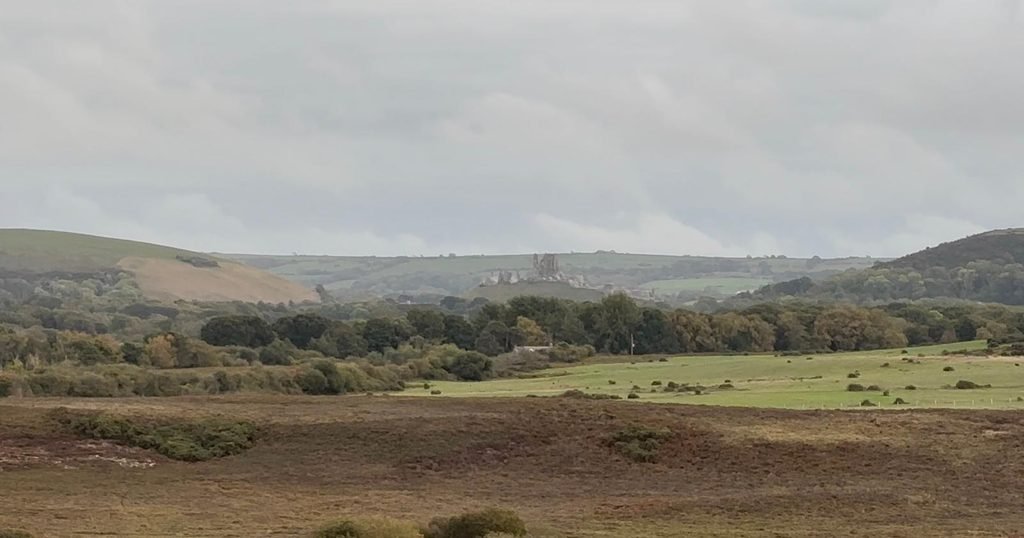
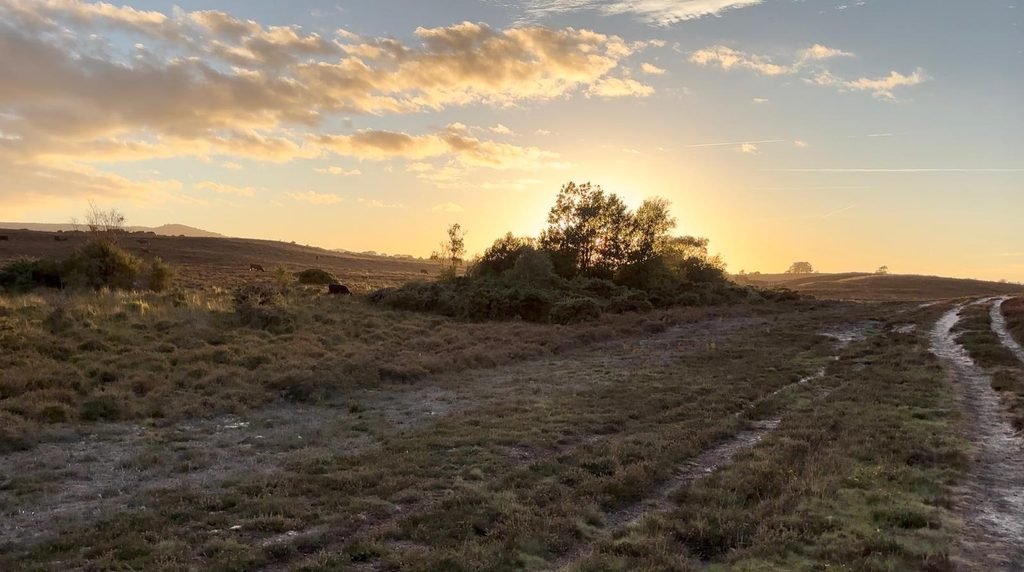
There was a small, white, stubby stone at the top. It wasn’t a trig point, but I tapped it anyway. I don’t know what it is, but I can only describe it as a short, stubby, stone milk-churn shape. The wind was picking up, the sky had a dramatic, unsettled look, and the horizon to the east was wonderfully orange as the sun set beneath the grey clouds.
The colours were muted pastels of browns and greens, with patches of purple heather beneath the grey clouds. Hartland Moor can seem bleak and empty, but in this weather, beneath those big skies, I thought it looked more beautiful than ever. A moor can seem bleak at the best of times, and even bleaker in winter, but I think these grey days bring out the best in it.
A bird of prey over the heath
As I climbed down from the mound and onto the circular path, I was heading into the direction of the setting sun when I could hear birds calling all around me. The sound came from in front of me and behind me, to my left and right. I wondered if it was me they were calling at. I stopped near a group of bushes and took out my phone to record the birdsong and any movement. Shortly after I started recording, I felt an urge to turn to my left and look behind me.
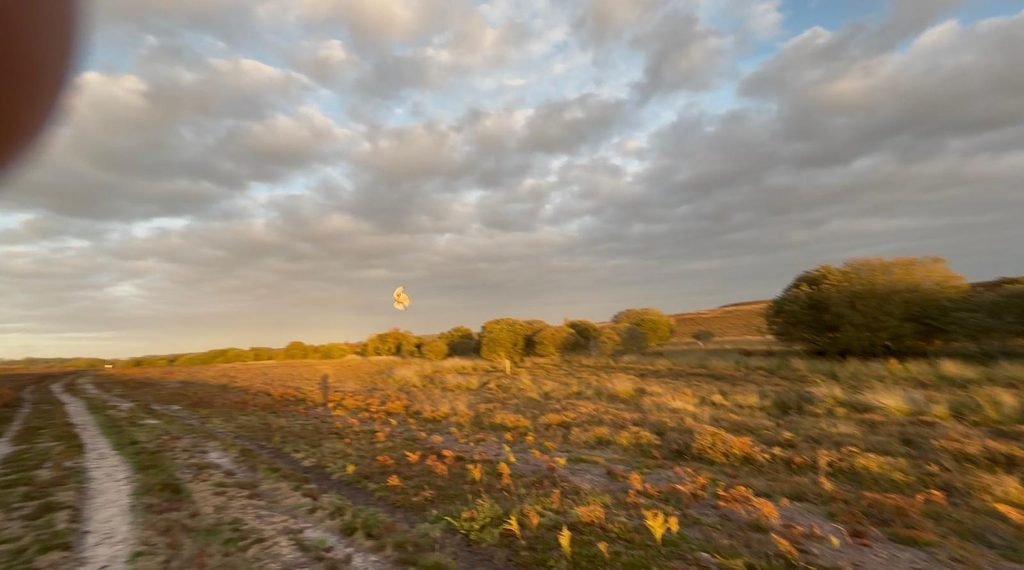
I got a huge surprise. A large, pale-winged bird of prey swept past just a few metres away. It was heading in my direction before changing course sharpely as I turned. Then it flew up the bracken-lined side of the hill I had just come down.
I caught it on camera, although the camera setting made it look further away than it really was. I’m definitely not able to identify it, but it was an incredible moment. I had turned at just the right time. I feel that if I hadn’t turned around, it might have headed straight towards me. But I’ll never know.
The smaller birds were still flitting around the heath, their dark shapes visible against the sky. After the larger bird’s sudden, low pass, I carried on through the gorse and across the open ground, passing more clumps of trees. Some were wonderfully silhouetted, with orange halos from the low, setting sun.
I came across cattle grazing on the moor a short while later. They looked up as I approached, but I kept my distance and continued along the path. Further on, the ground became a patchwork of gorse and flatter grass, with more damp gullies and small groups of trees.
There were several deer in this area. Most disappeared before I could start filming, others bounded away through the grass, their white tails flashing as they went. This area was a mix of open grass, tall gorse and clumps of moorland grass alongside the busy A351. The deer seemed to like it there.
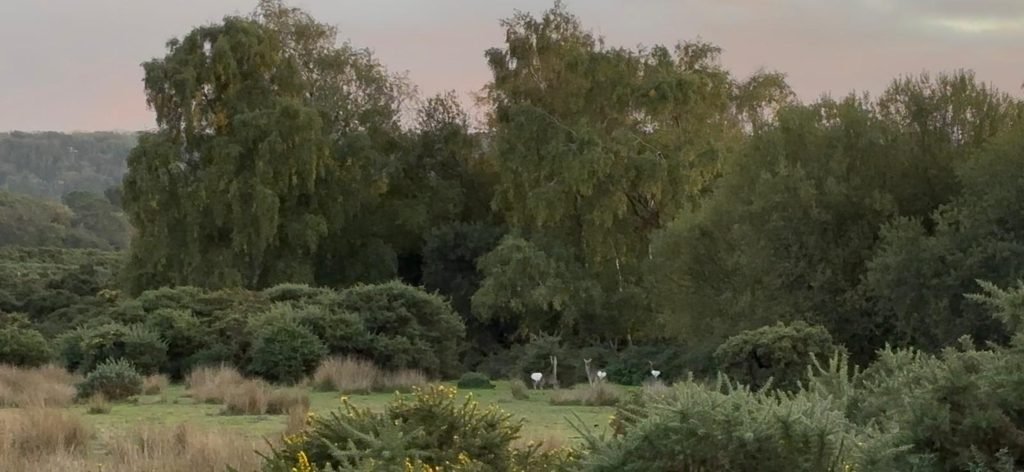
I followed the fence beside a section of private land, then continued along the edge of the heath. The A351 was loud, with only a very tall hedgerow between it and myself. Even so, I caught more glimpses of deer moving through the gorse and moor grass.
The evening light
As the light began to fade, I crossed back towards Soldiers Road and returned to Stoborough Heath. The sky had started to colour along the horizon. Pink and orange clouds sat below the heavier grey ones, and the setting sun illuminated the hills, the tops of the gorse and the dry, brown bracken.
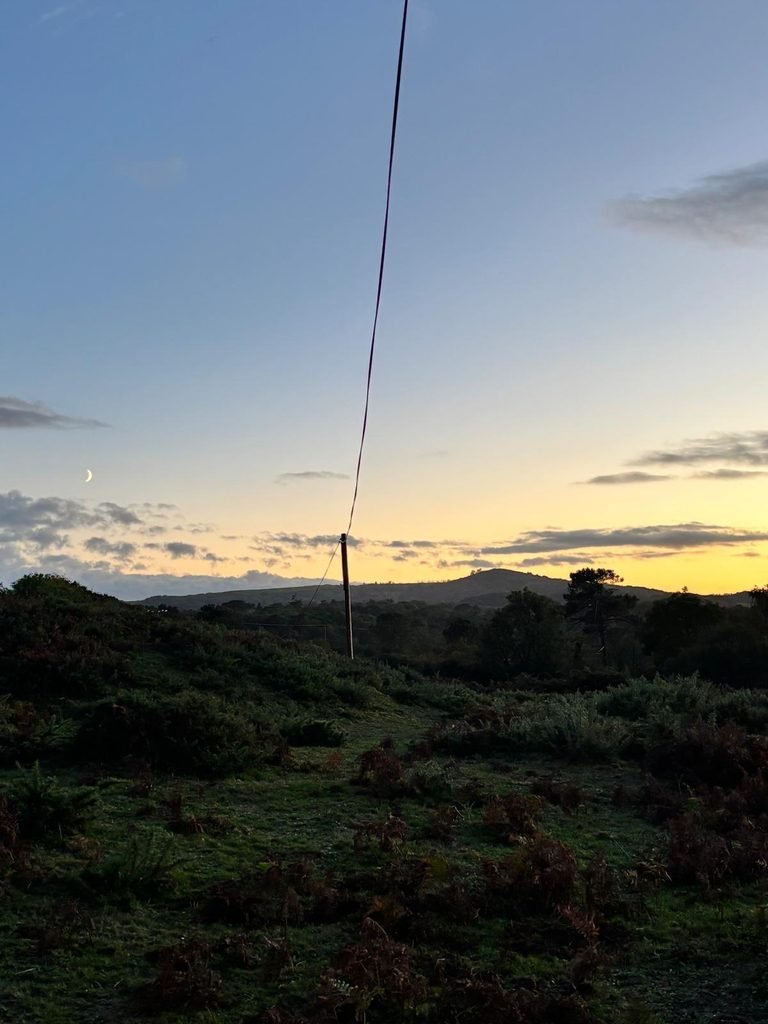
I followed a route through open grass and gorse, then crossed a small wooden platform over a wet section between fallen, gnarled trees. This led me back onto the straight, raised path of the Pike’s Tramway I mentioned earlier. This time branches covered parts of the path, providing a covered walkway. It linked one landscape to another. I left the green grass and gorse behind, passed through a damp hollow, then entered another part of Stoborough Heath, mostly covered with low heather and bracken.
The heath looked especially good in the fading light. The landscape was made up of different shades of brown, and the darker gorse and odd tree stood out against the orange sky. In places, the bushes became silhouettes. The wind moved through the grass, and the wide, open landscape brought back those big skies.
A quieter morning
By the following morning, the weather had changed. It was grey and windy, and the heath felt quieter beneath the heavy sky and the slightly pink horizon of dawn. I didn’t see anyone else as I walked.
From the slightly higher ground of the path, I spotted a deer in a lower, boggy part of the heath. It saw me too, then bounded away through the moor grass, its white tail following behind. It was heading in the same direction I was.
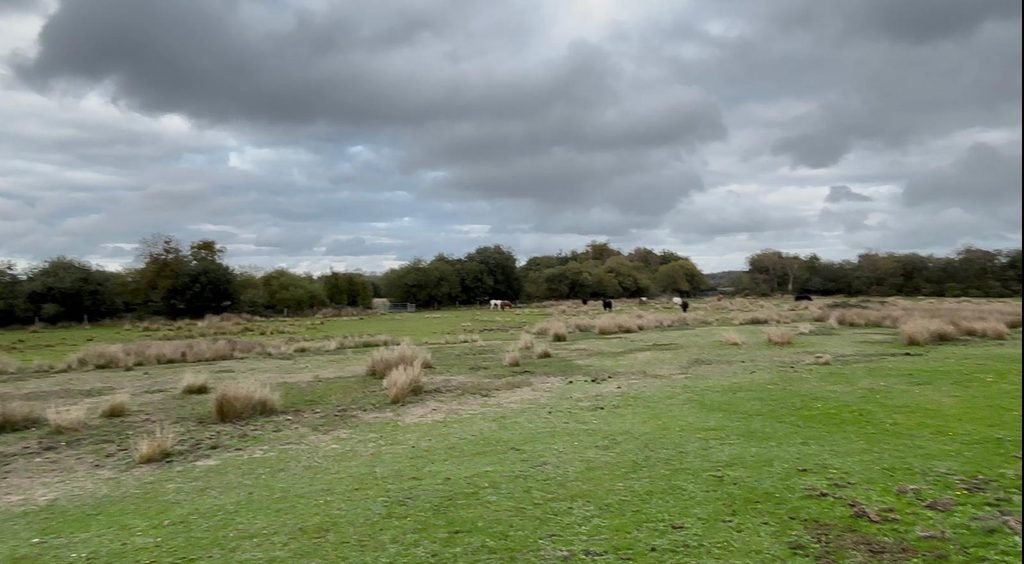
The path I was on led through another strand of trees before opening onto flatter ground, where horses and cattle were grazing on the green grass between clumps of light-brown moor grass.
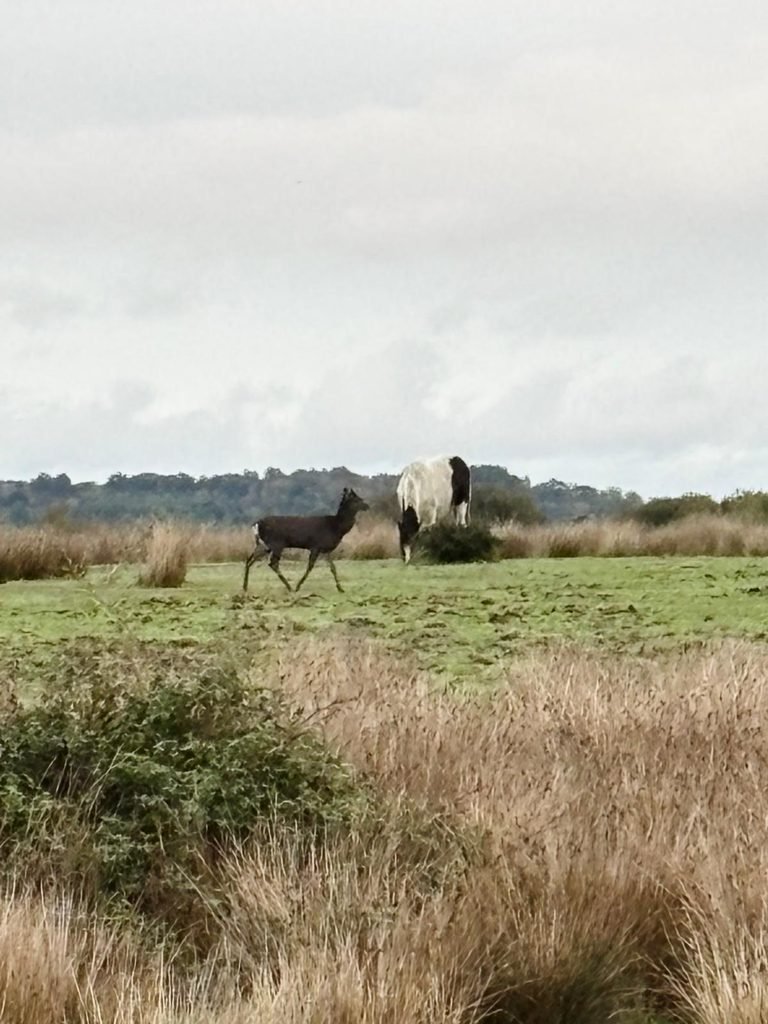
The deer appeared again, walking through the horses and briefly startling a couple of them. They soon put their heads back down to carry on grazing. They were completely unconcerned by me. The deer then slowed to a gentle walk and continued between them.
It was a lovely thing to watch. The horses’ calmness and lack of concern at my presence seemed to reassure the deer. If the horses didn’t see me as a threat, perhaps the deer didn’t either. It continued to walk slowly, and for a short moment all of us shared the same stretch of heath without disturbing one another. I watched as the deer moved away through the grazing animals, then continued towards a group of trees.
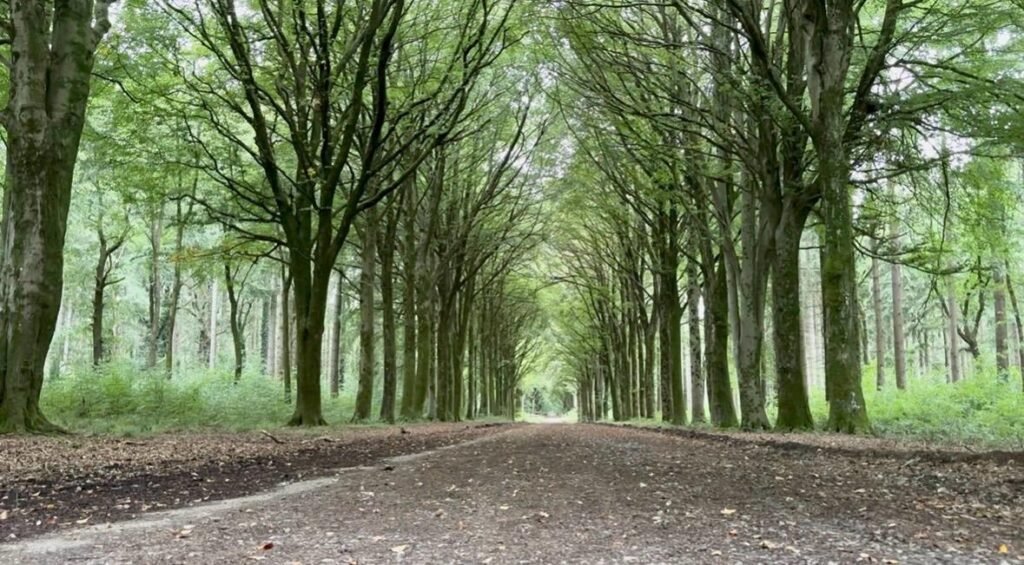
I made my way back towards the tree-lined entrance and the gates leading out to New Road. The trees formed a quiet corridor between the gate onto the heath and the gate by the road. It was good to return to a landscape I knew but had never properly explored. I had followed new paths, climbed the mound on Hartland Moor for the first time, and seen wildlife close-up.
A hidden corner of Purbeck
Stoborough Heath and Hartland Moor are part of a much wider landscape of heathland and other habitats across the Purbecks. Together with the surrounding areas, the Purbeck heaths stretch roughly 11 miles (18 km), from Coombe Heath and the army ranges in the west to Godlingston Heath and the Studland peninsula in the east.
There is much more here for me to explore. I only wandered through part of Hartland Moor, and the paths continue further north and east towards other areas of heathland. I will have to return and see where they lead.
For now, it was enough to spend time exploring somewhere I had usually treated as a cut-through rather than a destination. Stoborough Heath and Hartland Moor are beautiful, varied places and well worth taking the time to walk around.

Responses