
Walking Through Wareham Forest to Woolsbarrow Hillfort, Dorset
I have visited Wareham Forest and the surrounding heathland several times before, but that was part of the reason for coming back.
It was a weekday and I had a few hours after work and wanted to get out for a walk. Wareham Forest isn’t far from home, I know the area reasonably well, and there is always something different to see depending on the time of year and the weather.
This time, my destination was Woolsbarrow Hillfort, which isn’t one of Dorset’s most dramatic hillforts. There are no enormous ramparts like those at Hambledon Hill, and from some directions Woolsbarrow looks little more like a low hill. But the walk there passes through a surprisingly varied landscape of heathland, plantation forest, open ground and some boggy areas.
I parked in the same general area I have used on previous visits, close to the houses and railway station, rather than leaving the car overnight in one of the quieter forest car parks. This area is also close to the train station, and from here I could get direct access towards the forest via Wareham Golf Course.
The afternoon was already moving on, so I changed from my trainers into my walking boots beside the car, picked up my pack and set off.
From the road to the heath
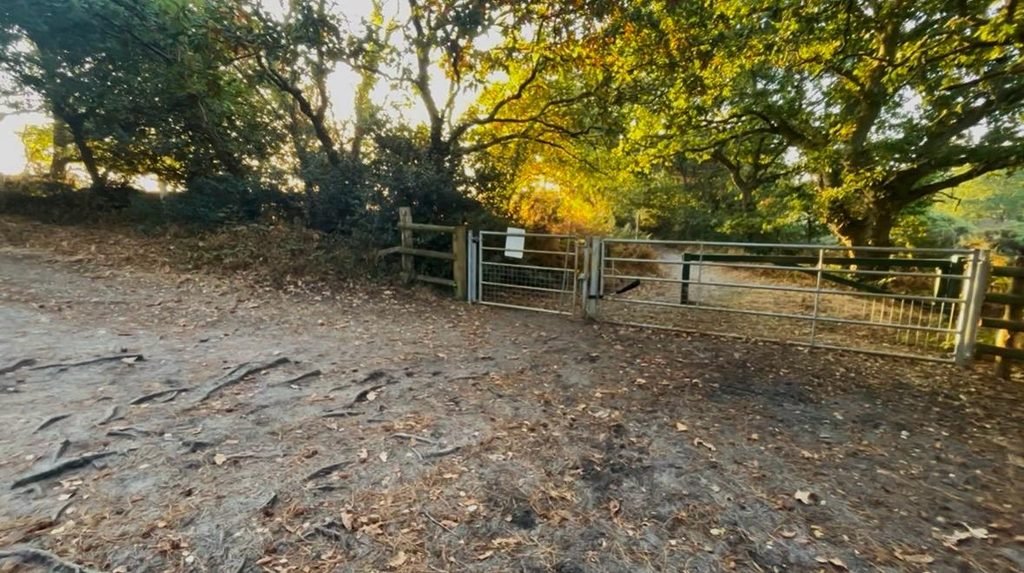
The first part of the walk takes you away from the houses and onto a path that passes through Wareham Golf Course, where there are signs warning walkers about golf balls. The route itself is straightforward. A tee is on one side and a fairway on the other, and before long the path passes between a couple of fences and continues towards the forest.
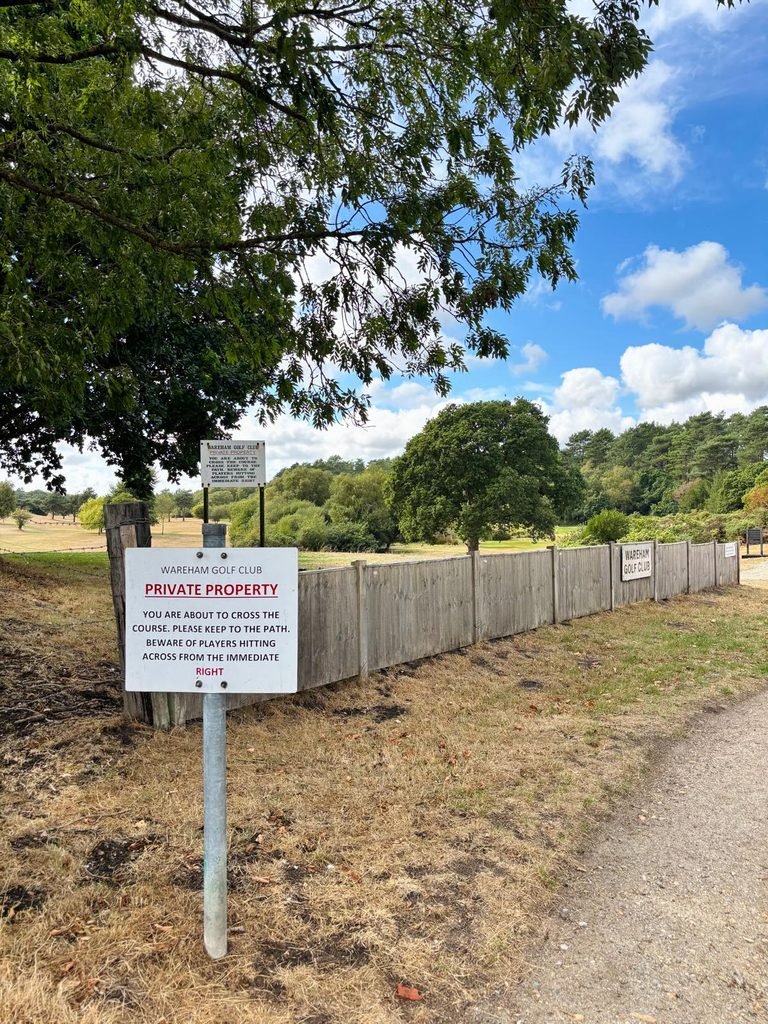
It is quite an unusual way to begin a walk into what feels like a much wilder landscape. Once through the gates, the surroundings begin to change.
There are some natural-looking areas and a mixture of trees, but it soon becomes clear that much of the forest is plantation. Rows of pine trees dominate large areas, with patches of heath, bracken and more open ground appearing between them.
The wind was fairly strong that afternoon, and the sound of it moving through the trees became a constant part of the walk. Silver birch moved and rustled in the breeze, bracken rustled below and, in the more open areas, the wind was much more noticeable.
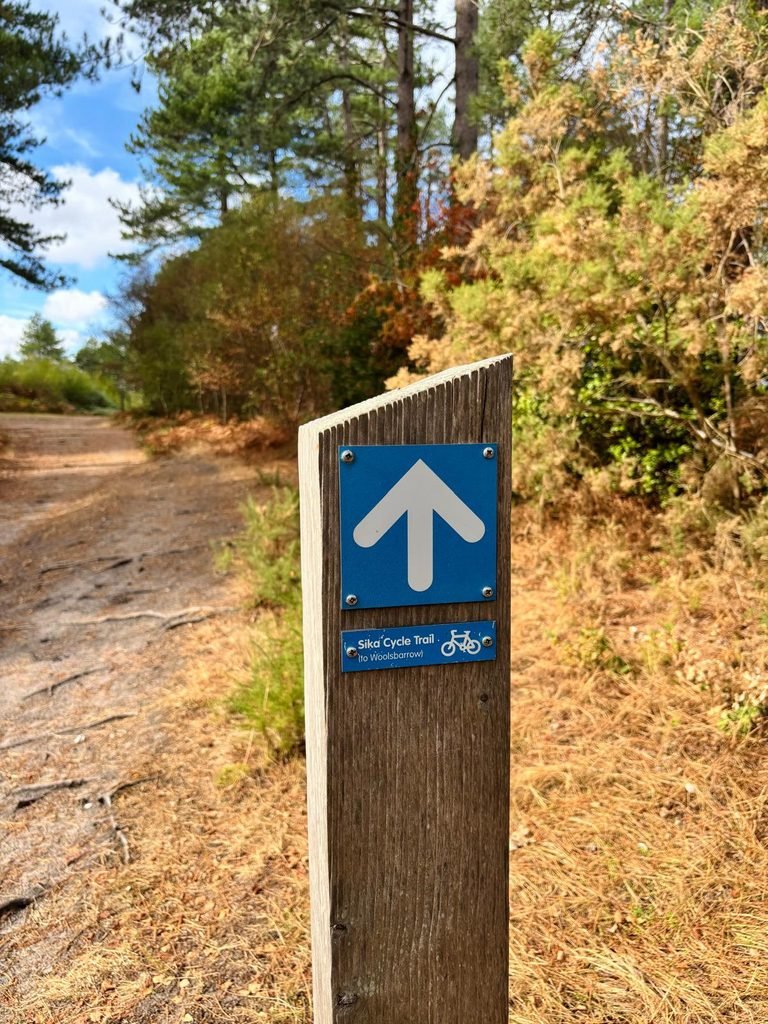
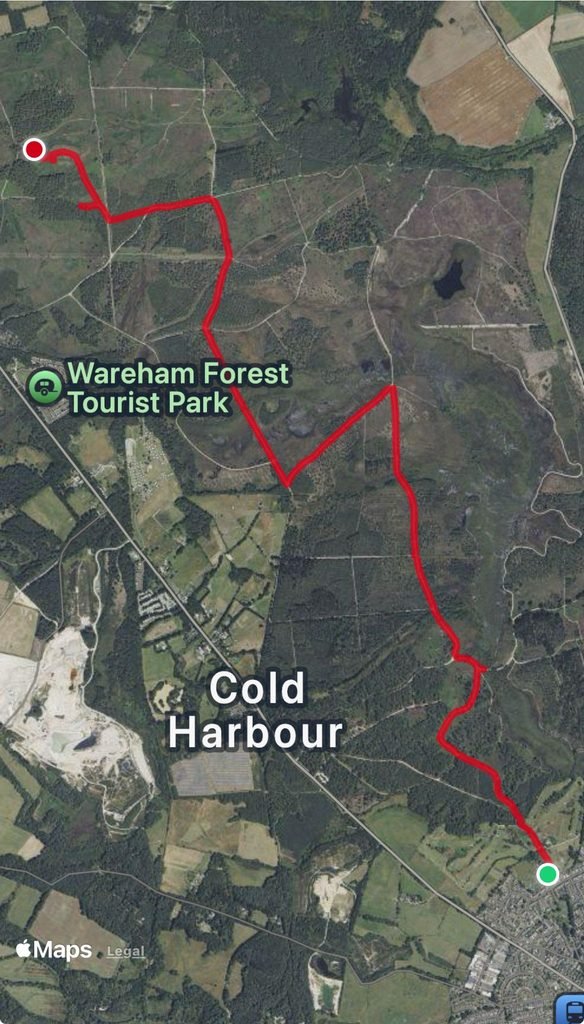
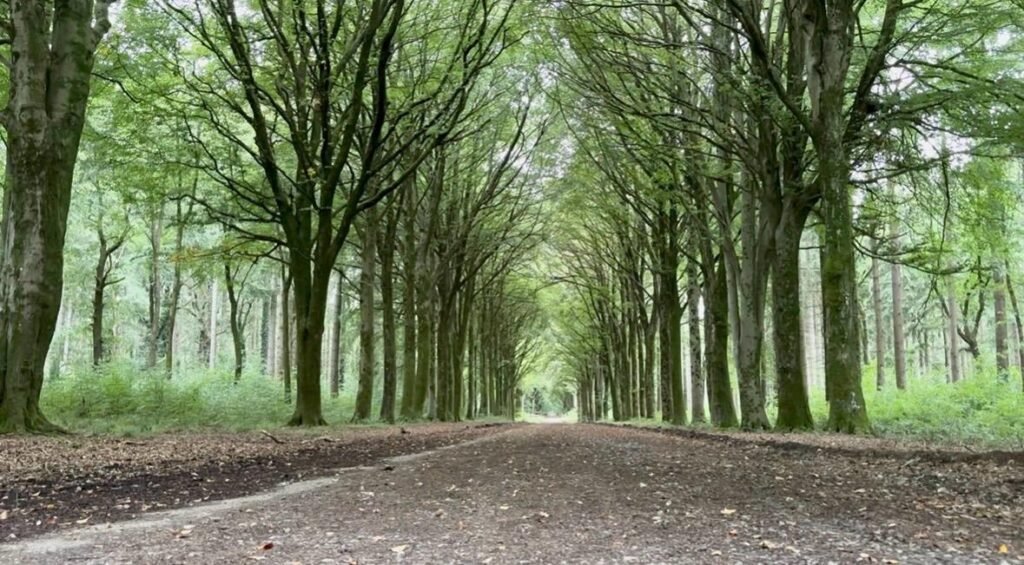
I followed the Sika Trail, which is a 7-mile (11.2 km) trail and a wide, well-maintained track running through the forest. It has a hard, compacted surface and is designed for cycling, but it also makes a great surface for walking when the weather gets bad. It is well signposted and takes in the site of Woolsbarrow Hillfort, so I mostly stayed on this path, only venturing off it to take a few shortcuts.
Through the forest
One of the things I notice whenever I walk through plantation woodland is how different it can feel from native woodland.
Some areas are almost completely dominated by the planted trees. The ground beneath them is usually bare, covered in pine needles, cones and other debris, with very little growing underneath. In places there are gullies and undulations between the rows of trees, but not much vegetation.
The difference becomes noticeable when you reach areas where the plantation opens up or mixes with other trees. There was much more bird activity in these places. I could hear birds moving through the trees and, although I couldn’t always see them, the sound made these sections feel much more alive.
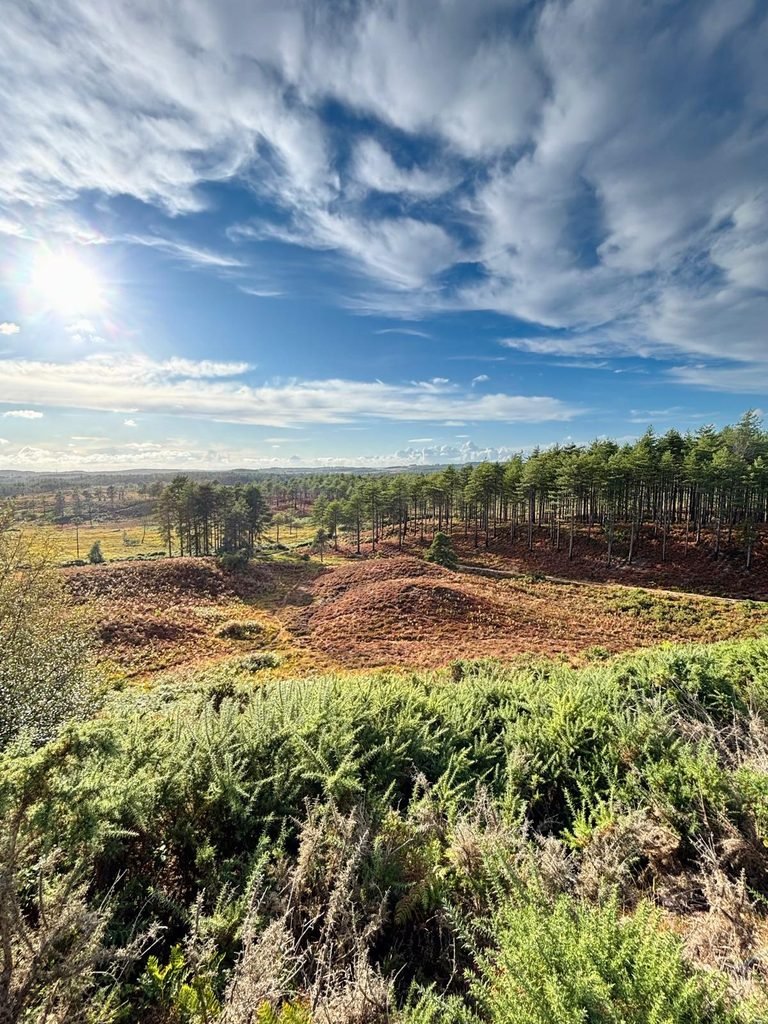
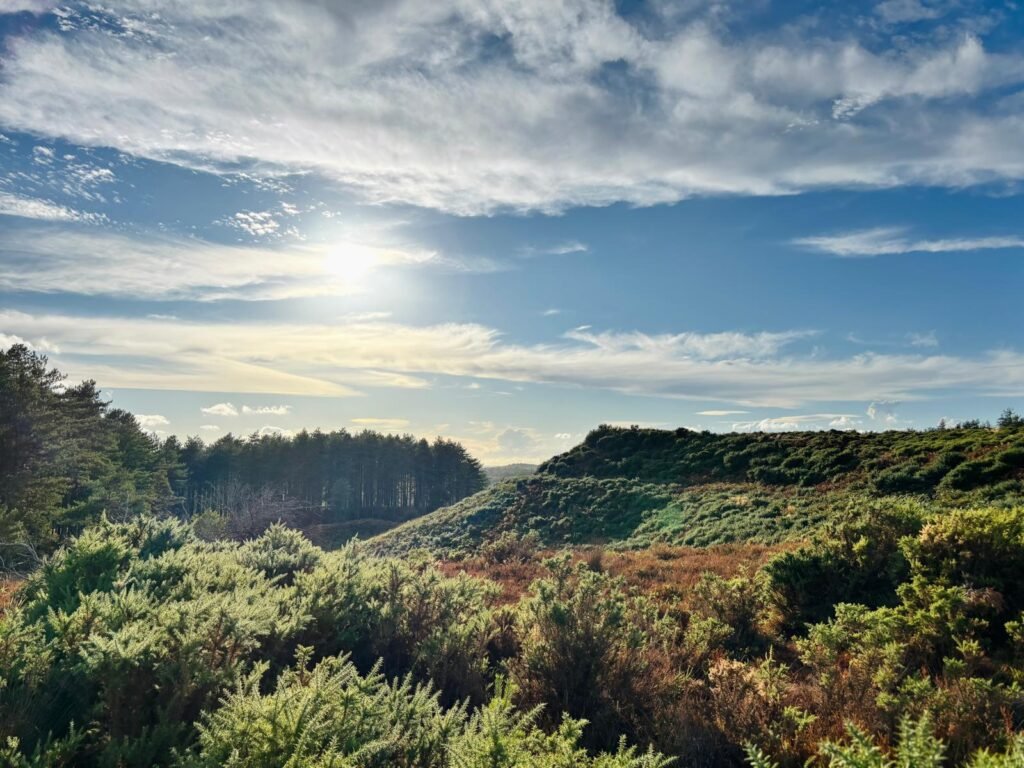
The forest also opens in parts to large areas of heathland, where heather, gorse, bracken and long grasses replace the rows of pines. This mixture helps make the area more interesting to walk through. You can be surrounded by trees one minute, then emerge onto open heath with a completely different view.
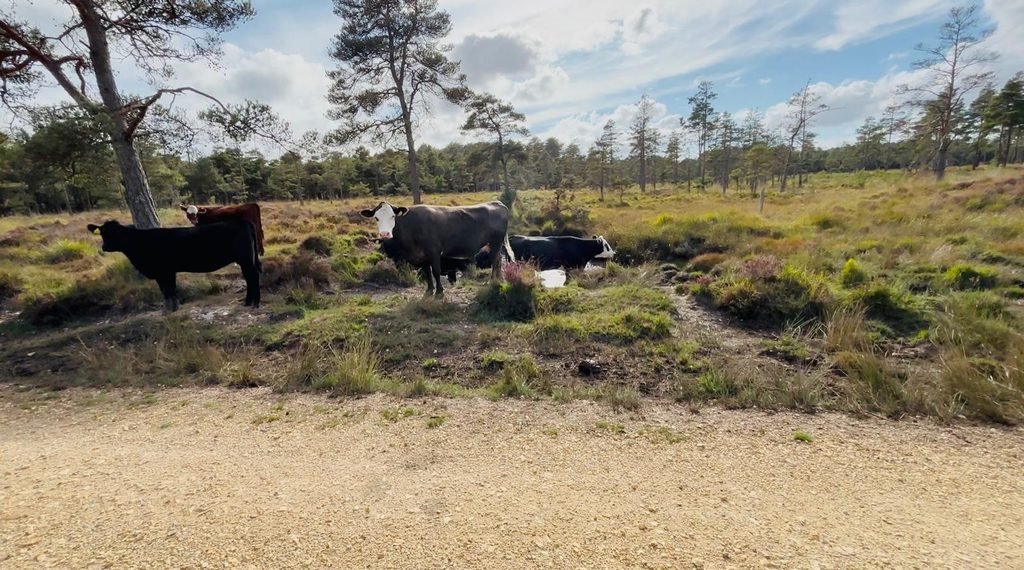
There are also numerous gates, cattle grids and fenced sections to pass through. Cattle were grazing across parts of the heath, sometimes standing beside the paths and sometimes in the wetter, boggy areas.
I hadn’t seen quite so many cattle here on some of my previous visits, probably because I have more often walked this area during the colder months.
This time, the signs warning of cattle grazing were on every gate and fence around the forest, and so too were the cattle. I encountered them as the path bordered Morden Bog Nature Reserve, simply grazing among the longer grasses of the bog.
Further along the trail I spotted them at the side of the path, while another group stood around a pool of water in the bog. Others were standing in the boggy pools on the heathland.
A few unexpected encounters
The wildlife wasn’t limited to the cattle. As I got closer to the hillfort, I was treated to the sight of a very well-camouflaged Grayling butterfly on the path. Described on the Wildlife Trusts website as “a master of disguise”, its wings are remarkably well camouflaged against the stones, dried bracken and leaf litter scattered across the track. It was such a treat to see, and had I not spotted it flying, I would never have noticed it on the path.
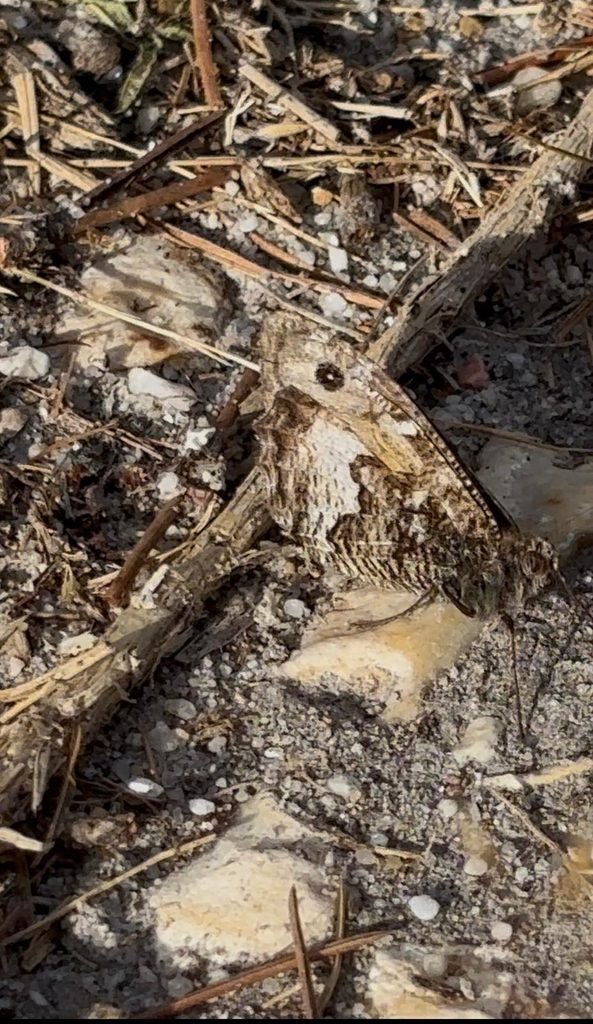
Further along, I came across something much more exciting and the real highlight of the walk. I had left the main Sika Trail and was following a smaller, dustier path around one of the fenced sections of forest. These areas seem to contain more varied woodland and vegetation than some of the surrounding plantation.
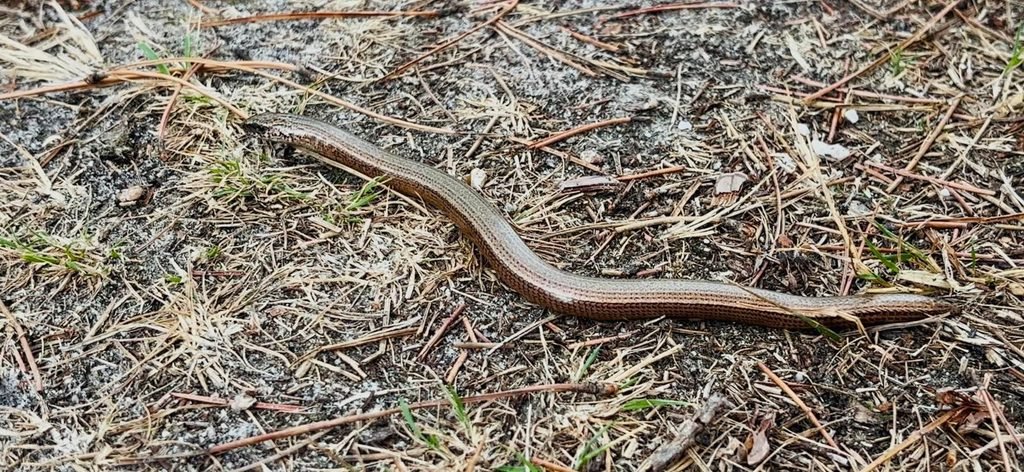
It was then that I spotted a slow worm on the path. I haven’t seen a slow worm since I was a child. It was lying stationary across the dusty track, making the most of the warmth. I stopped well away from it and filmed rather than getting any closer. After a while it began to move, slowly making its way across the dry grass and leaf litter at the edge of the path.
I followed it with the camera as it disappeared into the vegetation. It was probably the highlight of the whole trip. There was no need to interfere or get closer. I just watched it disappear into the undergrowth.
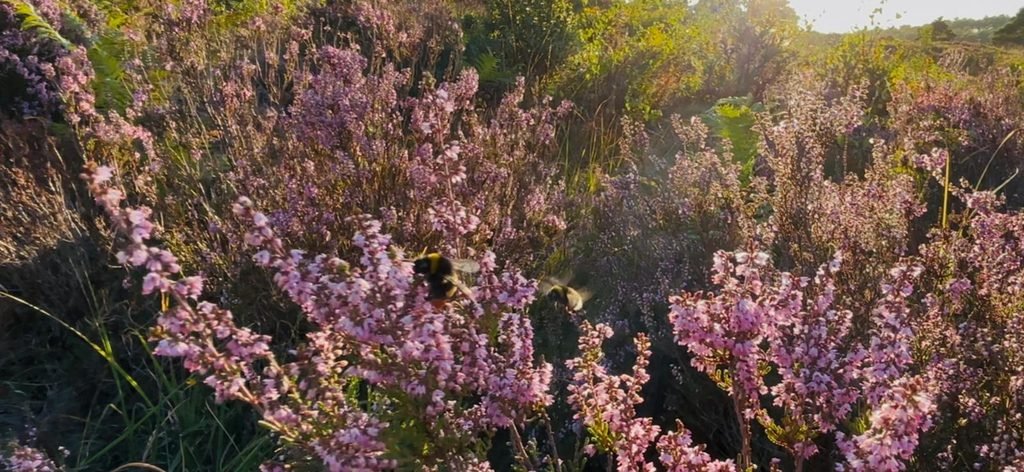
Later, I came across bees working their way through the purple heather. They were busy moving from purple flower to purple flower, and I was able to get quite close with the camera without disturbing them. It was another reminder that the open heathland has a very different character from the plantation areas.
I also heard geese overhead. This happens to me surprisingly often when I visit this part of Dorset. Large groups can sometimes be heard passing overhead, occasionally visible against the sky as they move across the landscape.
I have visited later in the year when there seem to be even more of them, although I can’t say exactly where they are heading. This time there were several groups making their way across the sky, very vocal as they went.
Woolsbarrow Hillfort
After 4.4 miles (7.1 km) of walking, I eventually reached the short, winding incline that leads to the plateau of Woolsbarrow Hillfort on Bloxworth Heath.
The approach isn’t a dramatic one. There is a gradual incline rather than a steep climb, and from the surrounding landscape the hillfort looks like a small hill with a flat top.
Woolsbarrow is quite different from Hambledon Hill or Hod Hill, both of which have much more obvious earthworks and dramatic profiles with their large ramparts.
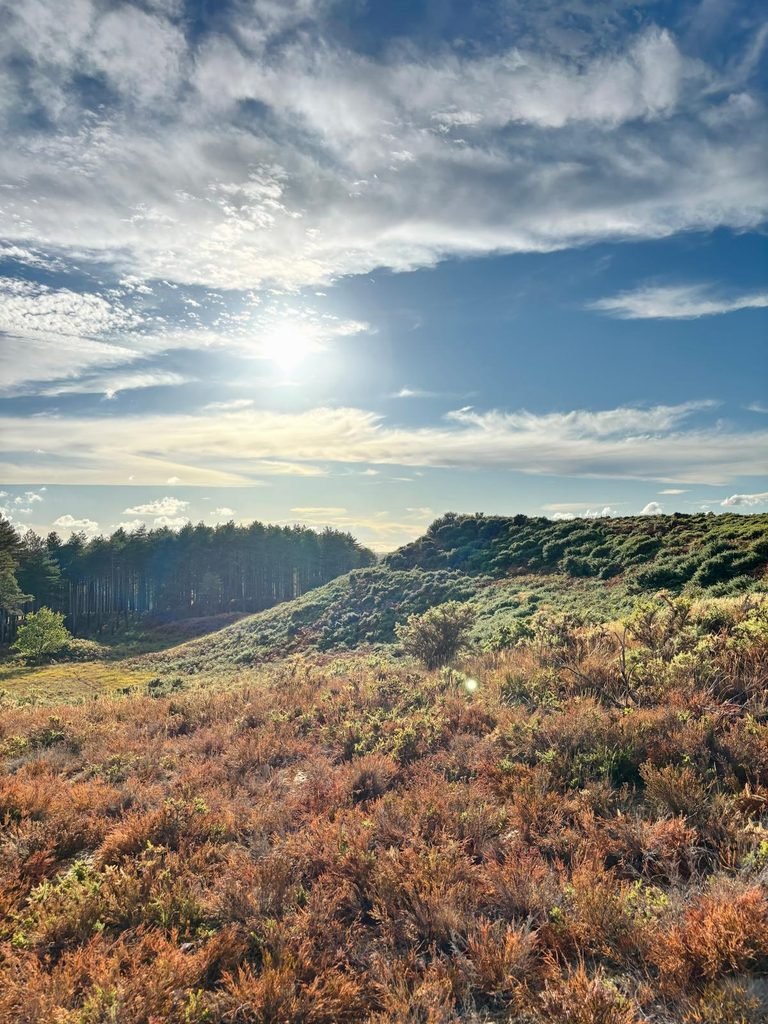
Here, the top is relatively flat and grassy, with heather, gorse and bracken around the edges. I bagged the trig point Woolsbarrow Camp, TP7066 again.
I spent some time looking at the landscape from the opposite side to where I had arrived. There wasn’t anybody else around at the time, which made it particularly peaceful.
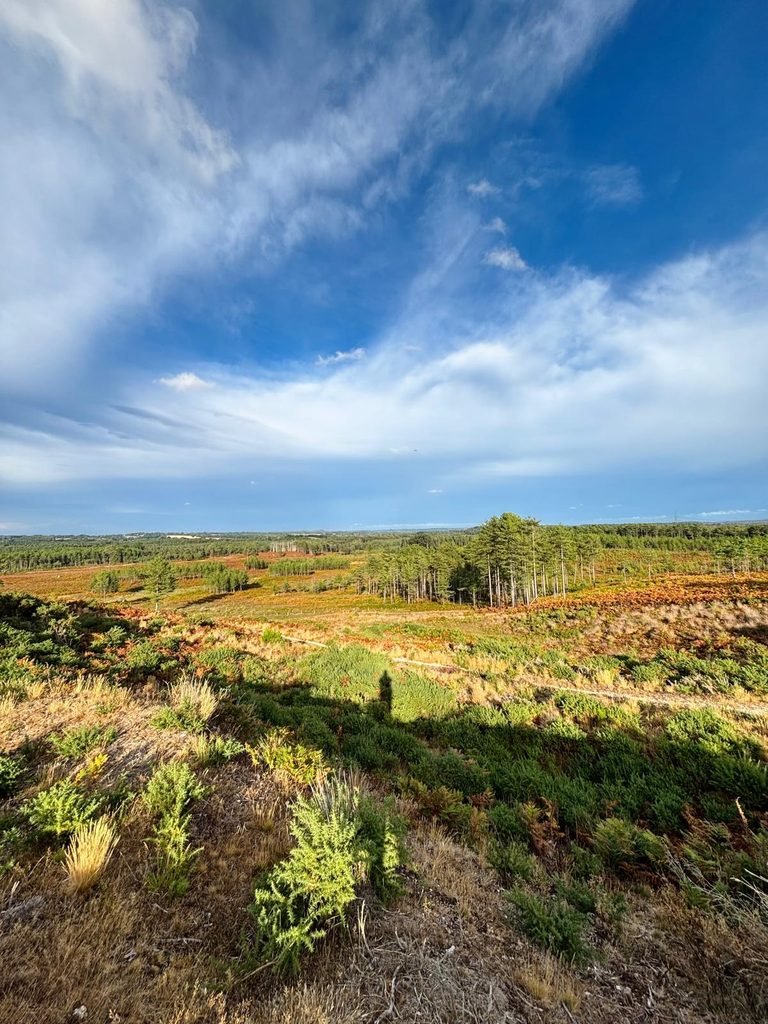
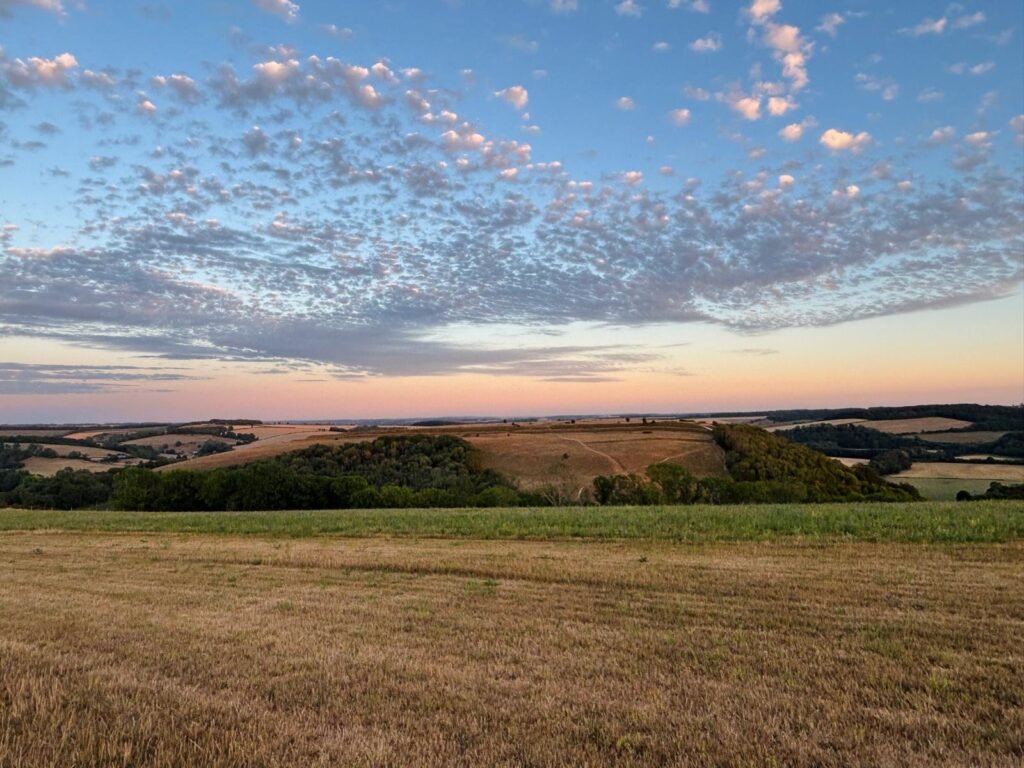
From the top, the surrounding landscape opens out. There are areas of low heathland and plantation forest in almost every direction, with the larger blocks of trees contrasting with the open ground.
The sky was beginning to develop some wonderful cloud formations in the distance. I followed the path down the other side of the hill, which leads through the longer grass and bracken.
At the bottom were several rounded, undulating mounds covered in bracken and heather. I am not certain what they were. They might be related to the earthworks, although I have read that the area has has been greatly by quarrying. They look very well-rounded, much like burial mounds I have seen in other parts of Dorset and overseas.
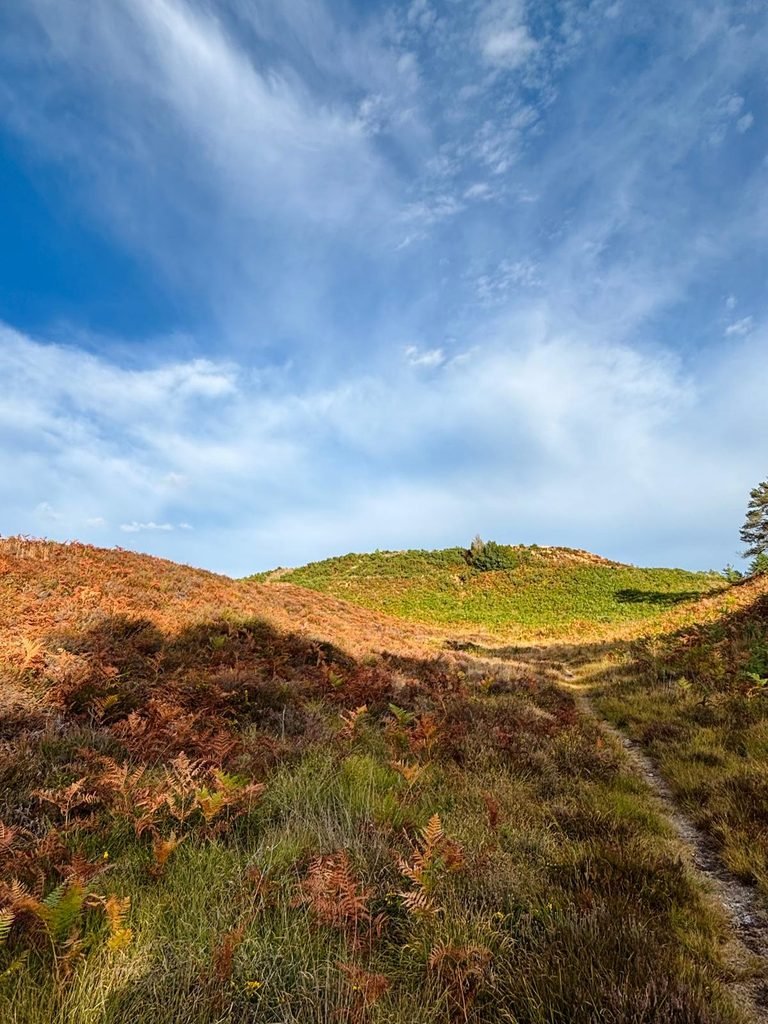
From ground level, they were simply rounded heath-covered features sitting beneath the top of the hillfort. Looking back from there, Woolsbarrow hillfort looked a little more prominent. A hill with sides covered in heath and grass, surrounded by the much larger landscape of plantation forest and heathland.
Back through Wareham Forest
I didn’t stay at Woolsbarrow for very long. The afternoon was moving on and I still had the walk back. I took a slightly different route for part of the return journey, passing through more of the heath and forest.
The area is criss-crossed with large, wide trails like the Sika Trail, with many smaller paths branching off into different parts of the forest.The character of the landscape changed as the light began to fall.
The sun was getting lower, the shadows were lengthening and the sky was beginning to develop warmer colours around the horizon. The wind was still moving through the trees, while the cattle continued grazing across the heath and some bird life was taking to the air.
There were also signs of people further away. I could hear the occasional voices and families having fun at the nearby caravan and motorhome campsite.
This is worth noting when visiting the forest, that although parts of Wareham Forest can feel very quiet, you are rarely as remote as the landscape can sometimes suggest.
This is Dorset, not the Scottish Highlands or the Lake District. There are roads, paths, farms, campsites and people nearby. Even when you can’t see anyone, you can often hear the noise of a road in the distance.
For me, that is part of the character and challenge of the area. You get the feeling of being out in the countryside, but then you’re reminded that you are never too far from everyday life.
A forest that keeps changing
The more I walked, the more I noticed the different types of plantation forests. Some are full of young, densely packed trees with little space in between them and very little growing beneath them. There are also more open plantations where mature trees stand further apart and sunlight reaches the ground.
There are large stretches of heathland covered in heather and gorse with the odd tree. And there are wet, boggy areas where long grasses grow around pools of water.
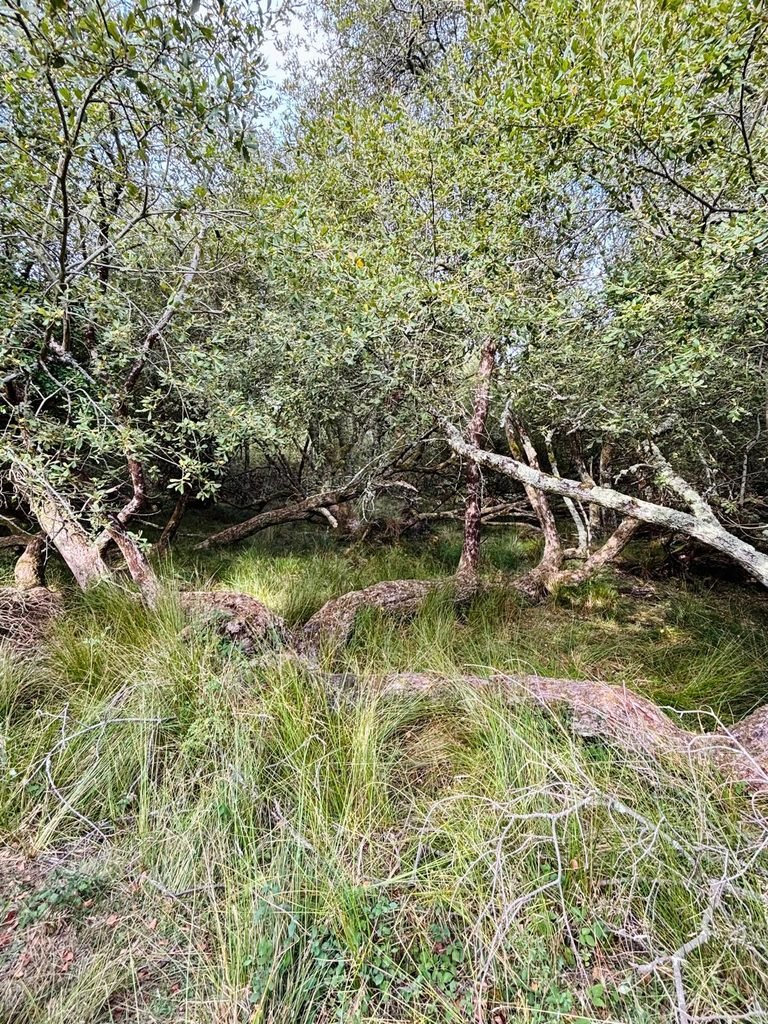
Some of the wetter sections even have trees growing at strange angles. Bent and twisted trunks emerge from the boggy ground, giving parts of the landscape an almost eerie appearance.
I arrived at the end of a long dry summer. The rains had just returned over the previous week, so things were not as boggy as they usually were. The heath was still full of colour and activity. The bees I saw earlier were busy working around the heather and birds could be heard in the areas where the trees were more varied.
Finding somewhere for the night
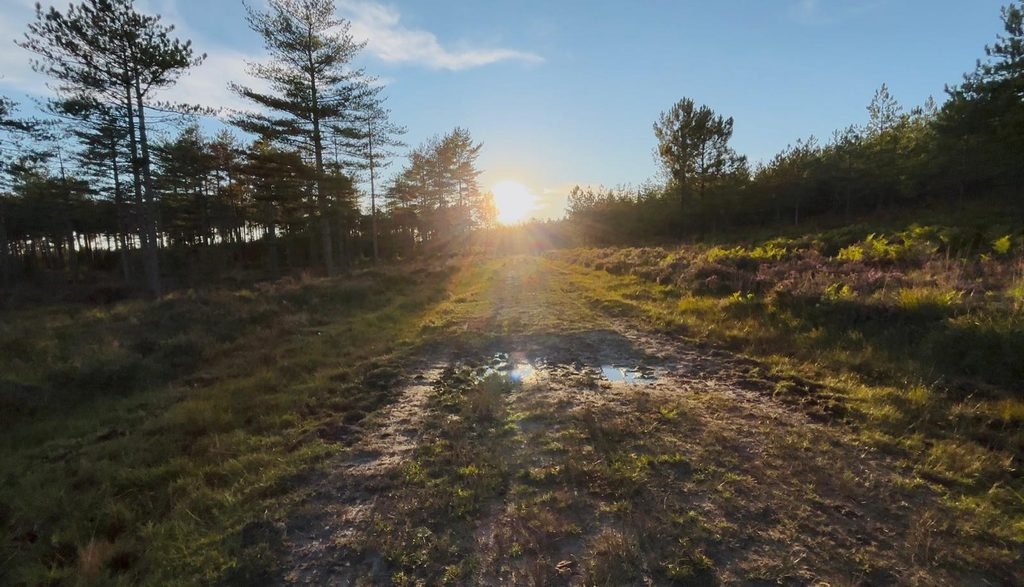
By the time I was heading back towards where I had parked the car, the light was beginning to fade. I still needed somewhere to spend the night, so I started looking around the woodland for a suitable place.
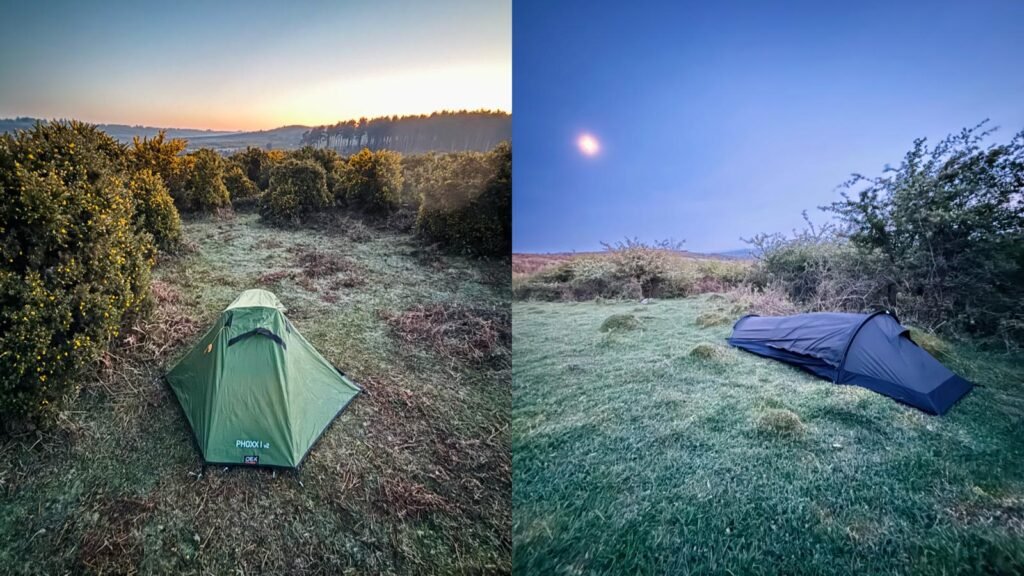
I eventually found a small area among the trees where the ground was reasonably flat and there was enough cover to keep a low profile.
It wasn’t a remote wilderness. A path was still relatively close by on two sides. Plenty of paths are a typical feature of plantation forests, so being completely isolated from a path or trail is very difficult.
I settled down for the night and left the surrounding woodland undisturbed. There was a little rain during the night, but nothing dramatic. The real treat came the following morning.
A misty morning
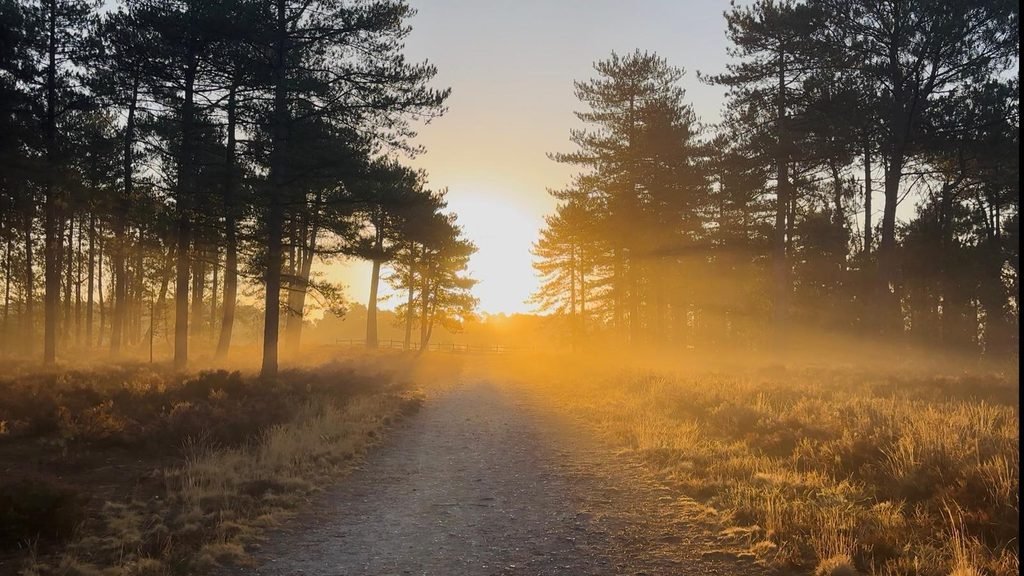
When I looked out from the bivvi, the forest had completely changed. Mist had settled across the heath and the wetter areas surrounding the trees. The trees themselves were dark silhouettes against the grey morning, while the rising sun was beginning to turn the mist and sky orange.
It was one of those mornings that makes the whole walk worthwhile. I walked to the edge of the trees and looked across the mist-covered heath. Everything was quiet apart from the welcome sound of a few birds.
The light was slowly changing, the mist was catching the orange glow from the sunrise and birds were beginning to sing in the surrounding woodland.
Back towards the road
The return journey brought more of the orange morning light over the different landscapes. The mist remained over parts of the heath and the sun was now producing a deep orange glow through the trees.
At one point I managed to take a wrong turn and ended up on one of the small hills beside the trail. I knew where I was, so I carried on towards a wooden barrier at the edge of the hill, surrounded by the orange mist created by the rising sun.
This moment was absolutely stunning. The sun had turned the whole scene orange. I found a way down onto the main trail via a dirt route used by mountain bikes. I knew this from the tyre tracks in the damp soil. This took me back onto the main Sika Trail.
It wasn’t long before I passed through the gates and exited the forest, crossed back towards the golf course and eventually returned to the paths near the houses.
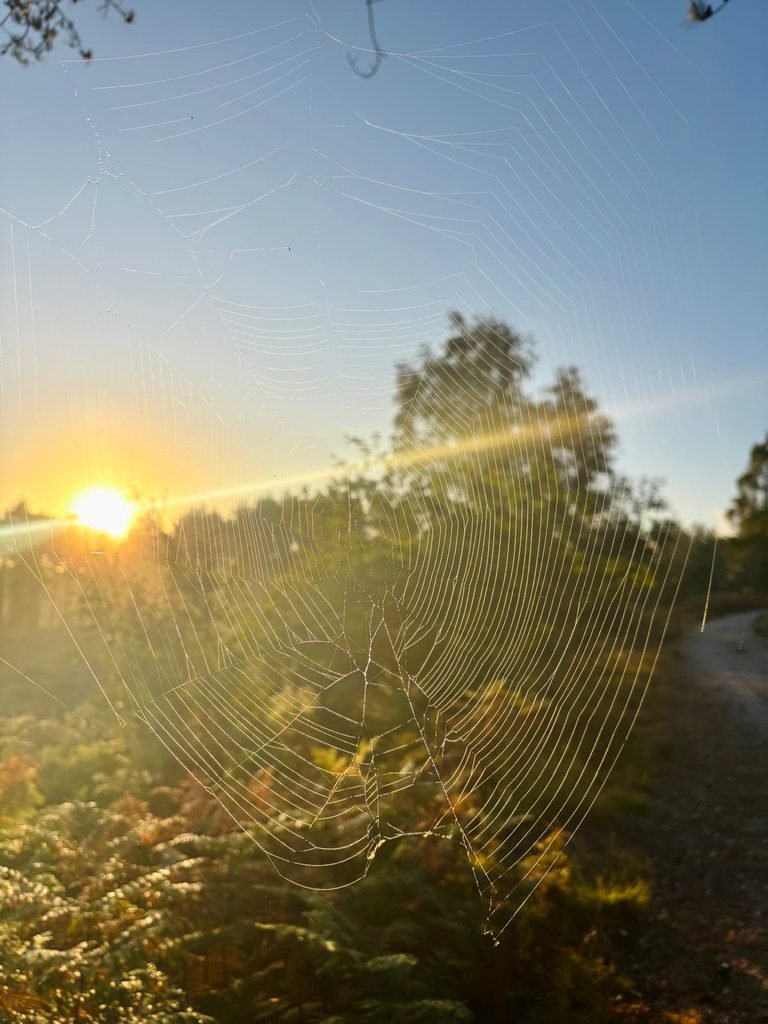
One final scene caught my attention before I left the forest. The low sunlight was catching a spider web suspended between the branches of a tree. Against the darker woodland behind it, the web appeared almost golden in the morning light.
I continued back towards the road, the golf course and eventually the car. The boots came off, the trainers went back on and the walk was over.
My Final thoughts
Woolsbarrow Hillfort may not have the dramatic appearance of some of Dorset’s better-known hillforts, but the walk to it is what makes the visit worthwhile.
The route passes through a constantly changing landscape. Golf course, heathland, plantation forest, open woodland, boggy ground, grazing cattle and finally Woolsbarrow Hillfort on Bloxworth Heath.
There was also plenty of wildlife along the way, from the bees working the heather and the birds in the trees to the butterfly that disappeared against the path and, best of all, the slow worm that I hadn’t seen since childhood.
For me, that is what makes returning to familiar places worthwhile. You might know the paths, but you never quite know what you are going to see.
And on this visit, the slow worm, the wildlife, the changing weather and that misty sunrise made it a walk I will remember.
Thanks for reading.
Dan


Responses