
The Way I Wild Camp – Quiet, Stealth and Low Impact
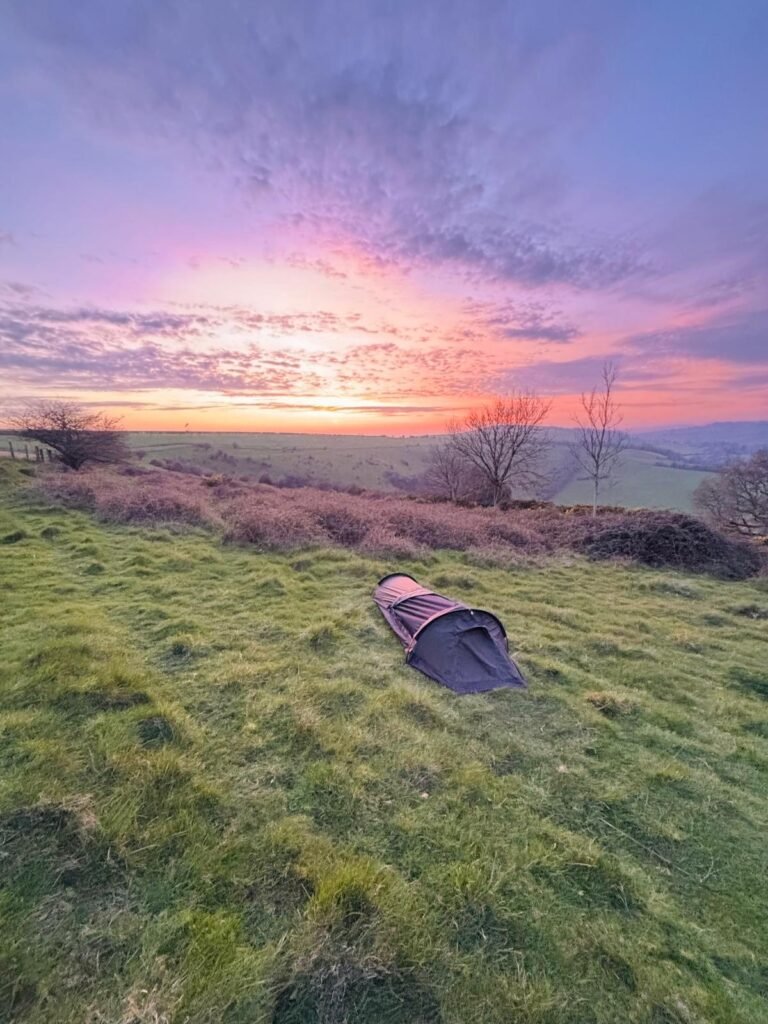
There are many different ways to wild camp, as there are with most things in life, and no one way is right or wrong. This is just how I do it.
My approach is pretty simple. I keep things quiet, low profile and try to leave no trace or signs that I was ever there.
Keeping Things Simple
I don’t usually cook full meals when I’m out. I don’t light fires and I avoid open flames, especially in the warmer months. I’m clumsy and accident prone, so the last thing I would ever want is to be responsible for starting a fire. Even a small flame or smoke can draw attention, and that’s just the way I have always done it.
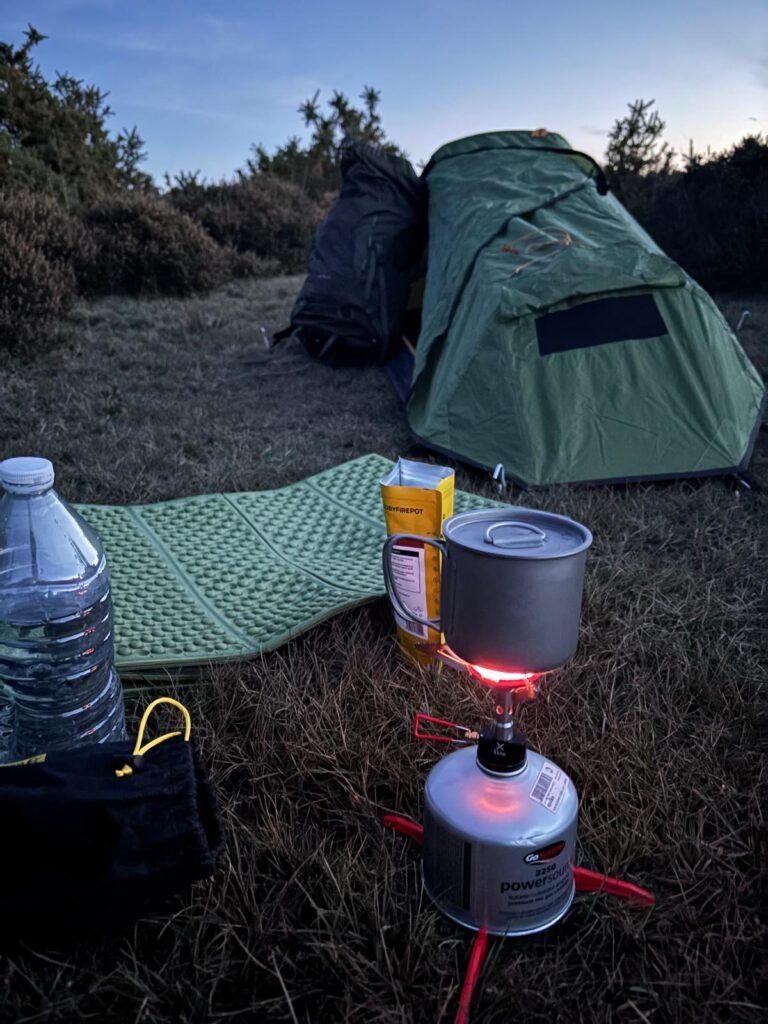
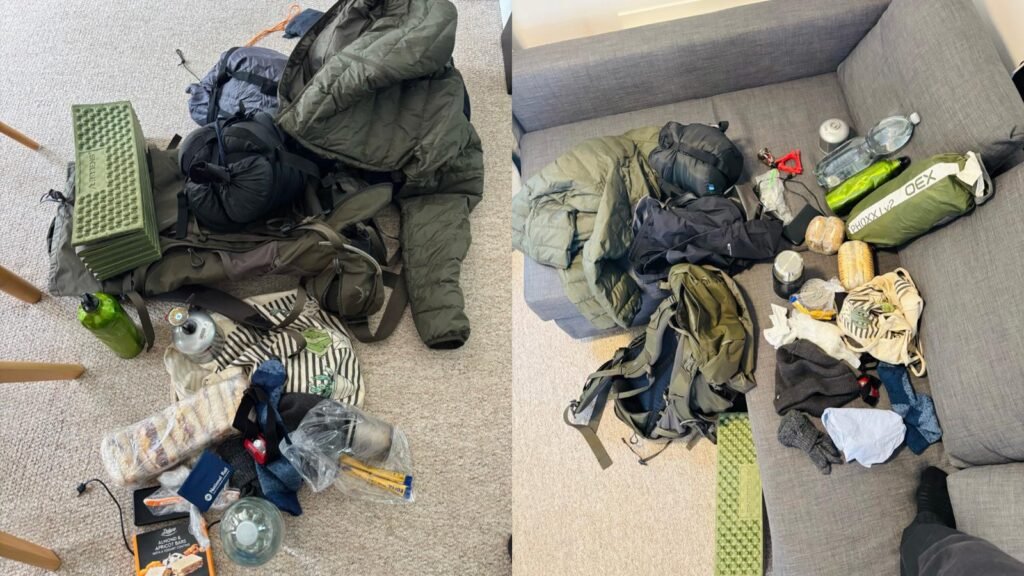
Most of the time I take simple food like soup, snack bars and sandwiches. It’s easy, quick to prepare and convenient as I can eat while I’m on the move. The bonus being, that while I eat, my pack gets lighter, and not cooking saves on carrying extra gear. I am partial to a coffee in the colder months, so that’s an exception.
Choosing Quiet and Hidden Locations
I don’t camp in obvious or popular places very often. You won’t find me on the tops of well-known mountains, because there aren’t any where I live. I don’t always chase a view, and I’m just as happy to be tucked away in a bit of woodland, behind gorse or in a quiet field where I won’t be seen.
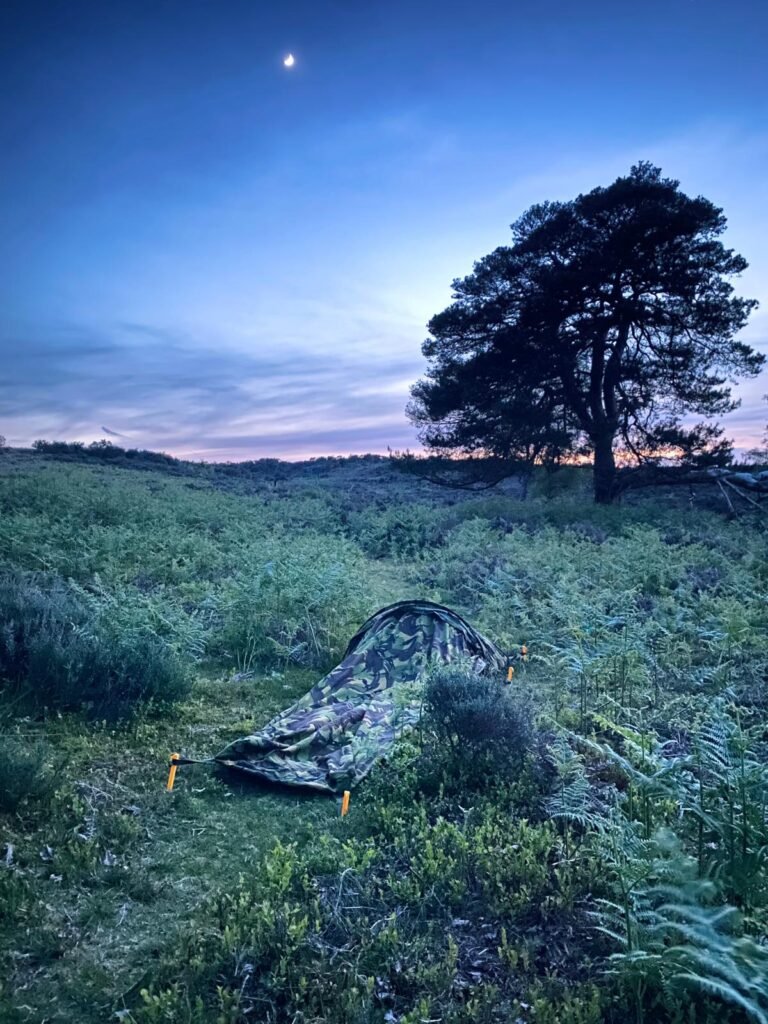
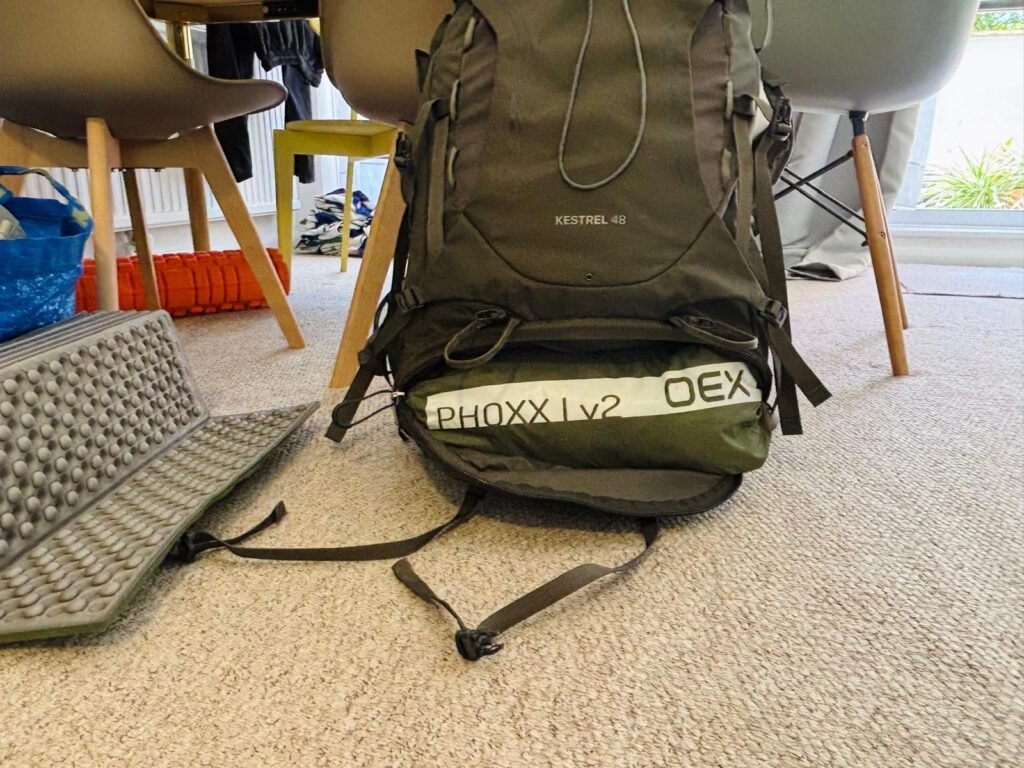
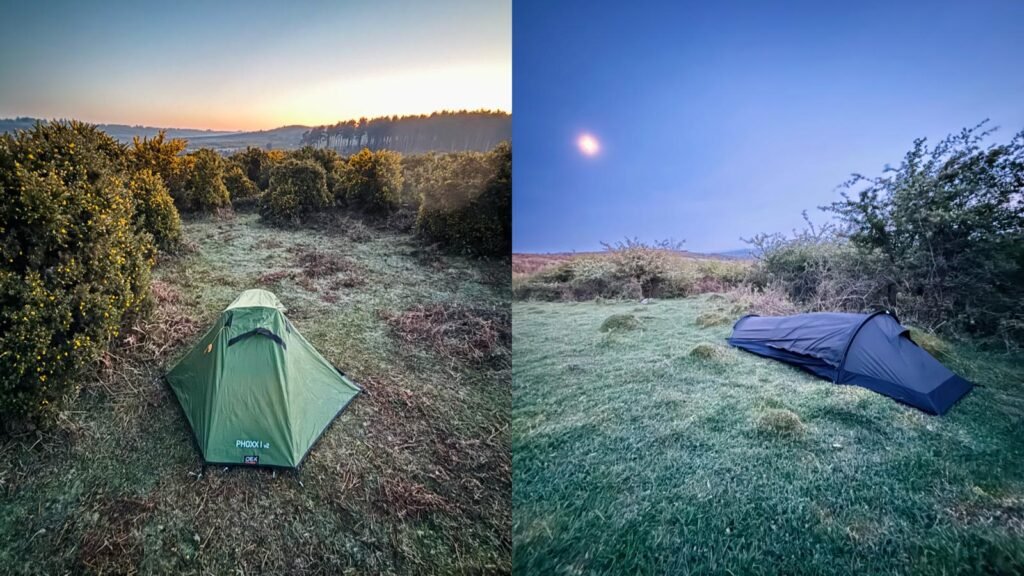
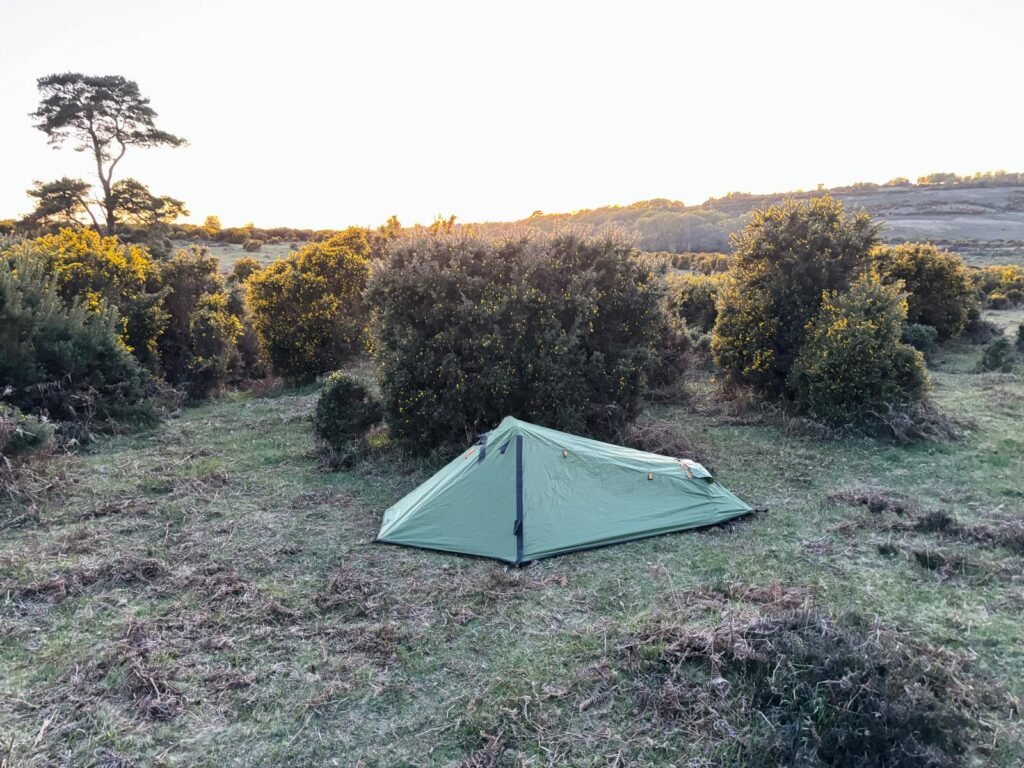
Being stealth plays a huge part in how I go about camping. I don’t use bright gear or large and brightly coloured shelters. I prefer low-profile setups, which is exactly why I like bivvy camping so much, especially using my Nortent Skjul Bivvy. It’s simple, discreet and does exactly what I need it to do. Before that, I used a Dutch hooped bivvi and in bad weather or winter, I turn to the the OEX Phoxx 1 V2 Tent, which is also very low profile and blends in well.
Be Respectful of the Countryside
I am carefully when it comes to choosing locations, and the time of year really matter. I avoid popular areas when they’re likely to be busy. Living in Dorset means the coast is a no-go area for me during the summer months, so I stay away and camp elsewhere.
I don’t access places by climbing fences, digging holes or crossing obvious boundaries into private or restricted areas. I stick to areas that are open and accessible, where visitors are welcome during the day, but not to encouraged to stay overnight.
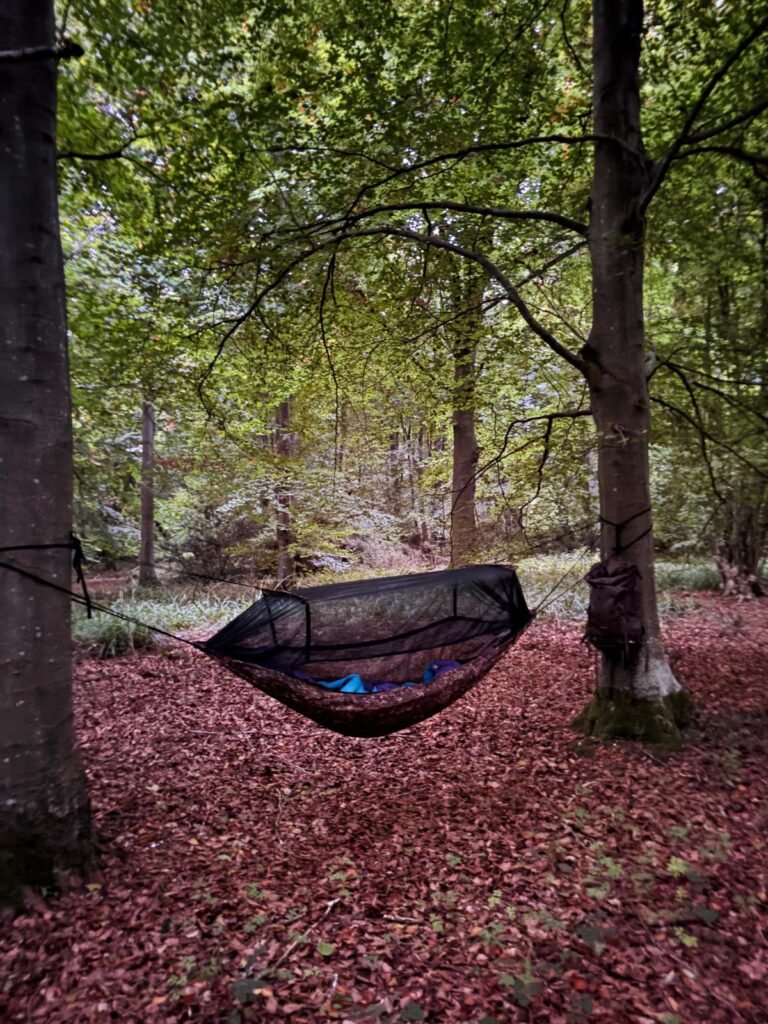
I try not to damage anything, and to have as little impact on the environment that I stay the night in. I’m very conscious that I’m only there for a night, while others call the place home. I even like to avoid camping on bluebells in spring and I definitely stay away from the areas where birds are nesting.
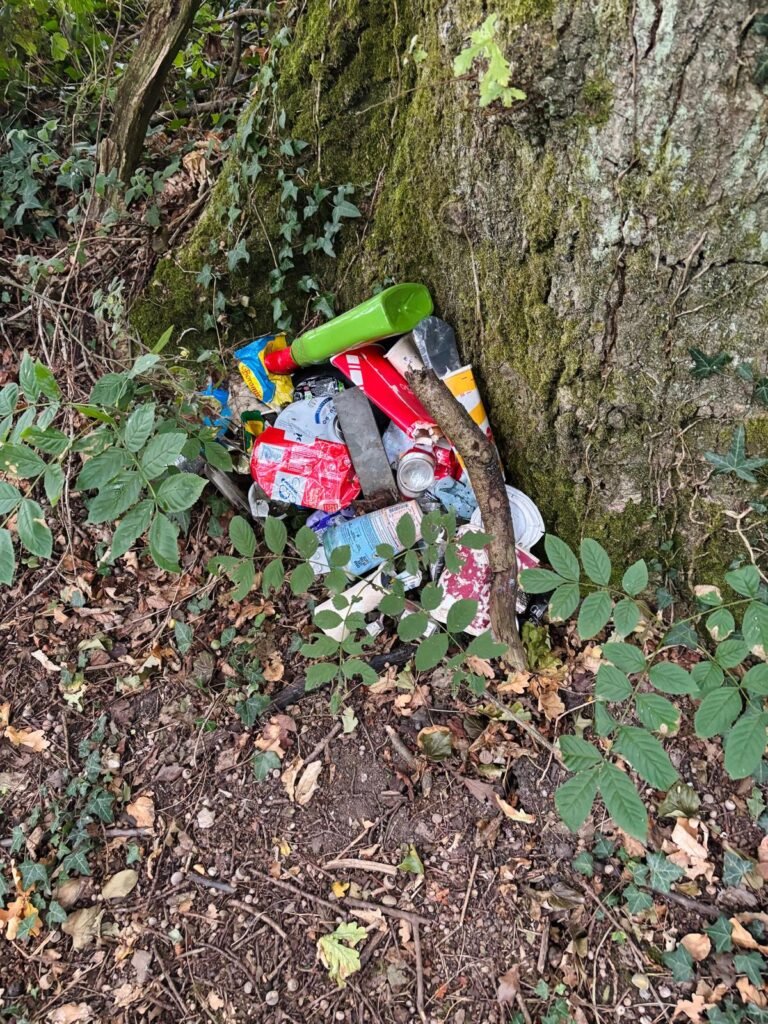
I also do a litter pick on every camp, which has become a bit of a tradition of mine, and a way of giving something back to the places that I stay in. It may be a small gesture, but my hope is the next person who comes along won’t notice anything at all, and that’s the goal.
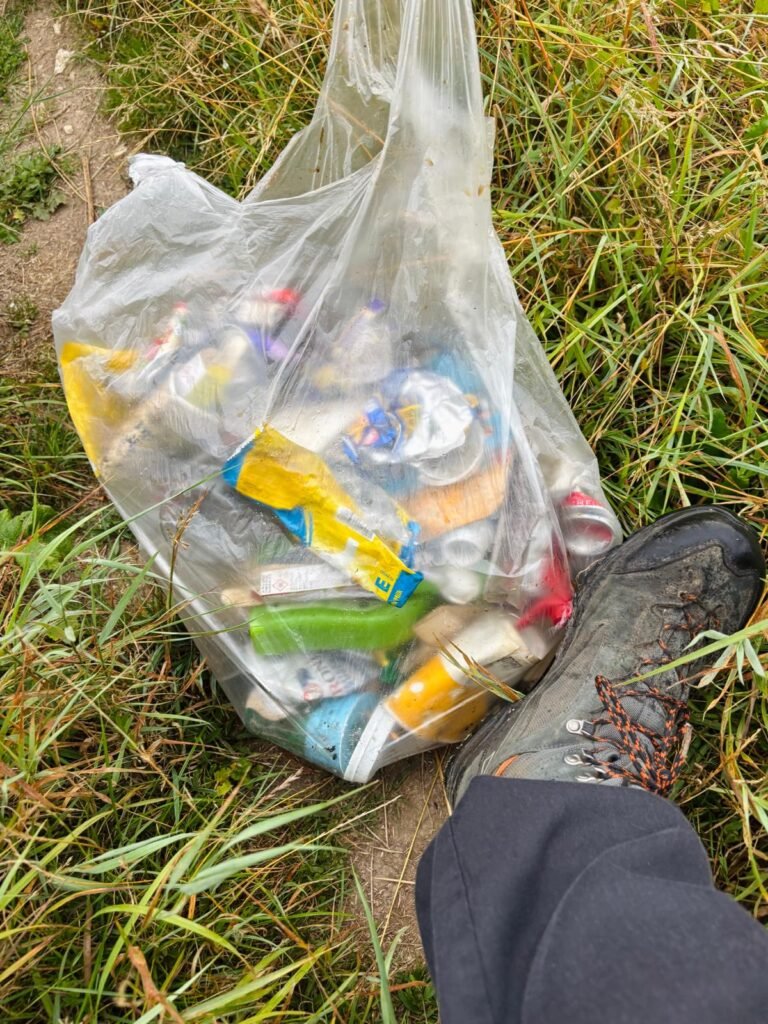
I can’t take credit for the idea. I picked it up from the YouTuber Steve Wallis. I watched one of his videos years ago where he cleared up rubbish from a spot he was camping in. I thought it was a cool idea, so I started doing the same and have stuck with it ever since.
I use the hashtag #oslitterpick On YouTube with every litter pick. I’ve litter picked in the USA, Nepal and South Korea.
Safety and Awareness
I think a lot about my safety when I am out and when I am choosing a spot. This is because I am getting older, and I am also a husband and a dad. I prefer places that are tucked away, but also where I can make a quick exit if needed. I don’t camp in enclosed areas with limited access, and I avoid anywhere I could get trapped if something changes during the night. I’ve learned that the hard way over the years.
Using ear plugs is something I never do, and the reason being is because I want to hear what’s going on around me. Being aware of your surroundings is very important, especially when you’re alone in a secluded spot.
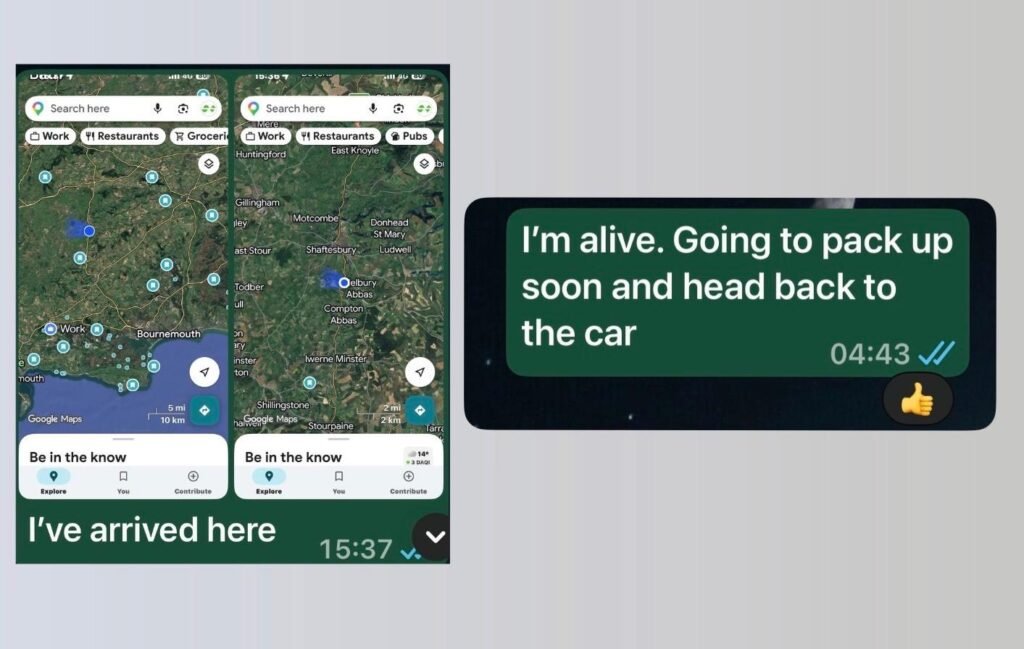
This may sound funny, and it may be something you do too, but I have this routine with my family using a WhatsApp group chat. Before I leave, I send them a rough idea of where I’m heading, usually a screenshot of a map with the area circled. When I arrive, I let them know I’m there safely. Once I’ve set up camp and settled in, I send my location using Google Maps, What3Words and GPS coordinates. These are also the three coordinate I use to mark my camps on the Camp Notes.
In the morning, I’ll message them again- usually something like “I’m alive”- along with where I am, that I’m heading home and an estimated time of arrival.
At night, as in the day, I keep a very low profile, and I don’t want to attract any attention to my location or camp – and that means no lights. I use my phone to read in silence, but never to watch a show or listen to music. I keep the screen dim and avoid pointing it in certain directions.
I avoid using a torch at all costs. The only times I’ve used one recently were to leave a flooded area at night and in the early hours when I needed to descend a hill in a storm.
Lights can be seen from a long distance, and they’re completely out of place in the countryside. They will give away your position immediately.
A Solo and Quiet Experience
I always camp alone. For me, it’s about quiet and having time to myself. I enjoy the exercise, the planning, finding a spot and figuring out how to get there and back.
I don’t carry a knife and I don’t do any bushcraft. I don’t use a pillow, and I don’t need the comfort of an inflatable mattress. I just like to keep things simple and practical.
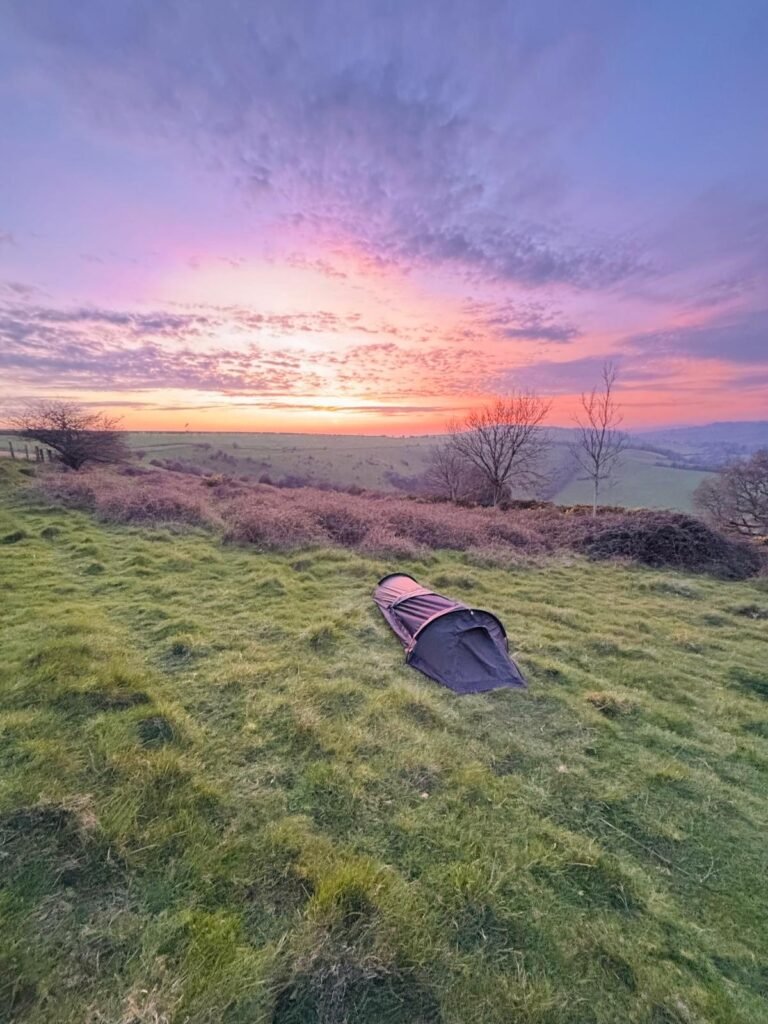
I like bivvy camping because it suits this approach. When out using the Nortent Skjul Bivvy, and being able to lie back with the top open and look up at the night sky is such an awesome experience.
If you’re wondering why I lean towards bivvi camping, read Where It All Began: My Love Affair With Bivis.
Leaving No Trace
In the morning, I’m up early. I’m usually packed and ready to leave at first light, and I like to be gone before anyone else arrives, or packed up and look like I am just passing through.
A big no-no for me is hanging around with the shelter up, where other visitors can see me and the shelter. I believe that if my actions start to annoy people or affect their enjoyment of the place, action will be taken to stop future wild campers, and in turn, spoil the enjoyment of the people that follow.
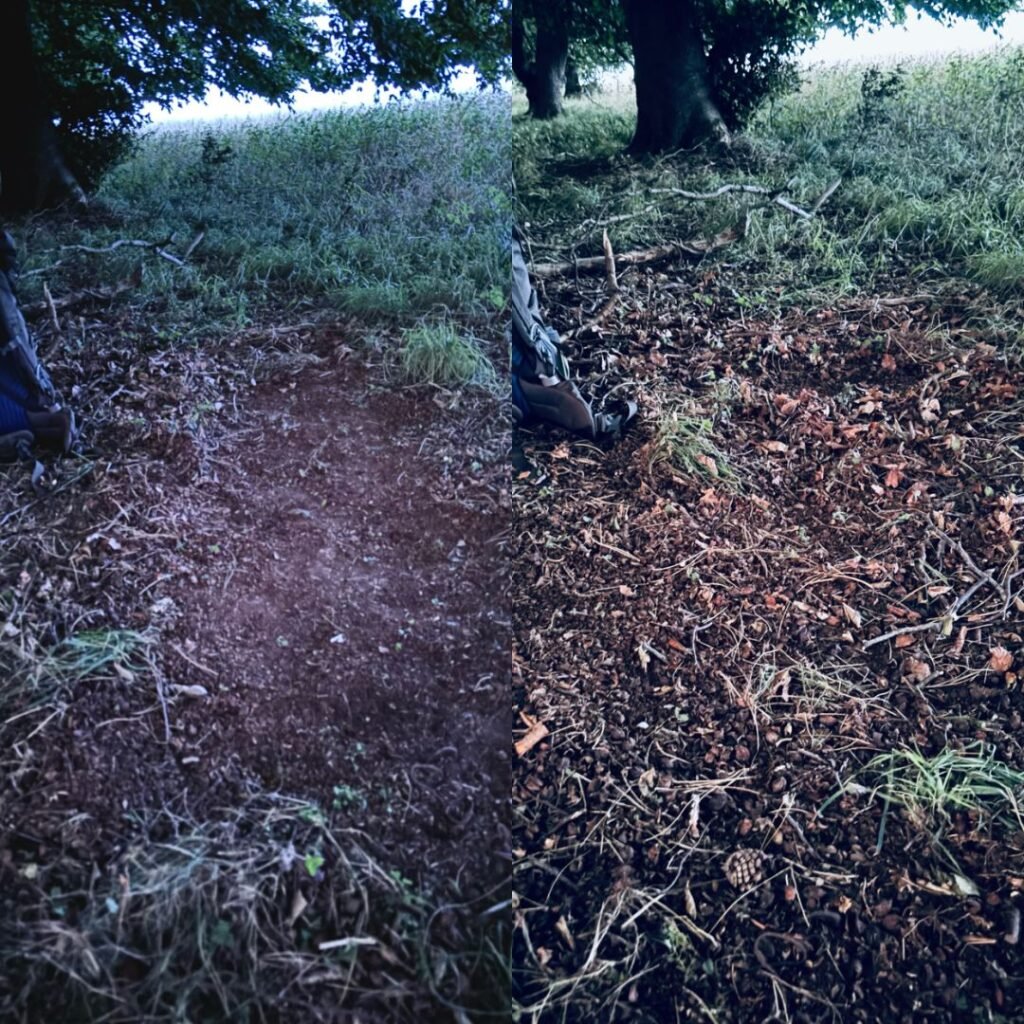
My simple aim is – no trace, no disturbance and no sign that I was ever there.
This is just my way of doing things. Others will do it differently, and that’s fine. Everyone has their own way of doing things and enjoying themselves. This is just the way I do it.
For me, it’s about keeping things simple, staying out of sight and enjoying a quiet night outdoors.
That’s just my style and how I do it.
If you have any questions, feel free to get in touch via social media or the contact page.
I appreciate you taking the time to read this, and I’d genuinely like to hear your thoughts – good or bad.
Thanks again,
Dan

[…] This is the kind of setup I rely on – quiet, low-profile and out of sight, which I explain more in The Way I Wild Camp – Quiet, Stealth and Low Impact […]
[…] If you enjoy bivvy camping, you may like how I approach it here: The Way I Wild Camp – Quiet, Stealth and Low Impact […]
[…] very similar to the quiet, low-impact approach I wrote about in my post on the way I wild camp. The Skjul suits my style […]
[…] You can read more about that here in The Way I Wild Camp – Quiet, Stealth and Low Impact. […]
[…] You can read more about that here: The Way I Wild Camp – Quiet, Stealth and Low Impact […]
[…] A lot of the way I camp is to be quiet, low impact and respectful to the places I spend time in. That’s something I wrote more about in The Way I Wild Camp – Quiet, Stealth and Low Impact. […]
[…] very similar to the way I prefer to wild camp […]
[…] approach is something I talk about in The Way I Wild Camp – Quiet, Stealth and Low Impact, where I explain why discretion and leaving as little trace as possible are important to […]
[…] Finding quiet, sheltered places has become a big part of how I camp, and I talk more about that in The Way I Wild Camp – Quiet, Stealth and Low Impact […]
[…] If you’re interested in how my camping style has changed over the years, I wrote about it in The Way I Wild Camp – Quiet, Stealth and Low Impact. […]
[…] a suitable place to camp is always about minimising your impact and avoiding unnecessary […]
[…] It’s also an important part of how I stay safe while camping alone. Before every trip I let my family know where I’m going and when I expect to be home. I explain my full routine in How I Stay Safe While Wild Camping Alone. […]
[…] The reasons why stealth and low-impact camping are important to me are explained in The Way I Wild Camp – Quiet, Stealth and Low Impact. […]
[…] That quiet, low-impact approach is something I explain in more detail in The Way I Wild Camp – Quiet, Stealth and Low Impact. […]