
Exploring Studland Peninsula, Dorset

I wanted a quick trip somewhere close, so I set off to explore Studland Peninsula in Dorset. It turned out to be a trip where things didn’t quite go to plan.
The plan was to walk along the Poole Harbour side of the peninsula, turn inland and explore more of Little Sea, which is the freshwater lake in the middle of Studland Peninsula, and then make my way back towards the ferry along the Studland Bay side.
I’ve walked along both the Poole Harbour shoreline and the Studland Bay coast many times before, but I have only crossed between the two and passed Little Sea once.
I crossed over to Studland on the Sandbanks Ferry. It costs £1.18 for foot passengers travelling from Sandbanks to Studland, while the return journey is free. If you use a local bus that travels on the ferry, the crossing is included in the bus fare.
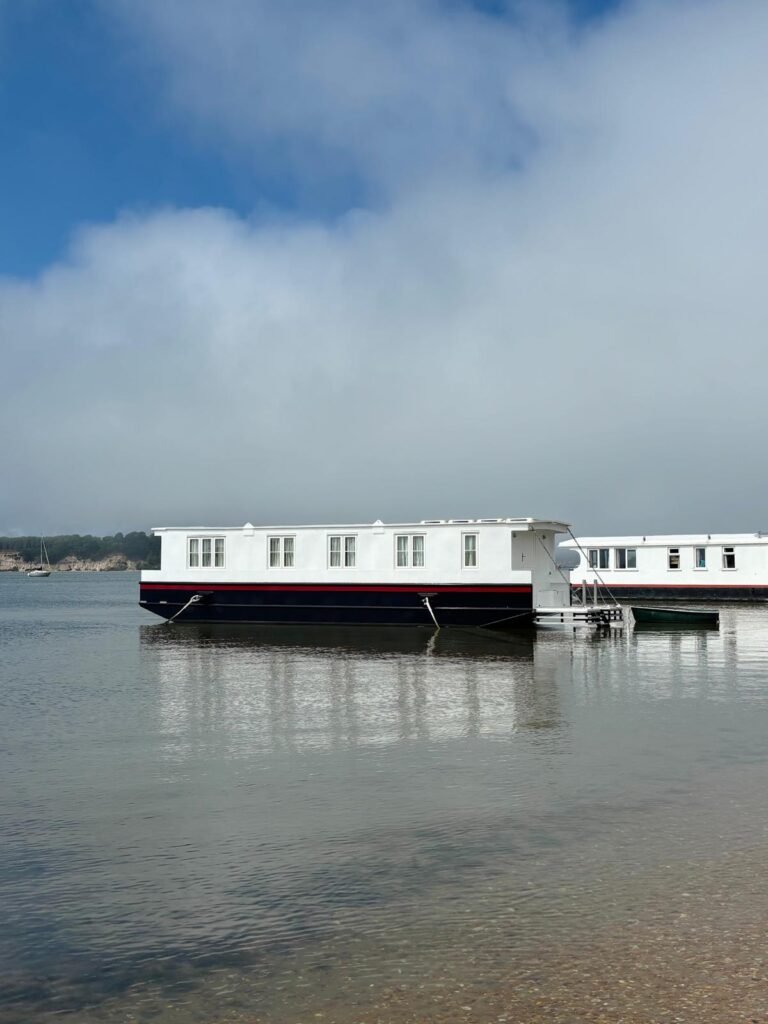
After passing the toll booth, I took the first opportunity to leave the road and head to the golden sand on the harbour side. The water was flat, still and glass-like, with houseboats moored quietly offshore. Across the harbour, I could see Brownsea Island and Furzey Island.
Litter was visible from the moment I stepped foot on the sand, and I began picking it up. Sadly, litter and evidence of fires would become a familiar sight throughout the trip.
I continued along the shoreline towards the sweeping curve of Bramble Bush Bay. Flat grassy areas along the raised shore offered ideal places to sit and enjoy the views, but many contained the remains of old fire pits.
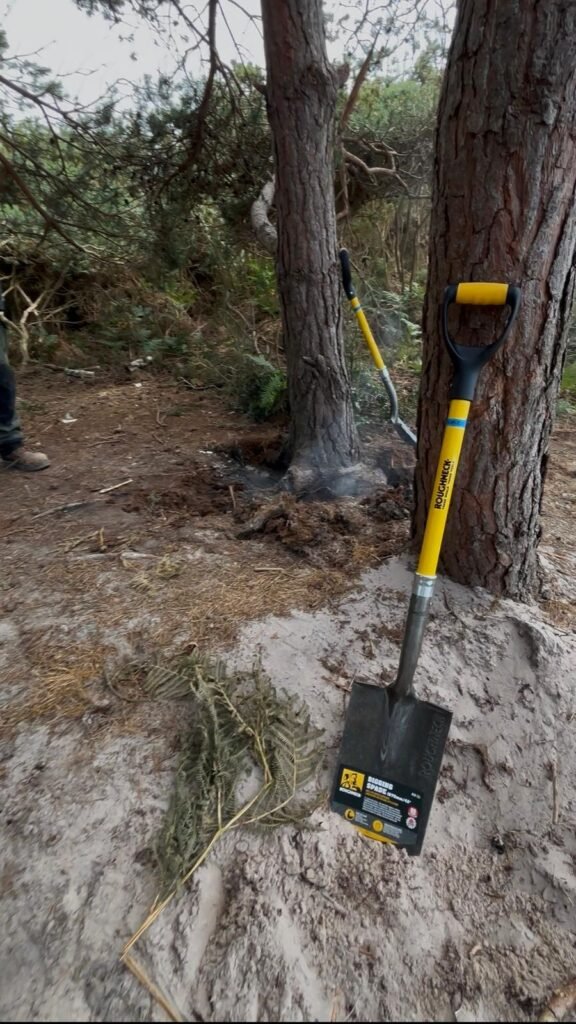
Further along I could smell something burning. It wasn’t long before I found out what was causing it. The rangers told me they had found the smouldering remains of a buried fire. They said a fire hadn’t been extinguish properly, and buried beneath dry organic material. The fire brigade had been called and were on their way.
The shoreline gradually changed from fine golden sand to pebbles, to stones, and then patches of squelching seaweed. Gorse bushes lined the coast alongside pine trees and silver birch as I rounded Redhorn Lake, with views across the water towards the Goathorn Peninsula.
By now, my litter bag was getting full, so I decided to head inland at Brands Bay and try to find somewhere to dispose of it. Before leaving the coast, I visited the bird hide overlooking the bay. Unfortunately, there was more litter inside, along with fire damage to both the wooden walkway and a patch of the surrounding gorse.
The café area at Knoll Beach was the nearest place where I knew there would be bins. Crossing the road, I came across the remains of a small building footprint. I’m not sure what it once was, but it also contained litter and the ash of fires.
By now, I had filled one litter bag and I had to put it inside a larger one. I headed in the direction of Little Sea and soon reached another bird hide overlooking the lake.
The view across the water was fantastic. Again, there was more litter inside and scorch marks on the interior walls of the hide. In the lake just outside the hide, I saw the necks of two beer bottles bobbing among the lily pads.
There was no path around the entire lake, so the route became a mixture of woodland paths and roads. Along the way, I came across a clearing containing several circular structures made from wooden stakes woven together with branches. I thought that they must have been to protect young trees or what ever was inside from the deer.
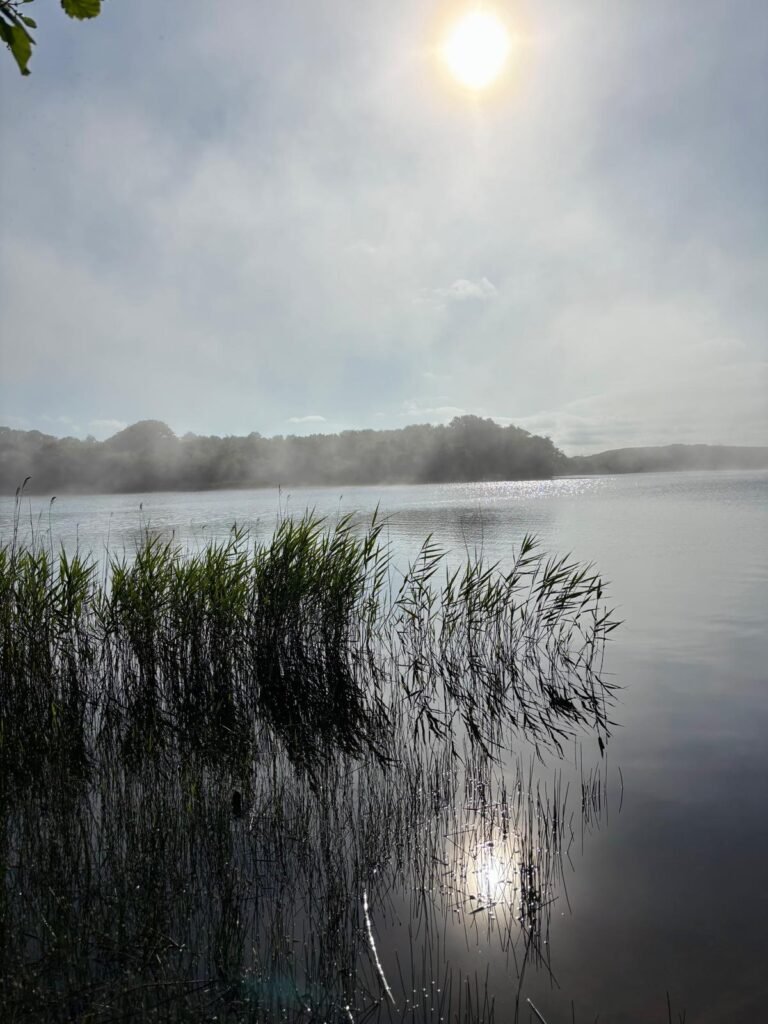
Eventually, I reached Knoll Beach Café, where I was able to dispose of the bag of litter. From there, I continued my walk for a short distance along the beach in the direction of Knoll Beach and the ferry, before turning inland towards Little Sea. The lake looked beautiful. Mist drifted over the water, the sun was high in the sky, and information boards explained the recent beaver reintroduction project.
As it was bird nesting season, I stayed on the main paths and didn’t venture any further into the nature reserve. Instead, I made my way back towards the sand dunes and beach.
If you’re new to wild camping, my post on responsible behaviour and what is expected before you go covers many of the same principles.
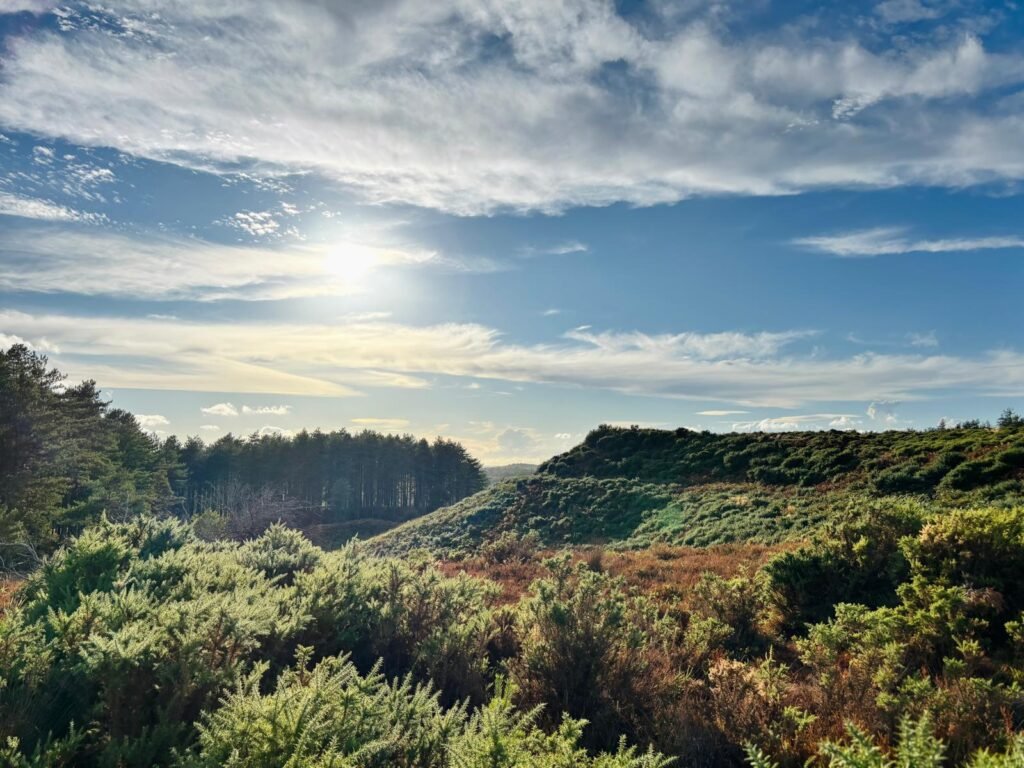
This area feels incredibly special. The combination of dunes, beach grass, heathland, woodland and freshwater habitats creates a really unique landscape. The winding sandy paths that weave through the labyrinth of dunes make it a wonderful place to explore.
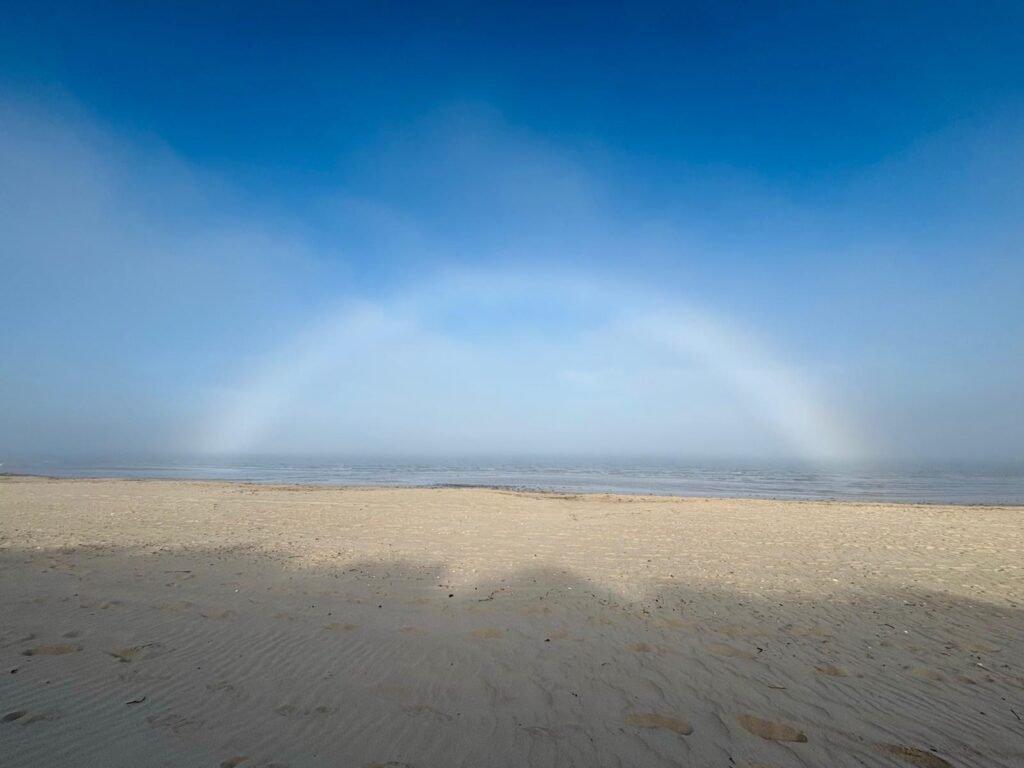
When I reached the edge of the dunes and the beach, I was greeted by a fogbow (white rainbow) a little out to sea. It wasn’t particularly obvious to the naked eye, but the camera brought it to life.
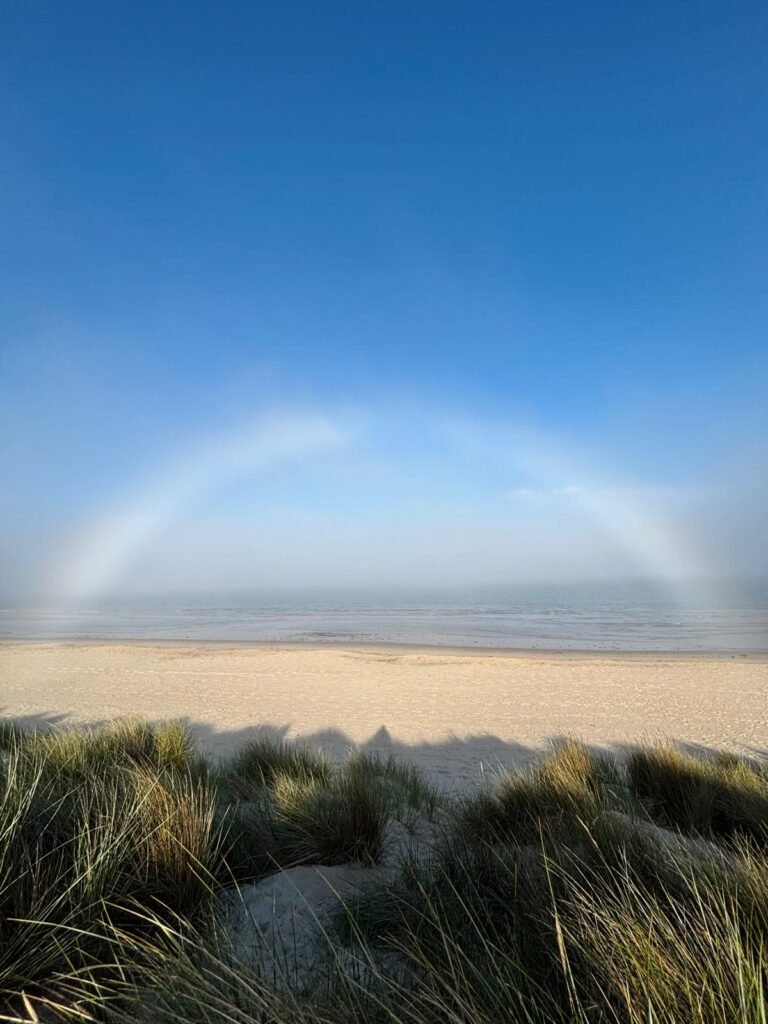
As the sun was beginning to set behind me, the wind was picking up and horse riders galloped along the shoreline beneath the sea fogbow. It was a beautiful scene.
Even at 10pm, it was light and there were still people around. Eventually, I settled into a small sheltered cove amongst the beach grass and made camp.
Finding somewhere suitable often takes longer than people expect. I wrote more about my approach in How to Find a Wild Camping Spot.
The following morning was amazing too. The deserted beach and light mist gave me a sense of remoteness, as though I was standing on the coast in the far north of Scotland. Had the mist not been there, the towns of Poole, Bournemouth and possibly even the buildings of Sandbanks would have been visible and shattered that illusion.
Everything was soaked by the moisture in the air. Water droplets clung to the beach grass before slowly sliding down the stems and disappearing into the sand at the base.
After packing up, I headed back towards the ferry, only to encounter one final delay. The ferry had a technical issue, and there was very little I could do. So I followed the advice of the ferry staff and enjoyed the beach.
Things may not have gone quite to plan, but it was still a trip I enjoyed.
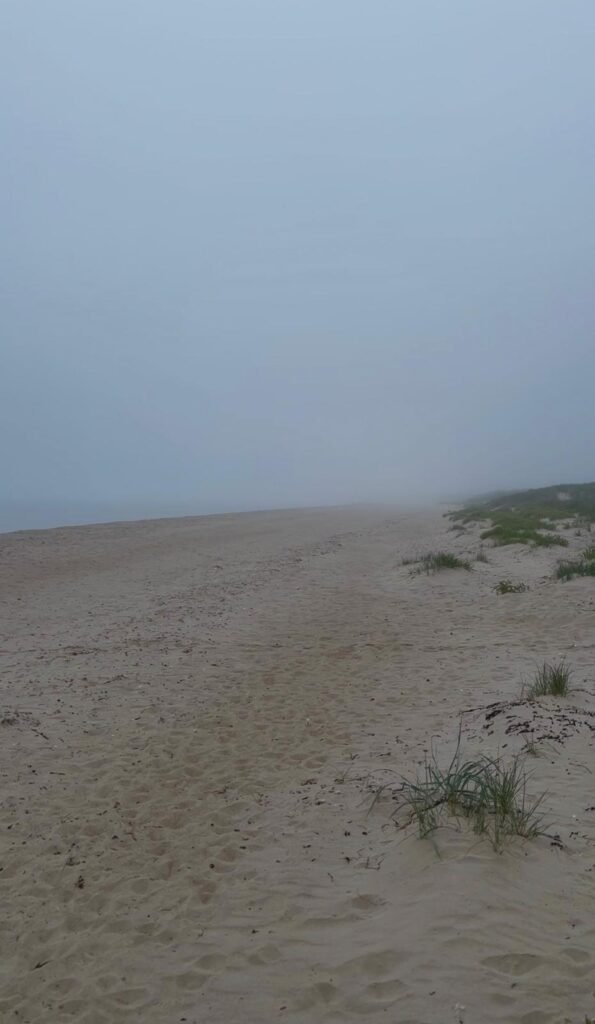
Studland is a stunning stretch of coastline and a very unique landscape. With its sand dunes, heathland, woodland, freshwater habitats and coastline, it is a wonderful place to visit at any time of year.
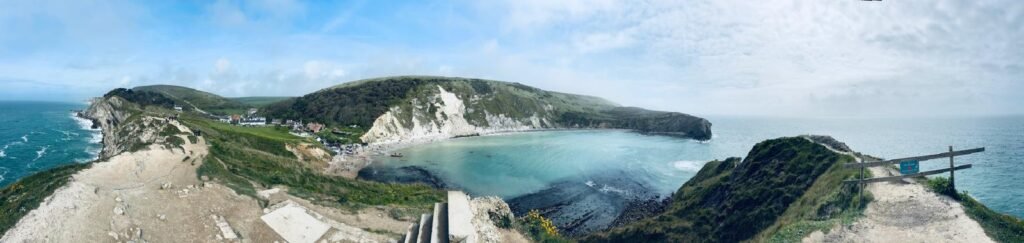
If you’re looking for another Dorset camp, you might also enjoy my camp on the Jurassic Coast near Durdle Door.
Thanks for taking the time to read this.
If you have any questions, or you’d like to share your own experiences of the area, feel free to get in touch via social media or the contact page.
I’d genuinely like to hear your thoughts.
Dan
Responses