
OEX Phoxx 1v2 Tent Review – Pros, Cons, Weight & Real UK Use

I don’t use affiliate links or sponsorships. Everything here is based on my own experience and paid for by me.
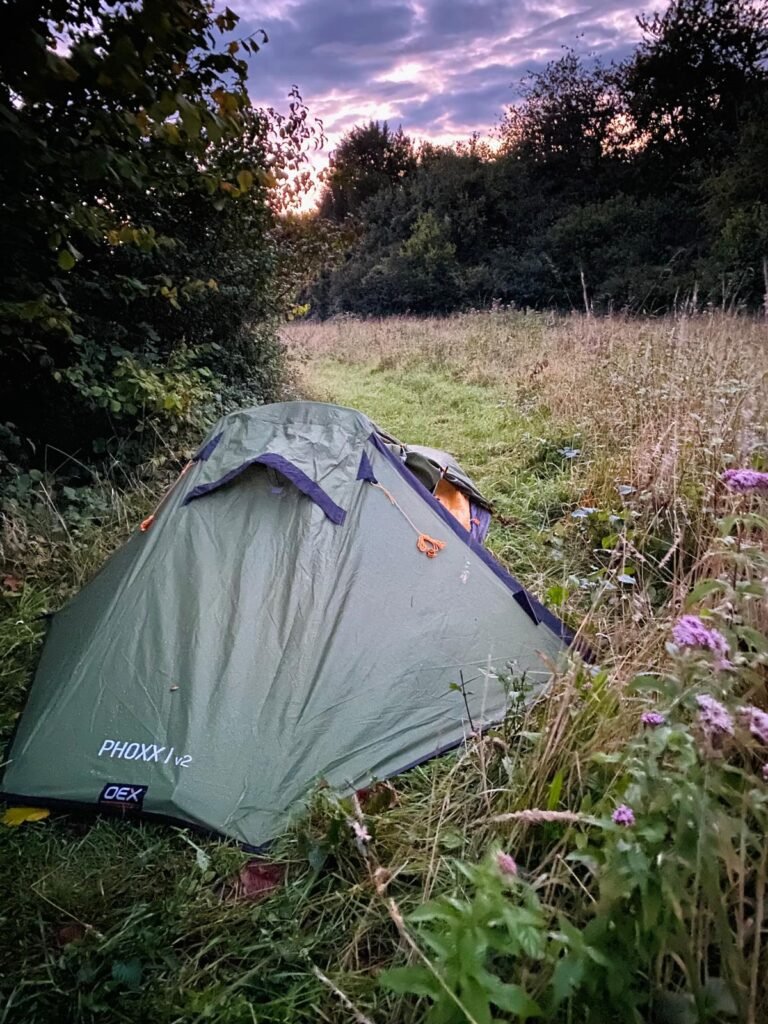
This is my honest review of the OEX Phoxx 1v2 Tent after around a year and a half of regular use in the UK.
I’ll focus on what actually matters from real use: weight, durability, comfort, price and stealth. I won’t go into many specs- you can find those anywhere. This is based on my real experience of 22 wild camping trips in this tent.
I’m not sponsored. I’m just a 52-year-old who camps at weekends and uses gear that works for me.
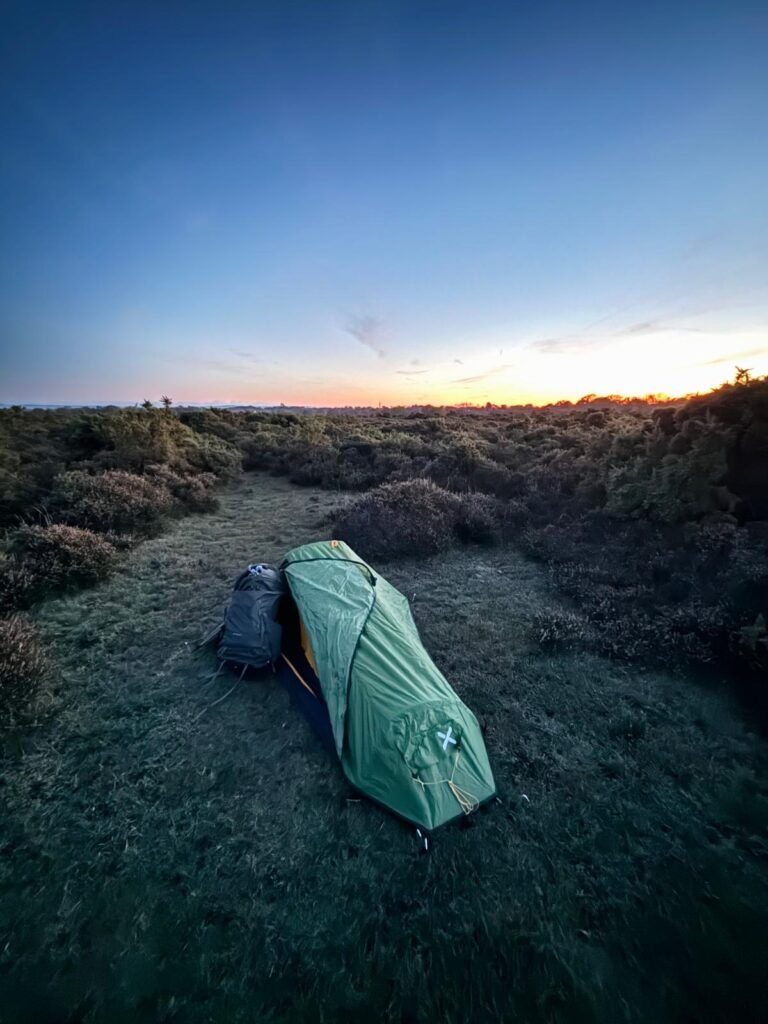
Before getting into it, it’s worth mentioning my bias. I’m a bivvy user, first and foremost. I’m used to tight spaces, low setups and minimal comfort. That matters, because the Phoxx 1v2 branches the evolutionary ladder between a bivvy and a tent – it’s almost a bivi with a tarp over it. So if you like space or being able to sit up, this probably isn’t for you.
If I had to sum it up quickly: it’s great for stealth camping, bad weather and short trips, but not great for space, long winter nights or cooking inside.
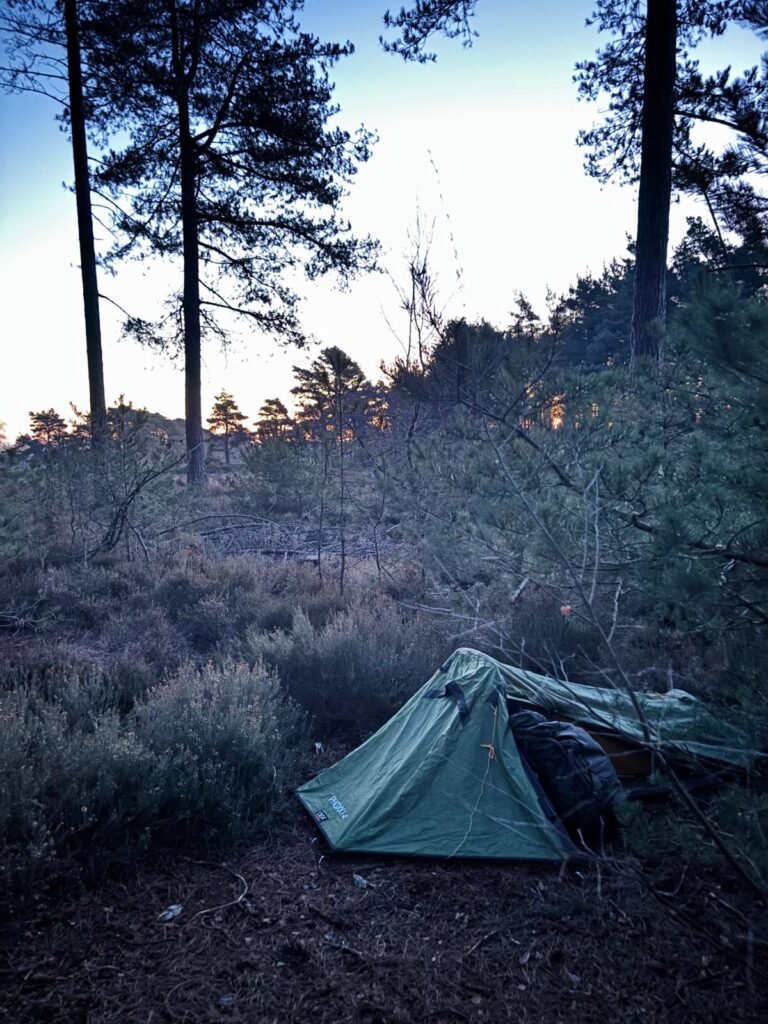
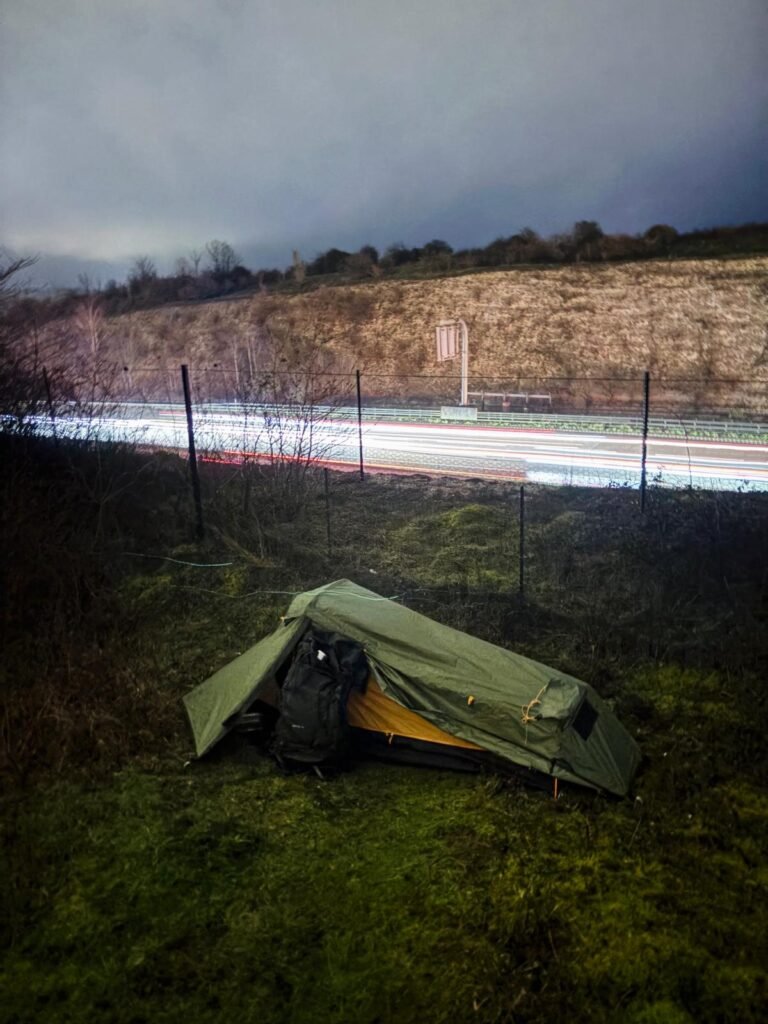
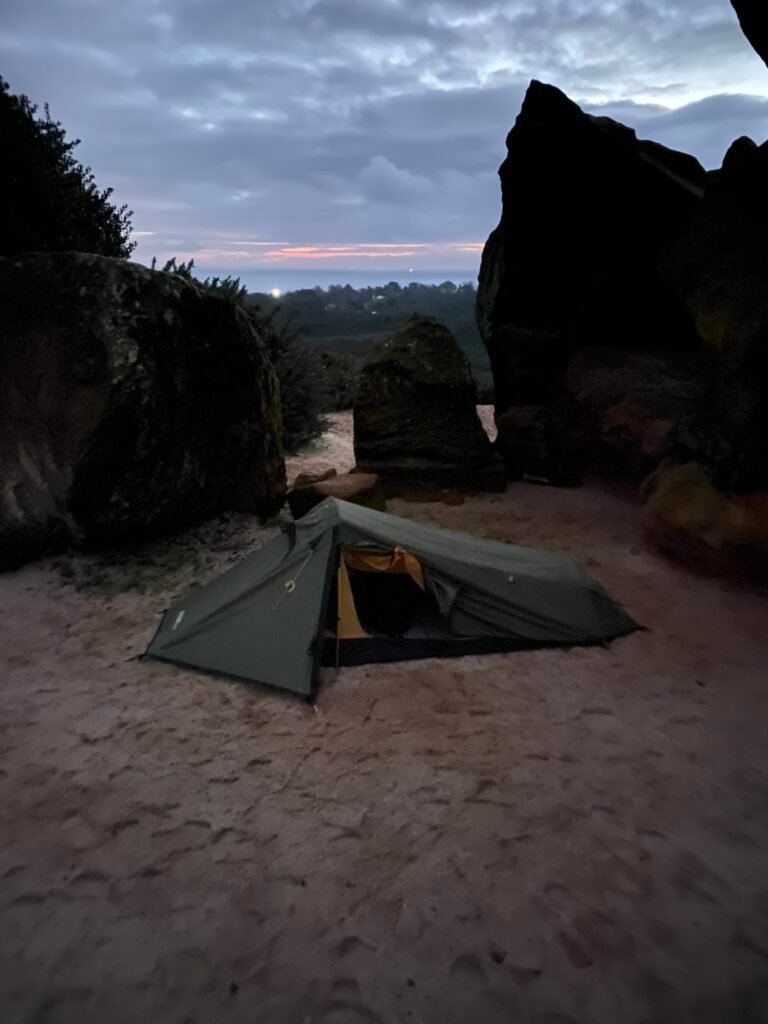
Starting with the positives, durability and weather protection are what this tent does well. It’s a tough bit of kit. I’ve used it in strong winds and storms, including exposed areas on the Dorset coast and hills, and it has never collapsed or leaked. With a 5000mm hydrostatic head, it handles the normal UK wet weather without any issues. It’s a very low profile and with a height of 75cm, its steep sides and low profile help it deal with wind far better than many larger tents.
Price is a massive plus. For what you get, it’s hard to argue against it. I paid just under £70 for mine, and I’ve recently seen it on the Go Outdoors website for under £48. For an entry-level tent or even a shelter to try camping with, it’s a bargain.
Weight-wise, it comes in at 1.58kg. It’s definitely not ultralight, but neither is it the heaviest. It’s somewhere in the middle. If you look at what you get for the price – you get a full inner section with poles, a flysheet and some storage space in the vestibules, I think it’s a very good deal.
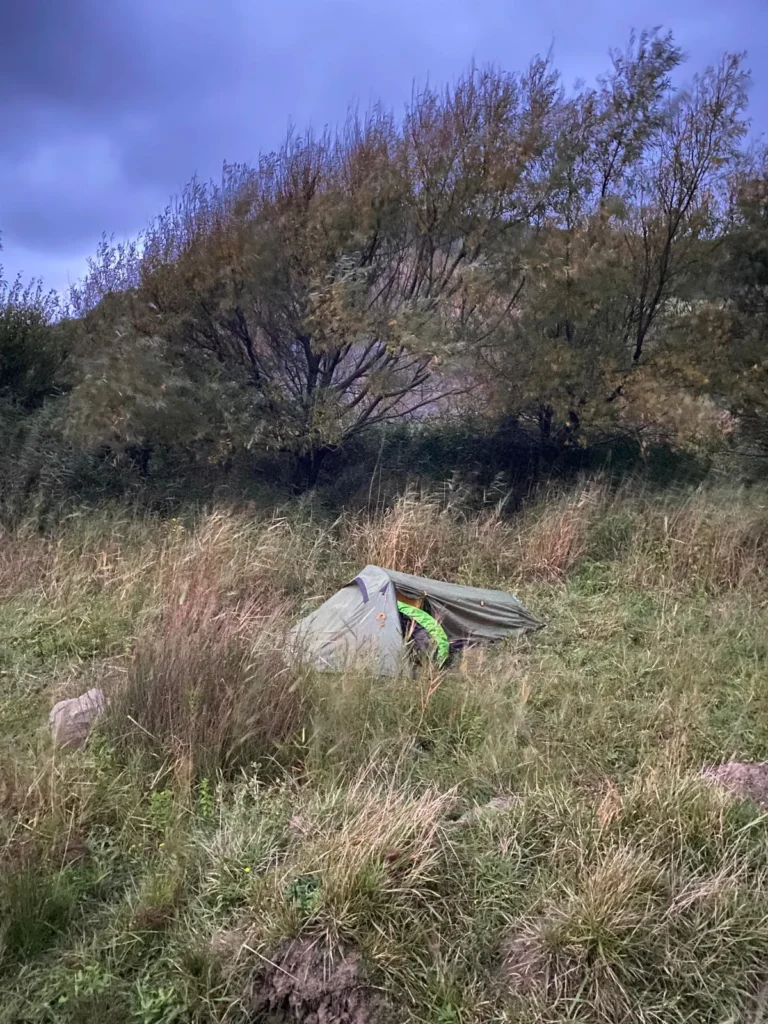
Stealth is one of the main reasons I chose this tent. It’s low, it’s green and it’s easy to hide. If, like me, you camp in areas that are close to paths or buildings, this makes a huge difference. It’s not a bright colour, it doesn’t stand out and it sits just below long grass or bracken.
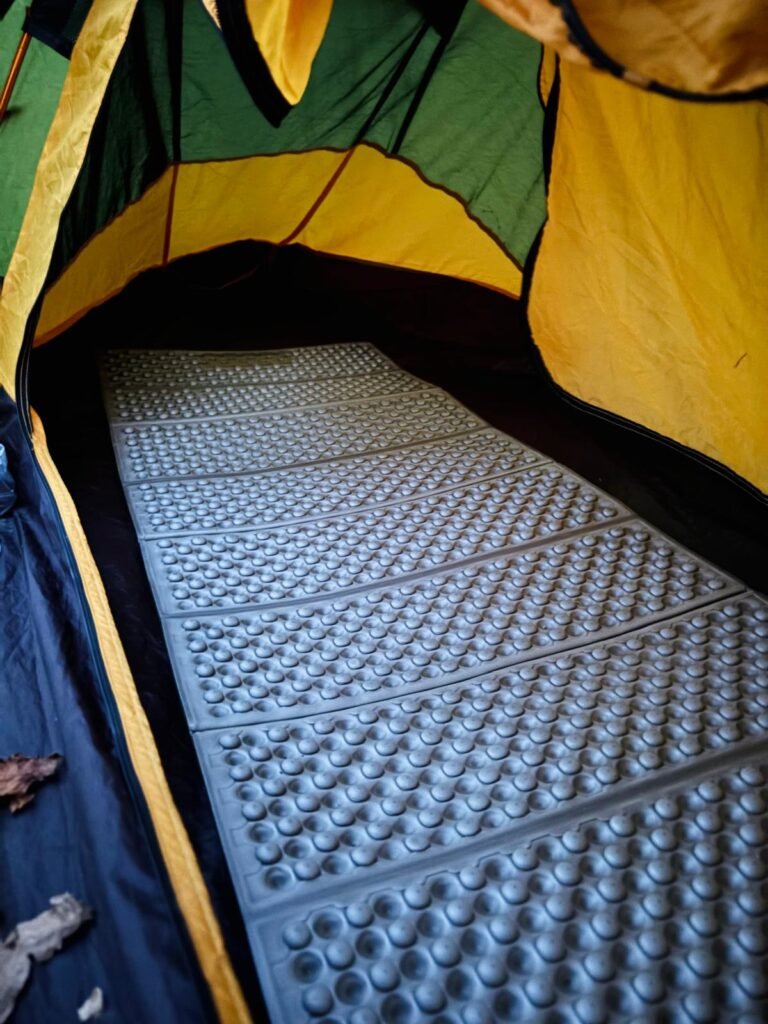
With regards to comfort, is a good fit for the right user. I’m around 6ft1 (185 cm) and I fit inside without any real issues. There’s enough length and enough width. I can use my backpack as a pillow and still have space. The two vestibules also help out with space, by giving you somewhere to keep boots and gear out of the rain.
Moving on to the negatives, and the main one is size. This is where most of the downsides steam from. You can’t sit up in it, it can feel tight to those not used to these kind of spaces, and getting in and out can be tricky at times. If you’re used to bigger tents, this will feel small and restricted. In winter, when it’s dark early and light late, being horizontal with limited space can feel a long time.
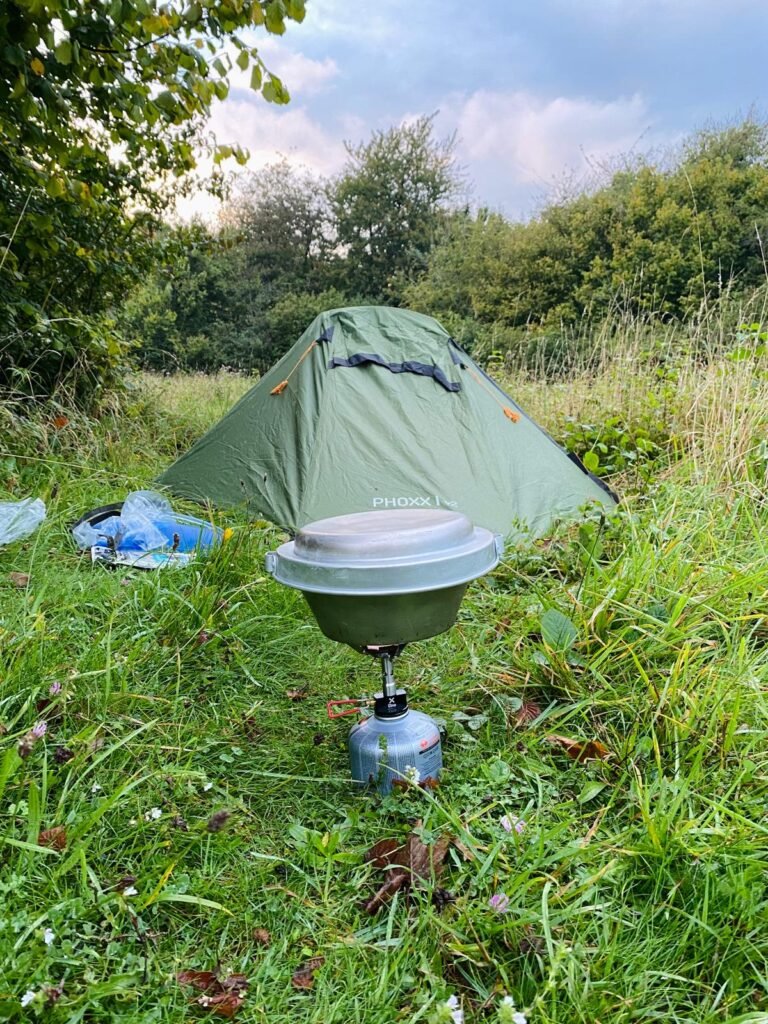
The vestibules are very good and do a great job, but they’re limited. You can cook in them at a push, but you do run a big risk of setting the tent on fire. But, as long as the tent is facing the right direction, they offer a bit of protection from the wind, but they definitely don’t offer anything in the way of protection when it rains. They’re more suited as a place to put your boots and backpack.
Condensation is another issue, although I have had condensation issues with every tent and bivvi I’ve used. In wet and damp conditions, it does build up, and I think it’s the same of every canvas shelter. I try to reduce it by leaving a gap for airflow and opening one side when I can, but in colder months when the air is damp and wet, I don’t notice much difference. Condensation does lead to lead to one issue -contact between the inner section and the flysheet, especially at the foot end, and of course any contact transfers that moisture straight onto your sleeping bag. This is especially hard to avoid as the foot end is no more than 40 cm in height.
The inner-first setup is also worth mentioning, and something I’ve heard mentioned many times on YouTube. You setup the inner section with it’s poles first, then add the flysheet on top. In dry conditions, that’s fine. In rain, it does mean that the inner can get wet before you get the outer on. It’s not the end of the world, but it can be a negative.
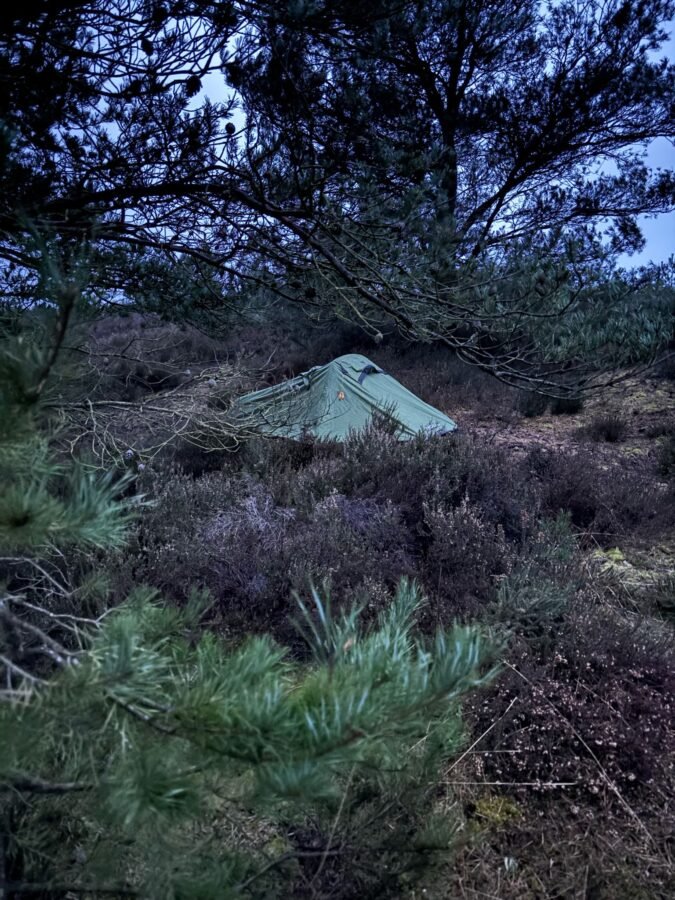
To finish up, someone recently said to me on social media that the best tent is the one that suits you, and those are very wise words. I didn’t buy this tent for camping and cooking in blustery conditions on mountain summits. Neither did I buy it for walking and backpacking across countries on long distance treks. I bought it for short, 1–2 night camps in the UK countryside where I wanted something low profile, reliable and easy to use that was cheap.
For that purpose, it does exactly what I need it to do. This is the same tent I’ve written about before in my full OEX Phoxx 1v2 review, which you can read here.
#oex #phoxx1v2 #robenssleepingmat #robens #tent #wildcamping #tentcamping #forestcamping #campingstove #trangia #blog
A Gentle Encouragement
If you have any questions, feel free to get in touch via social media or the contact page.
I appreciate you taking the time to read this, and I’d genuinely like to hear your thoughts – good or bad.
Thanks again,
Dan




[…] I’ve recently written an updated review after more use, which you can read here. […]