
Dancing Ledge Wild Camping (Dorset Coast Walk & Camp)
This trip took me along one of the more rugged and interesting sections of the Isle of Purbeck coastline in Dorset, starting from Langton Matravers and heading out towards Dancing Ledge, Seacombe Cliff and Winspit Quarry.
Dancing Ledge and the Route Along the Coast
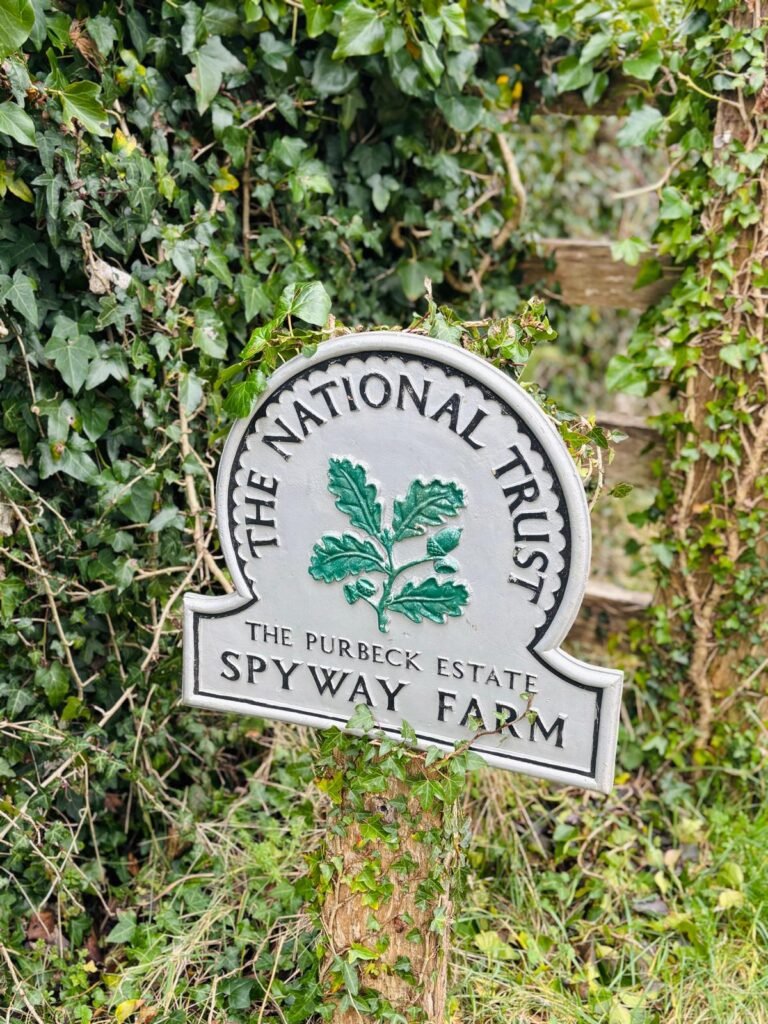
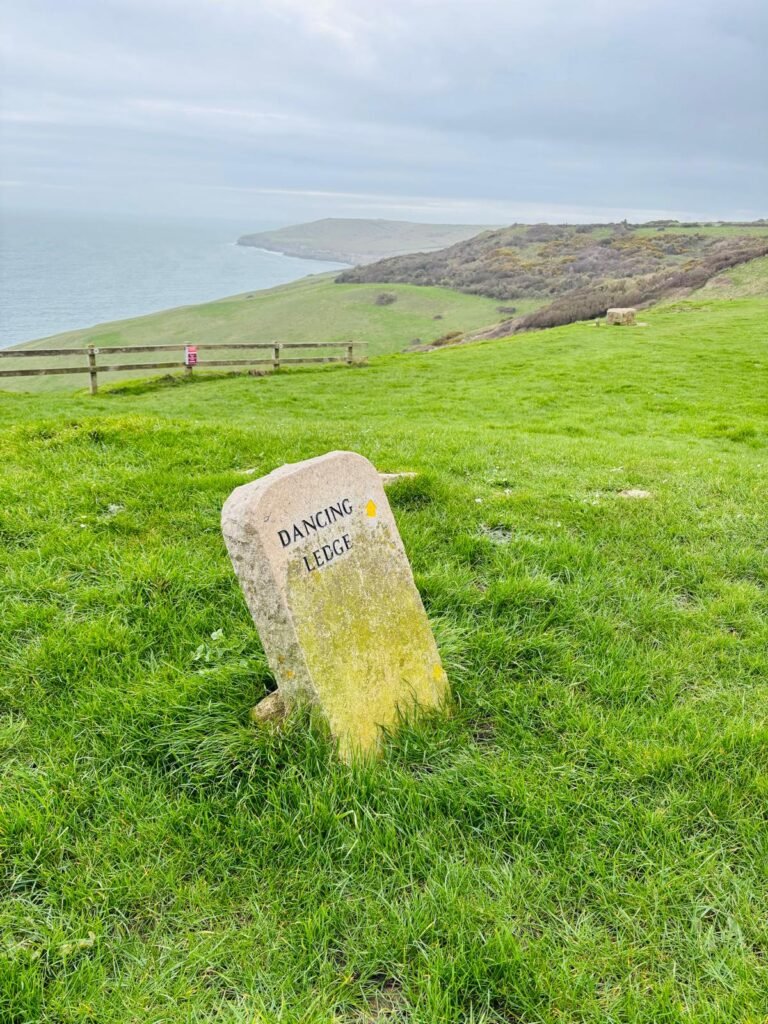
I accessed the South West Coast Path via Spyway, passing through the National Trust car park and crossing over the Priest’s Way. From there, it’s a steady walk past Spyway Barn, across cow-filled fields and out to the edge of the high ground, where a guidestone points the way down towards Dancing Ledge. I captured the full descent in a time-lapse on my YouTube channel, showing how the path drops through the landscape.
Dancing Ledge itself feels almost like a natural amphitheatre. The flat rock platform, surrounding cliff walls and crashing waves below, gives it a very enclosed and atmospheric feel. When I arrived, I had the place to myself and I wandered around to explore the place and take a few photos. There are quarry openings cut into the rock, and metal grills blocking the window shaped entrances.
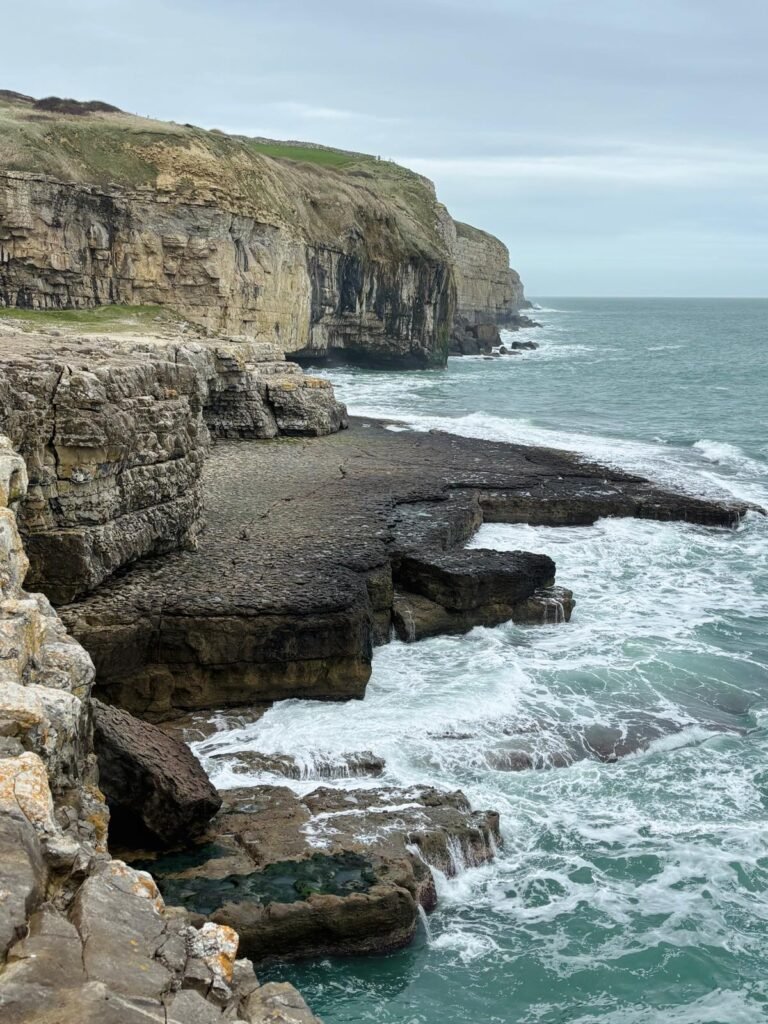
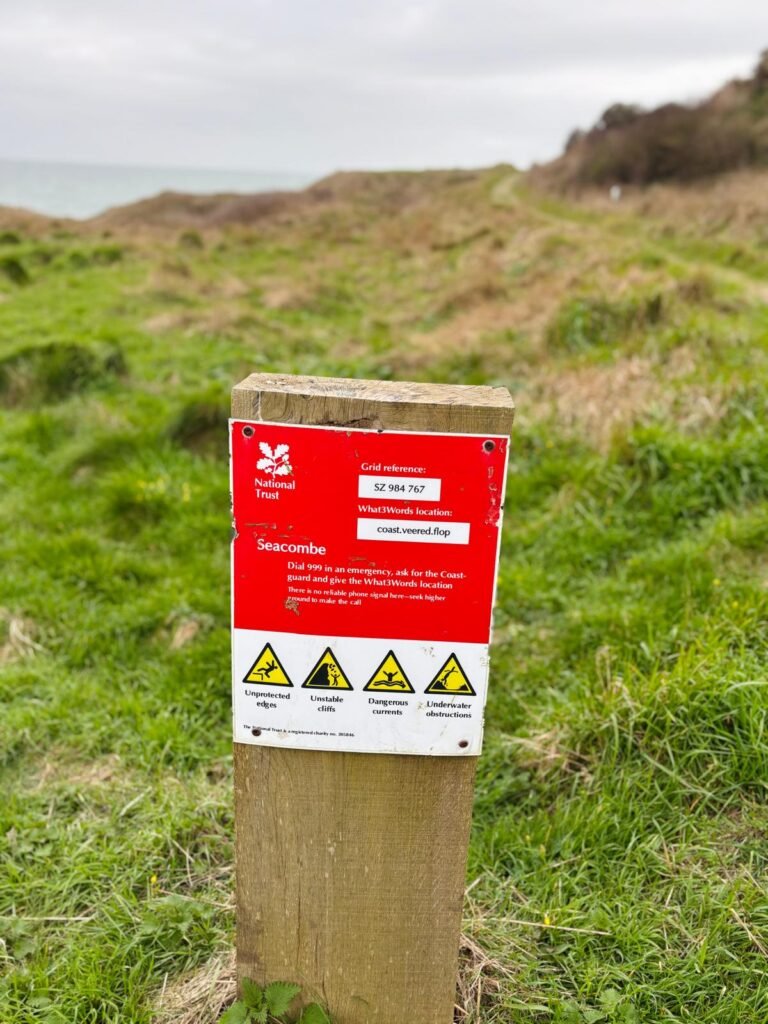
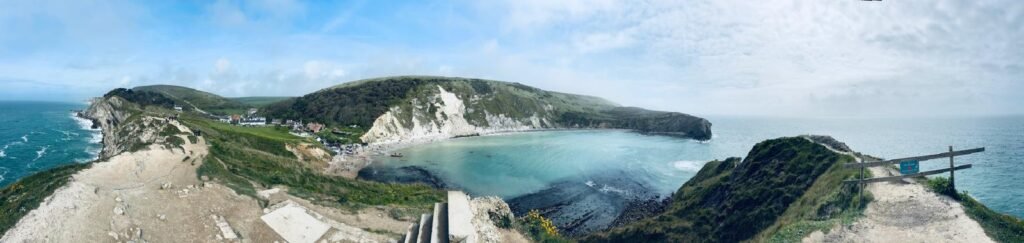
From there, I continued back and along the South West Coast Path towards Seacombe Cliff. This section offers great views along the Dorset coastline, with more rocky outcrops along the way. Arriving at Seacombe, access to the quarry entrances are fenced off due to rockfall risk, and there are signs warning of the dangers.
All along this section of the coast, there are areas where rock climbing takes place. I did see a group of climbers in the distance on a cliff edge, but this isn’t an area I wanted to explore, with my 10 kg backpack and my fear of heights.
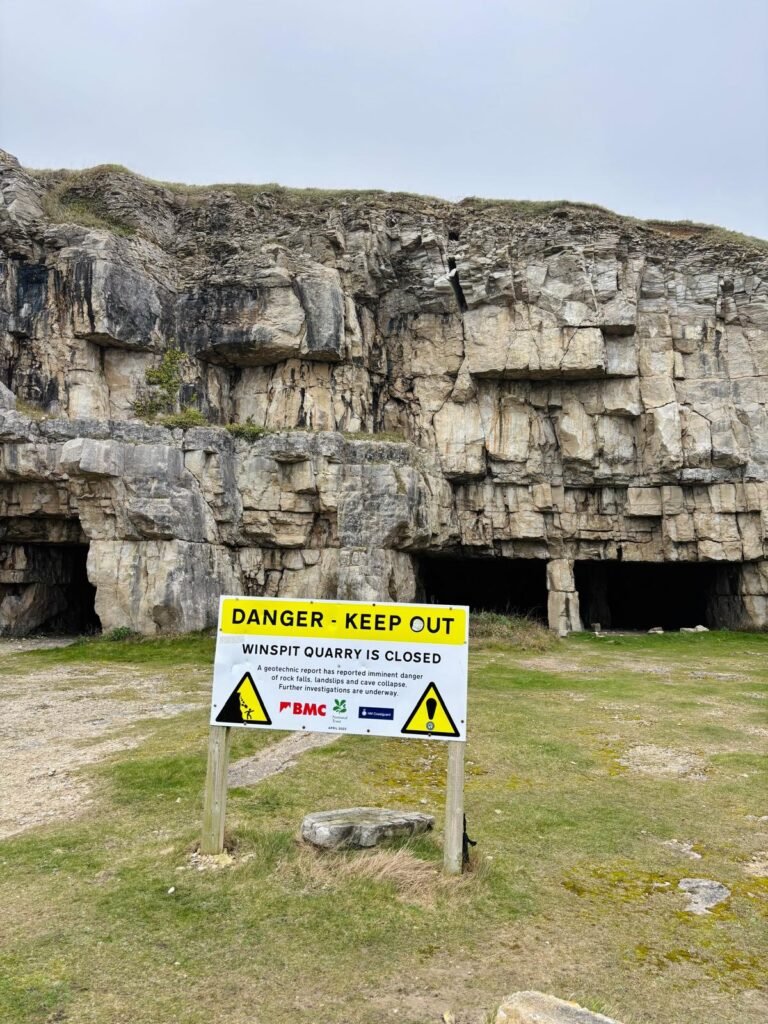
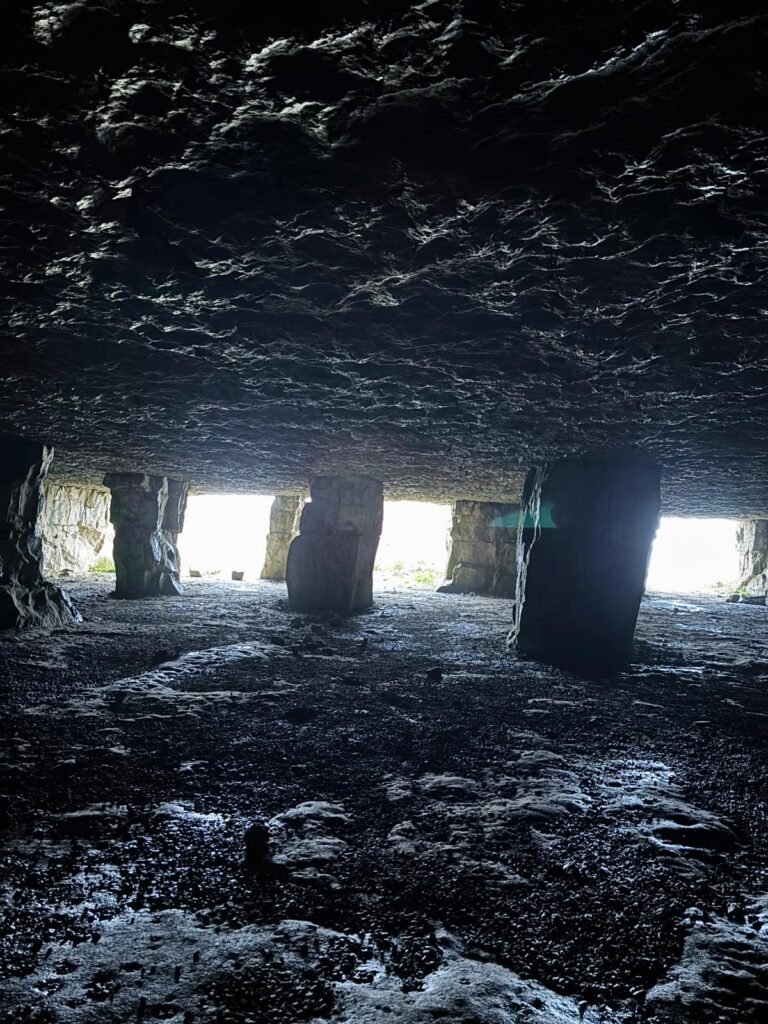
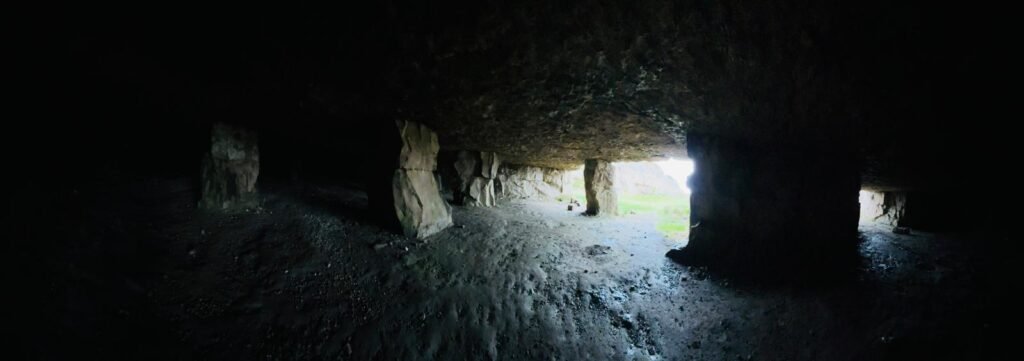
I carried on towards Winspit Quarry, which is one of the more impressive spots along this stretch. The quarry itself is a large hollowed-out space with supporting rock pillars, giving it a dramatic and almost cathedral-like feel inside. It’s a great place to explore and photograph, but like many of these locations, it shows signs of heavy use, including litter and evidence of campfires.
Changing Plans and Choosing a Camp Spot
My original plan was to reach St Aldhelm’s Head and the nearby trig point of TP6120 – St Albans Head, but with the wind picking up, and the light slowly fading, I decided to go no further. I turned around and retraced my steps to Seacombe Cliff, but instead of following the coastal path, I followed a path up to higher ground.
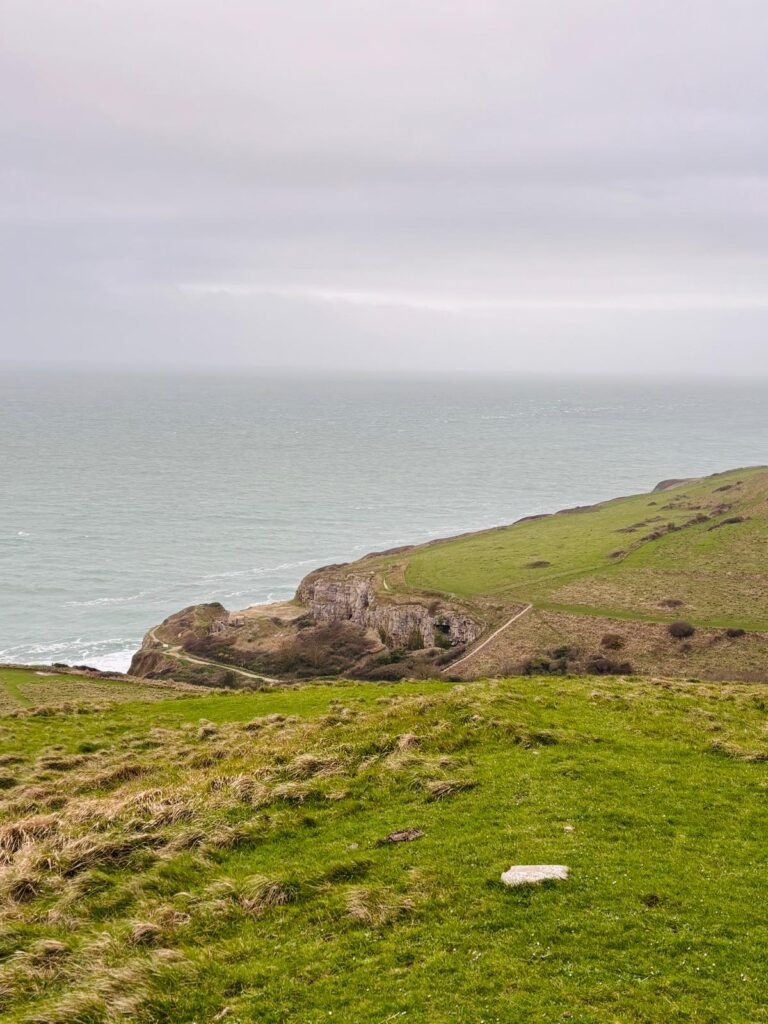
There are two main paths along this part of the coast – the South West Coast Path along the lower level, and another quieter path running along the higher ground and usually through farmer’s fields. I chose the higher route, which seems far less popular and offers more options in the way of quiet spots to camp and some shelter from the wind.
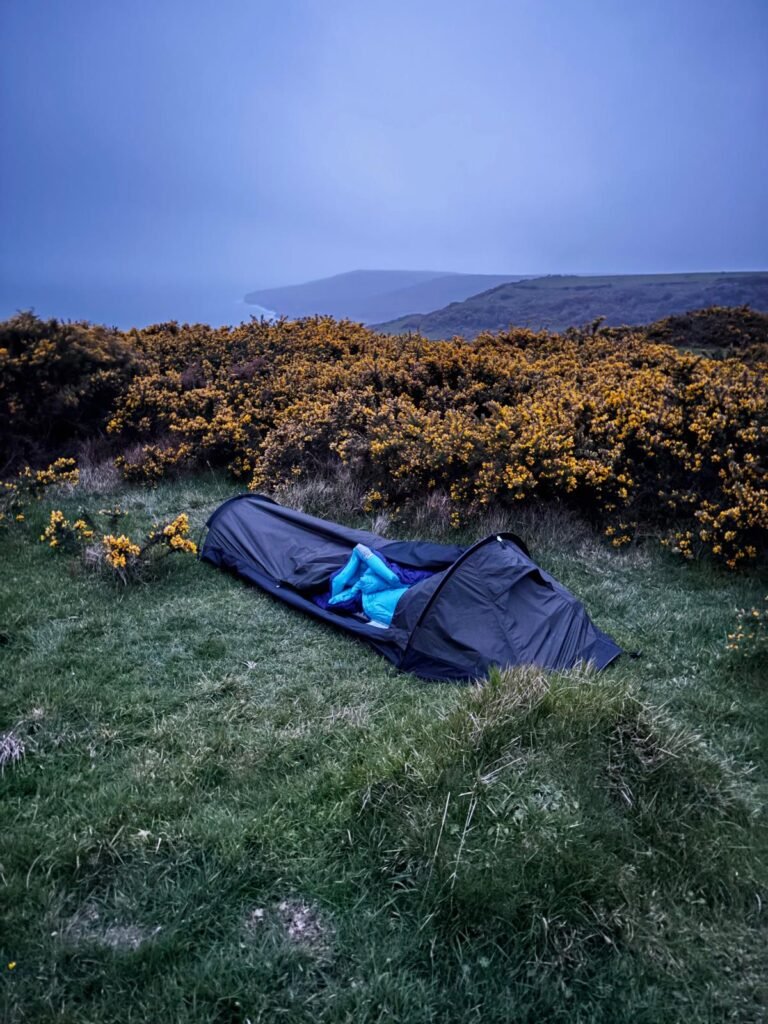
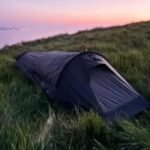
I eventually found a sheltered spot not far from where I had begun the day near Dancing Ledge. It was on flat grass behind some gorse, which was perfect protection from the wind. It turned out to be a good comfortable spot out of the wind. In the very late evening, I could see faint lights coming from Seacombe Cliff. I could also hear music, which could have been coming from either Seacombe Cliff or Dancing ledge. I felt that my instincts not to camp at either was justified.
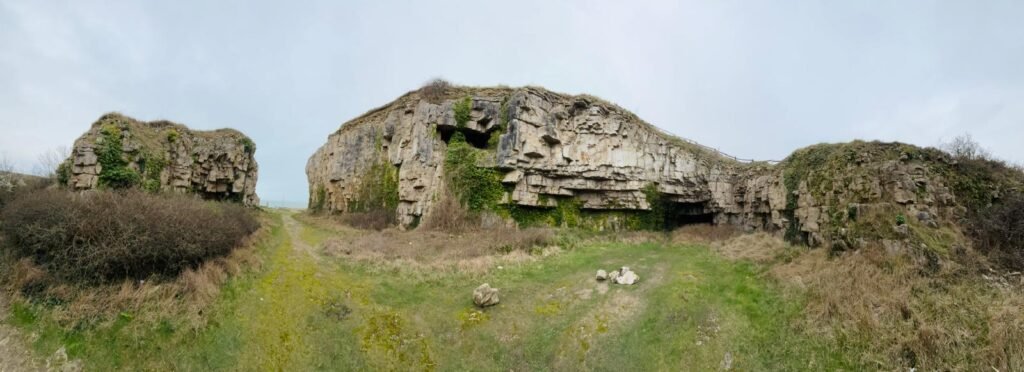
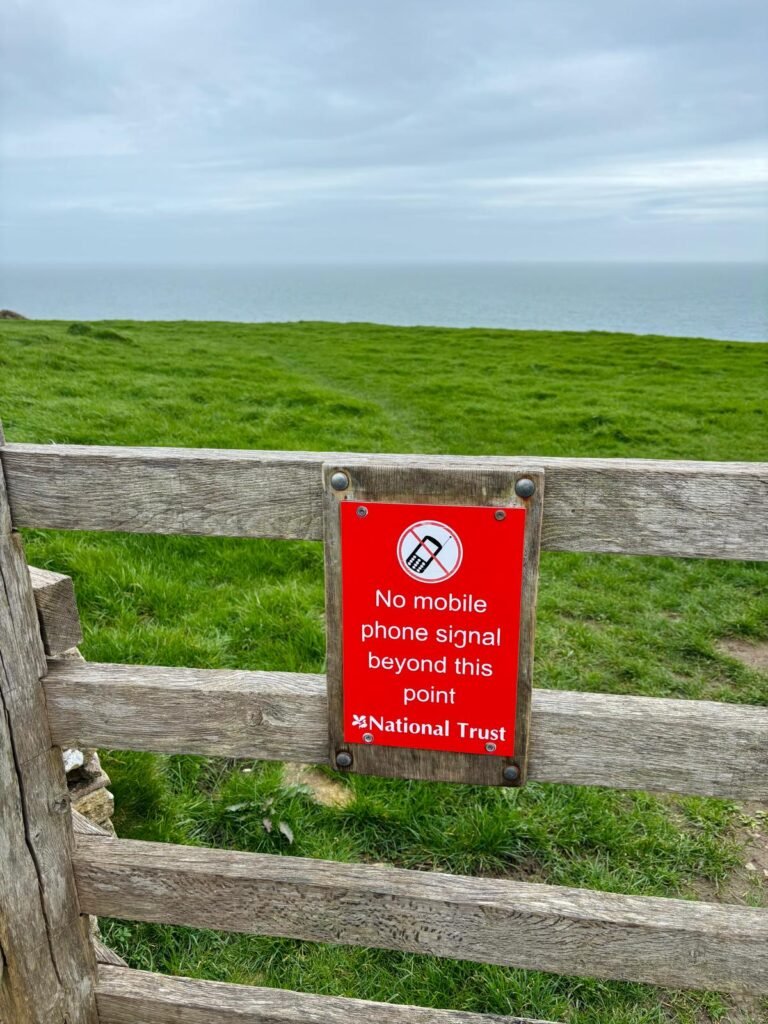
While those spots are fantastic features to explore and photograph. They are also easily accessible popular spots. Unfortunately, some areas are strewn with litter, fire pits and signs of people using them as toilets. They’re also enclosed spaces with only one route in and out. This isn’t ideal if a group decides to descend on the area at night. This, along with the fact there’s no internet signal due to the drops in elevation, were the reasons why I chose not to camp here.
If you enjoy this part of the Jurassic Coast, you may also like my longer Dorset coast walk and camp here: Wild Camping the Dorset Coast (Jurassic Coast, UK)
Wild Camping with the Nortent Skjul Bivvi
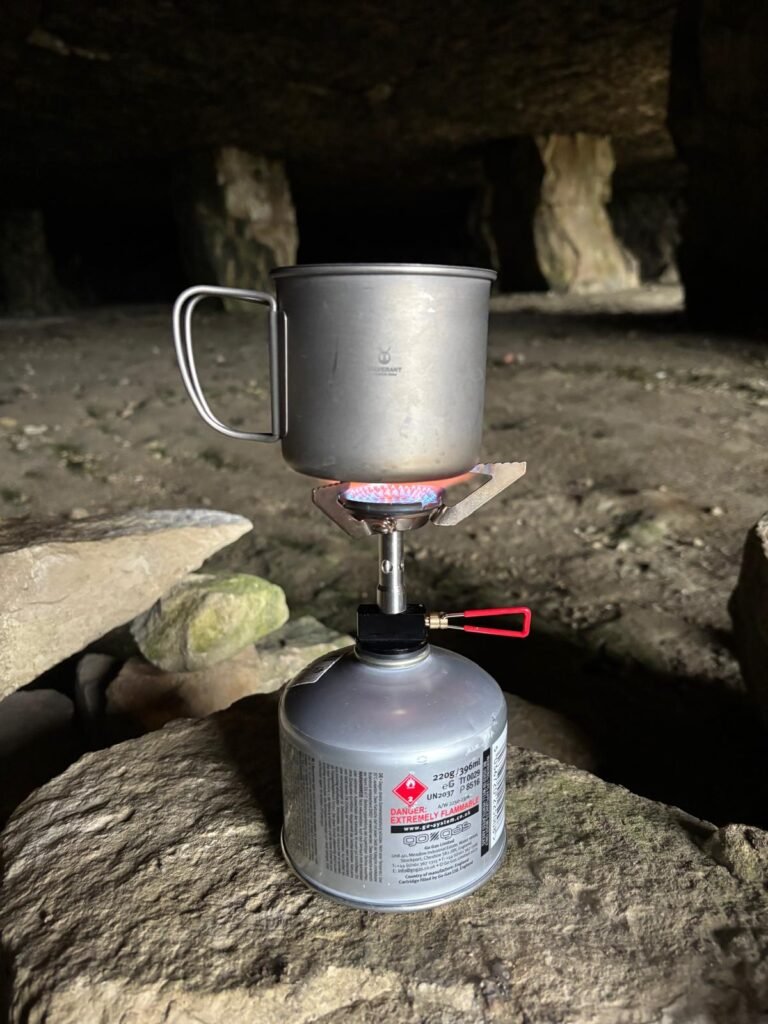
This was also my first night back out using the Nortent Skjul bivvi after a sewage leak had damaged some of my stored gear. After many thorough cleans and soaking in disinfectant, it was time to give it another go – and I’m glad I did. It was great to be out in it once again, and this is my favorite shelter, and my favourite form of wild camping.
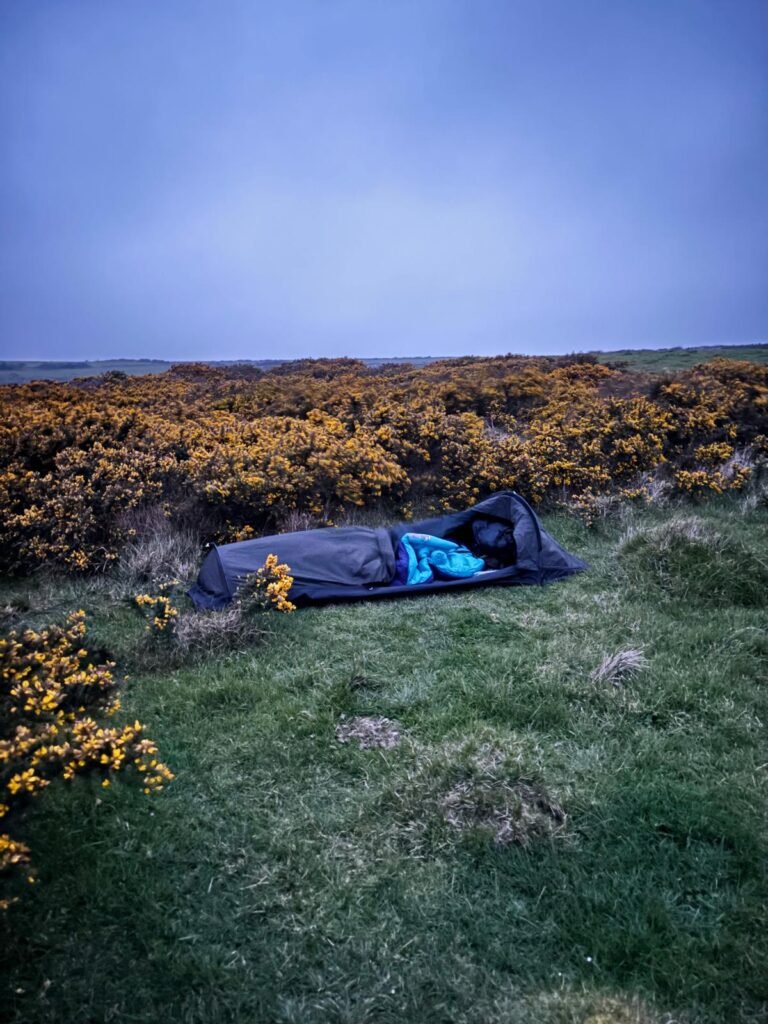
The night itself was very windy with rain in parts and a cold sea fog. It’s not what I had expected from the weather forecast of overcast and dry. Because the morning was miserable, I didn’t get the stove and coffee out for a morning coffee. Instead I packed up and headed back to the car through the wind and fog. The walk back took me through open fields, where cattle were lying down after their night time sleep. Negotiating fields of cattle is one obstacle I dislike, and something I am extremely weary of. If I can avoid them, I will. From experience, the fields of younger males can be the worst. My approach is to keep my distance, avoid making eye contact, and if possible, stick to the parts of the field where I can easily escape, or take cover.
Final Thoughts on the Purbeck Coast
Overall, it was an enjoyable trip out along a very scenic and interesting part of the Dorset coast. I have only visited this area once before, and it offers great views, interesting terrain and plenty to explore – but it’s also a reminder that some of the more obvious camping spots aren’t always the best choice.
For the practical details of this camp – including coordinates, access, and a few heads-up points – you can check out the full camp post here: (Isle of Purbeck Coast, Dorset: Nortent Skjul Bivvi Setup)
A Gentle Encouragement
If you have any questions, feel free to get in touch via social media or the contact page.
I appreciate you taking the time to read this, and I’d genuinely like to hear your thoughts – good or bad.
Thanks again,
Dan
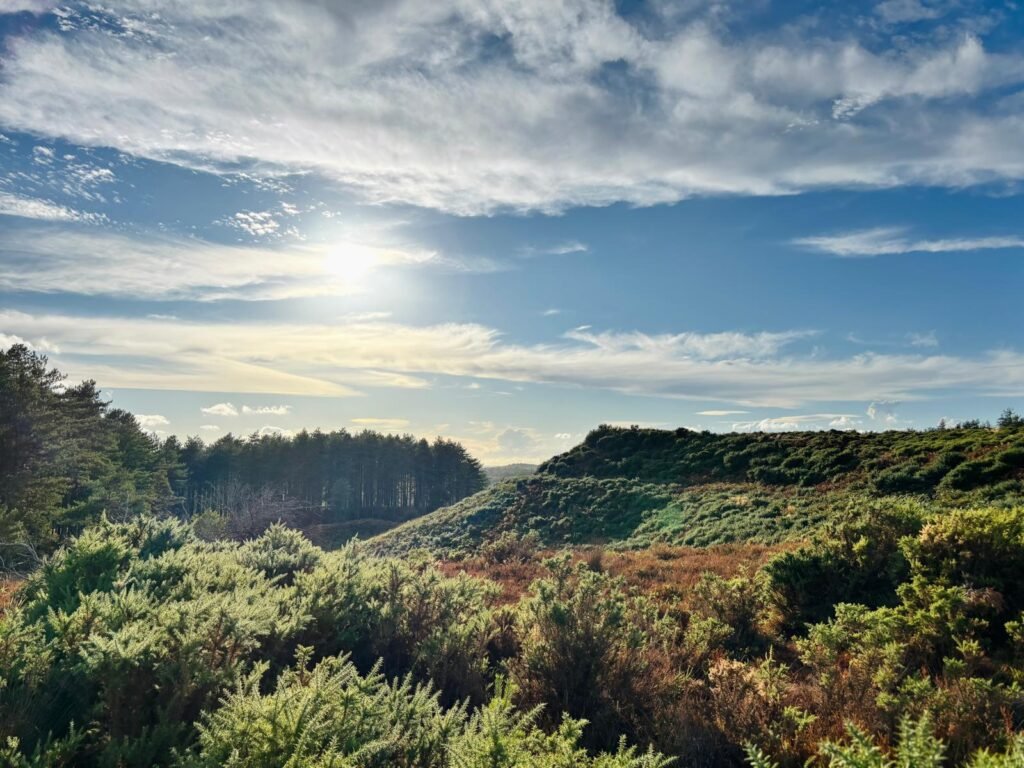
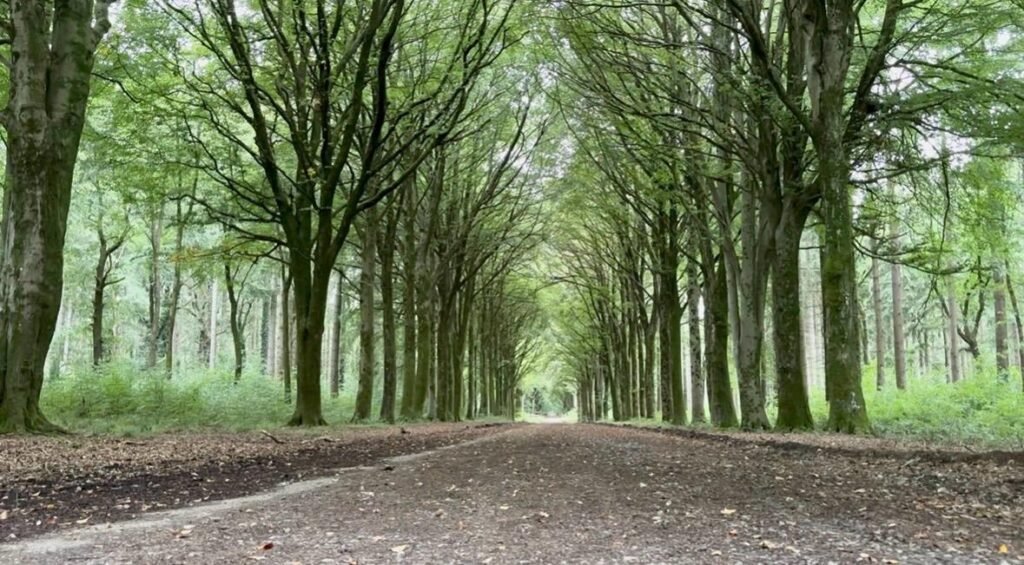
[…] If you enjoy this part of the Jurassic Coast, you may also like my camp at Dancing Ledge, with its exposed cliffs, sea views and coastal walking routes: Dancing Ledge Wild Camping (Dorset Coast Walk & Camp) […]