
Where It All Began: My Love Affair With Bivis

Why Bivvis Get Reactions – and Why I Like Them
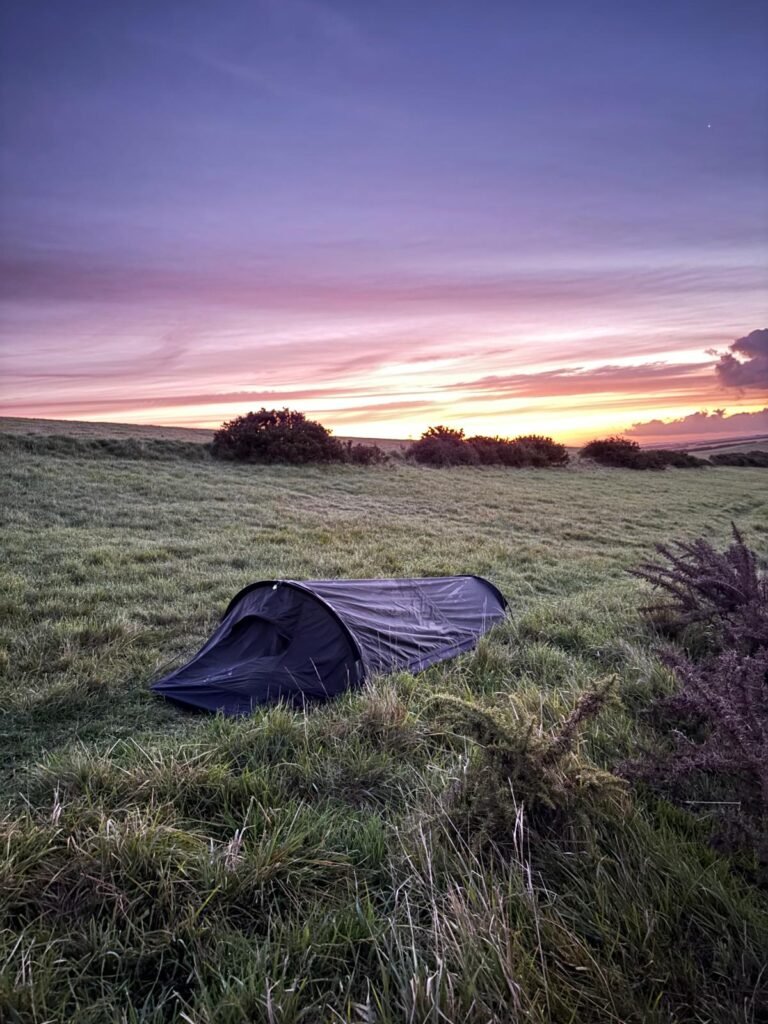
I often get complimented on my bravery, along with plenty of inquisitive comments about sleeping in a coffin. If you don’t know what I’m talking about, this refers to my love of bivis and why I enjoy camping in them.
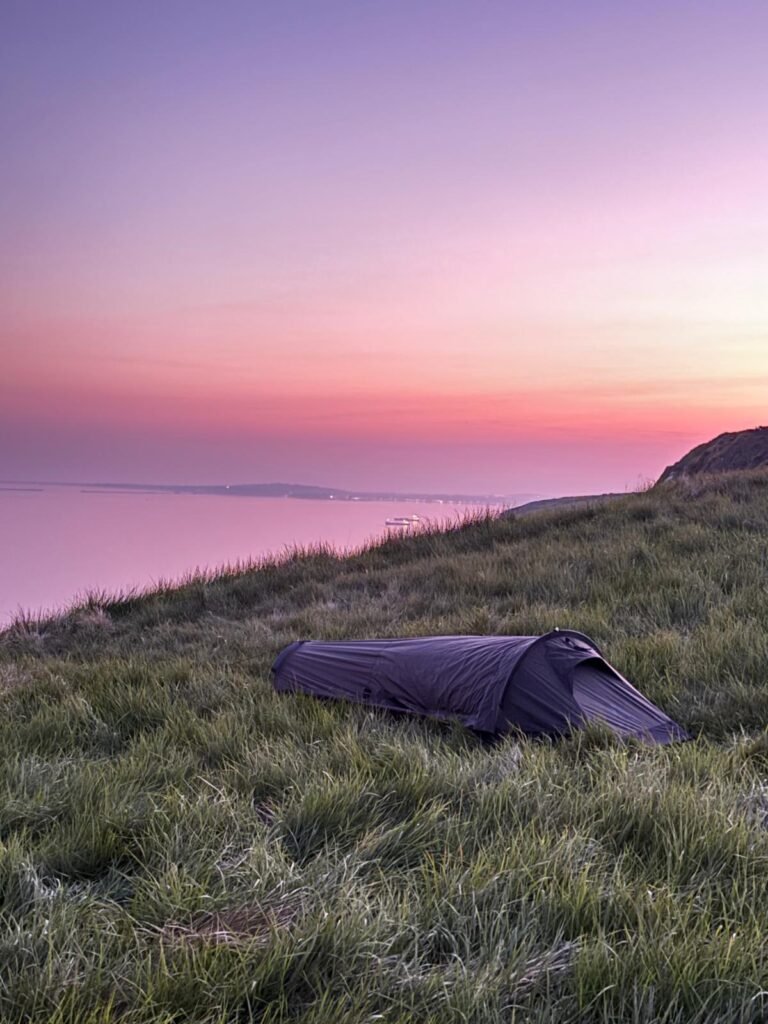
I know bivis – and small tents, which I’ll include here – aren’t everyone’s cup of tea. So I’d like to explain why they work so well for me.
I’d like to begin by saying, I don’t always camp in a bivi. There are times when a bivi wouldn’t be appropriate, or when I simply want to mix things up and use a different shelter. That said, I could quite happily cope with longer journeys using a bivi – and in the past, I have.
Learning to Use Bivis Early
I’m in my 50s now, and my love of bivvies goes back to my teens. Back then, a couple of friends and I went on a two-month cycling trip through northern Spain into south-west France, crossing the Pyrenees and heading down to the southern coast of France.
One of my mates was in the army at the time and supplied us all with bivis. They were simple drawstring bivis and certainly not luxurious. We slept in them through hot southern European nights, and had to pull the drawstring tight to keep the mosquitoes out. They were hot and very uncomfortable. After that trip, a friend and I promised ourselves that one day we’d own a Dutch army hooped bivi.
The Dutch Hooped Bivi: Years of Use
I’m not sure if my friend kept that promise, but I did. After moving back to the UK in 2010, I started camping again and bought a large Dutch army hooped bivi, which I used for many years.
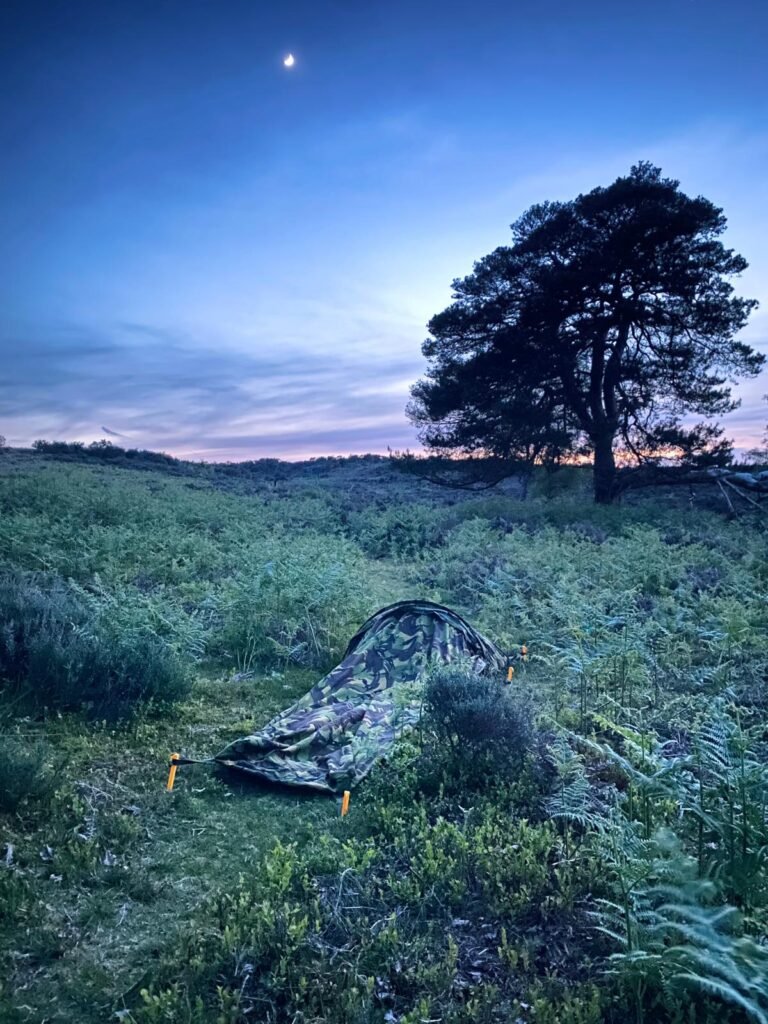
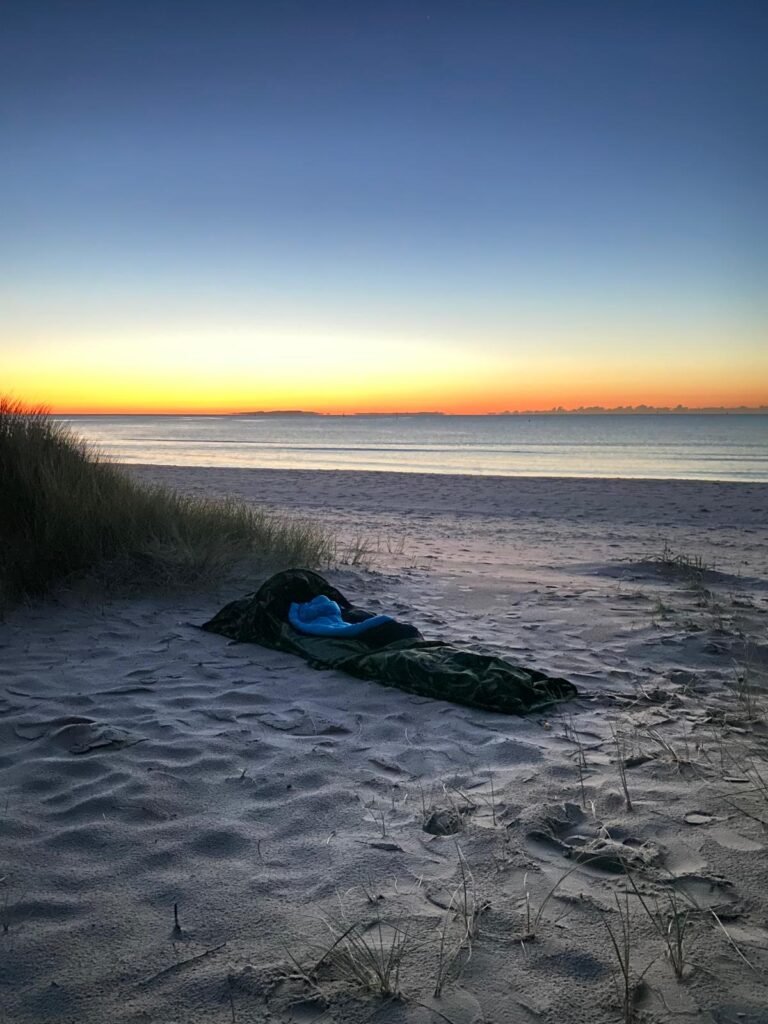
I really loved that piece of kit, and it was my only shelter so I used it on every camp I went on. It wasn’t perfect and does have a few drawbacks though. It’s heavy at around 1.7 kg (3.7 lbs), and in winter the thick Gore-Tex sits directly on you and your sleeping bag, allowing the cold to penetrate.

Even though it has a few negatives, there are way more positives.
What I Like About Bivi Camping
I find bivis fun and fuss-free, and they suit me because they’re no-nonsense and not flashy. They come second only to cowboy camping and tarp camping when it comes to no-frills shelters and a simple way to spend a night outdoors.
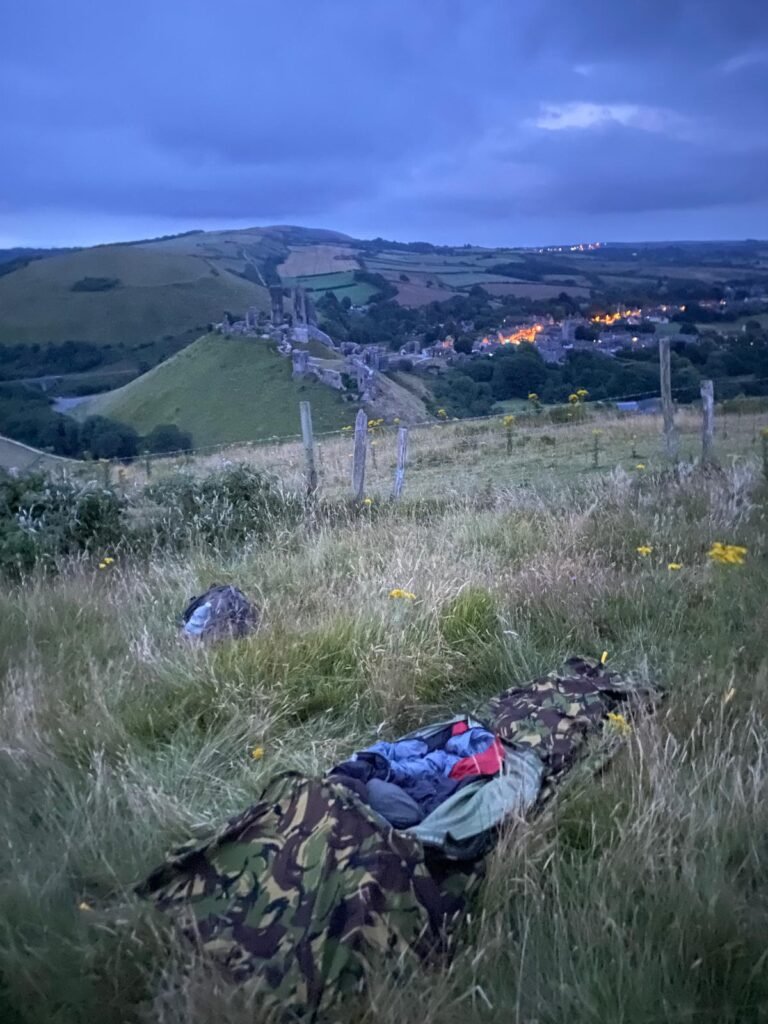
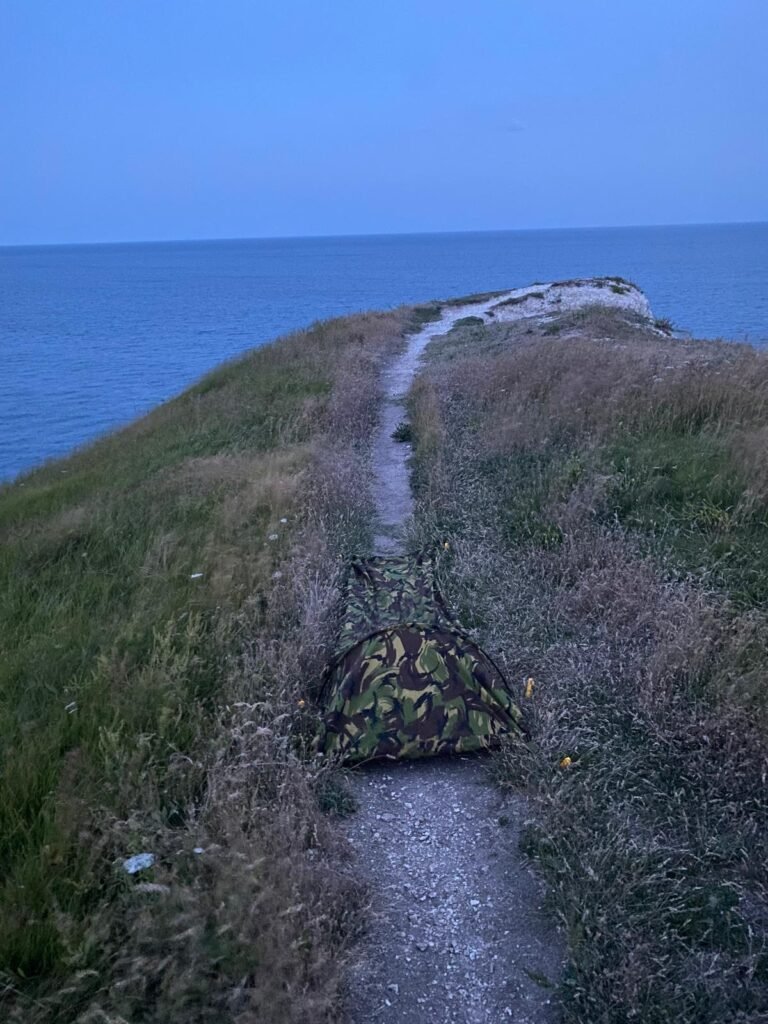
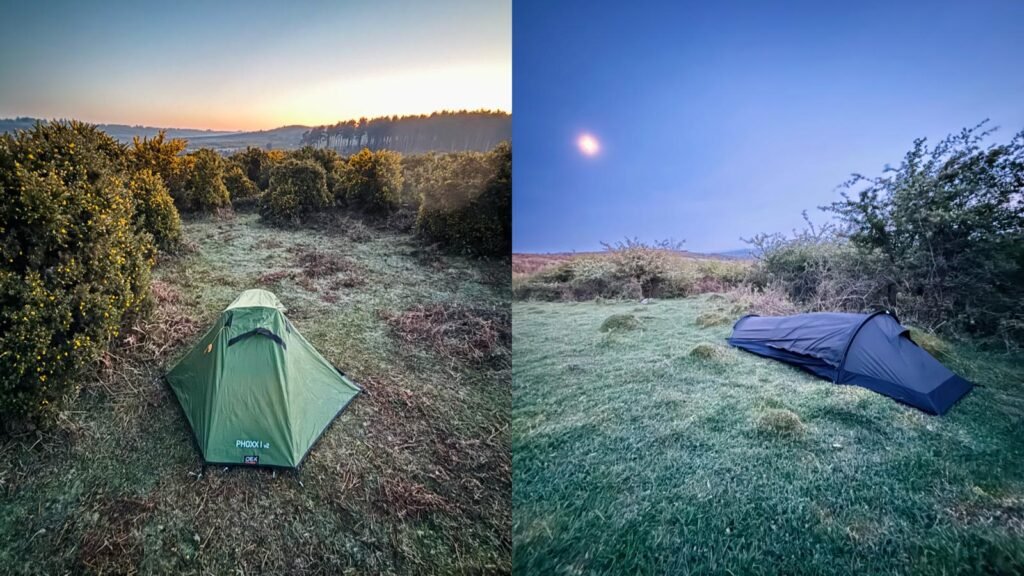
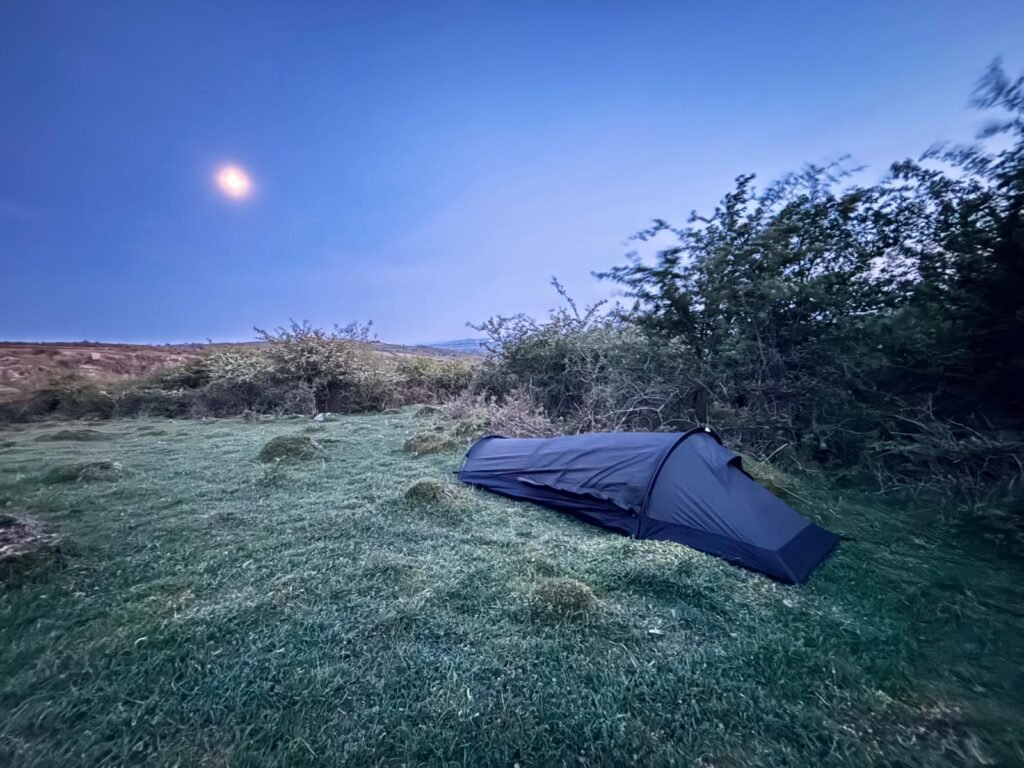
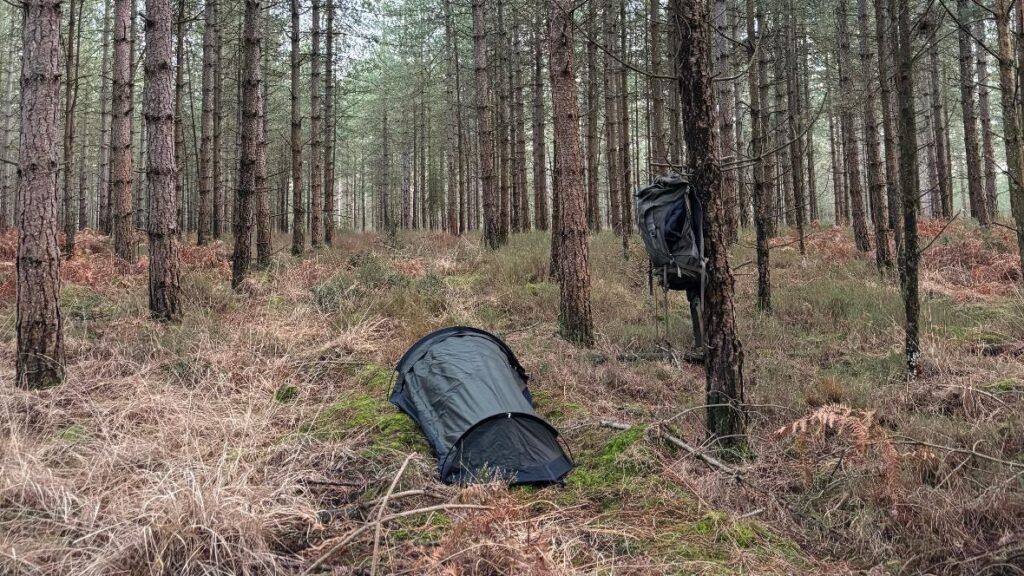
I find bivis are large enough for me, there’s enough room for myself and my gear. But the thing I love the most is their stealth qualities. They’re low profile and they are able to fit into places a tent never could.
Why I Upgraded to the Nortent Skjul
In early 2025, I decided it was time for a much needed upgrade. I’m getting older, I still love the Dutch hooped bivi, it can be rough at times.
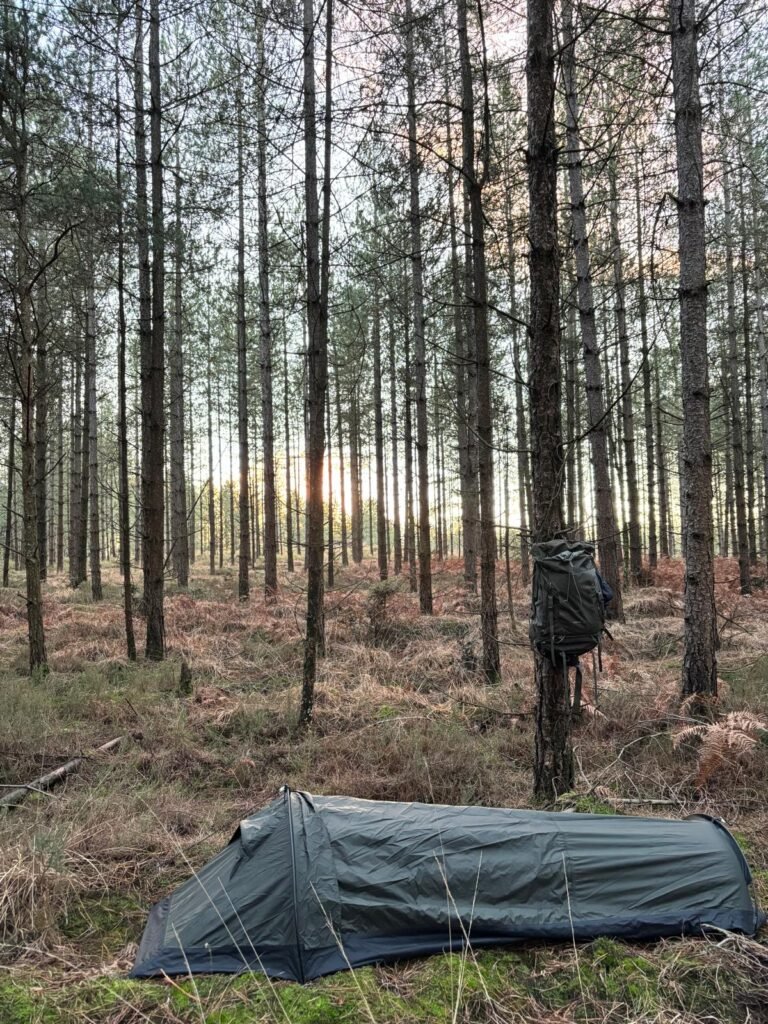
After having a good look around and doing plenty of research, I decided to spend more money than I ever had before on a shelter. I splashed out on a Nortent Skjul for a couple of reasons. Firstly, it’s really light. It is expensive, but not the most expensive on the market. Secondly, is the design. It has a side access, and is double-hooped which helps to keep the fabric off you when you’re inside. But the thing that really closed the deal for me was the bug net.
Living With the Skjul
The bug net is pretty much a third of the length of the bivvi. It helps keep the temperature down in the summer, while allowing an incredible view of the sky while inside. The Dutch hooped bivi does have a bug net, but nothing like this.
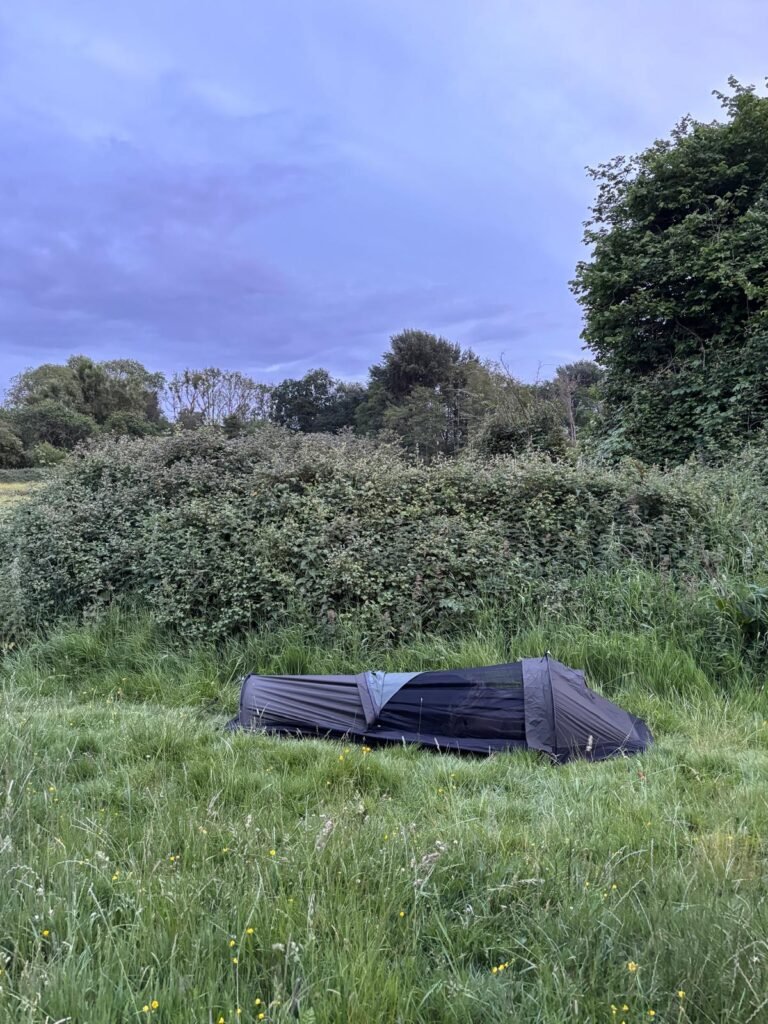
It’s such a beautiful experience of looking up at the sky, while being protected from the biting beasties is awesome.
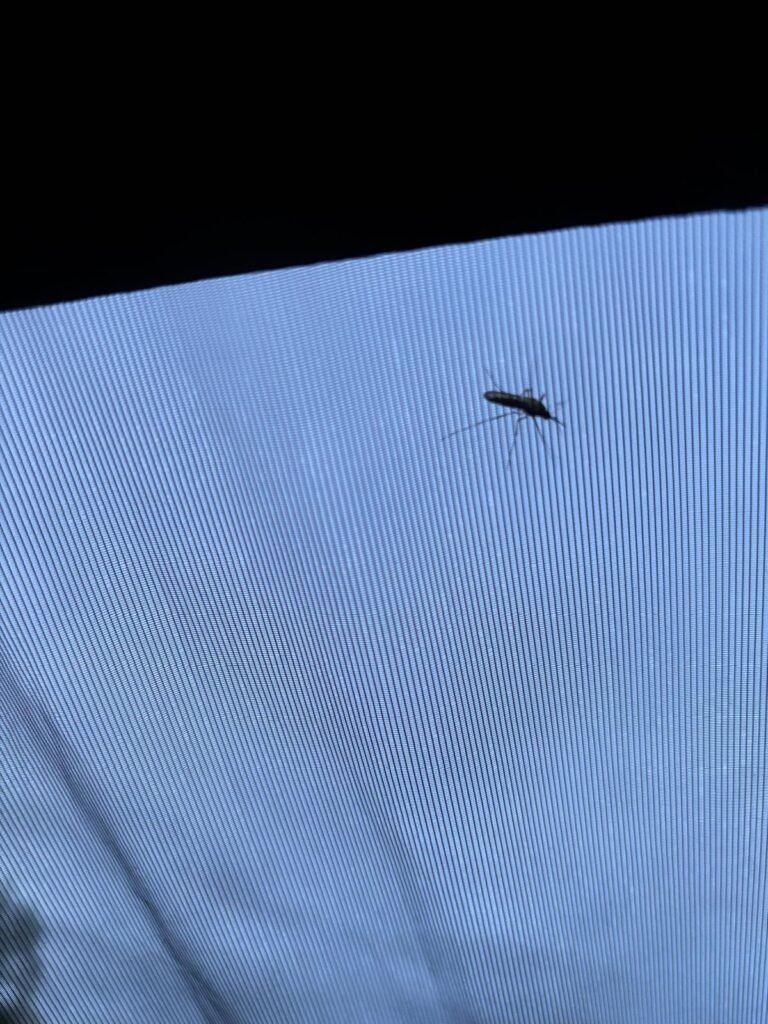
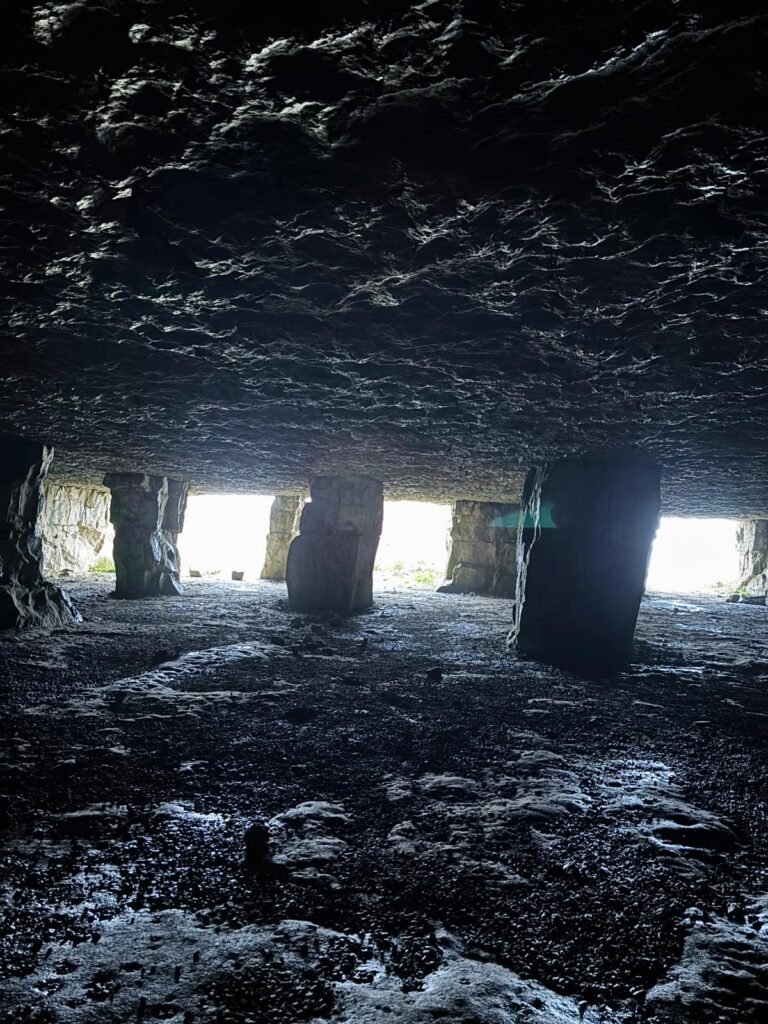
I’ve used this bivi a lot since buying it. I’ve slept in many locations such as hilltops and coastal cliffs to forests and woodlands.
Compromises
I’ve found a shelter and a form of camping that suits me. I know compromises have to be made with owning and using a bivi, but they’re small compared to the enjoyment and the many positives I get from using them.
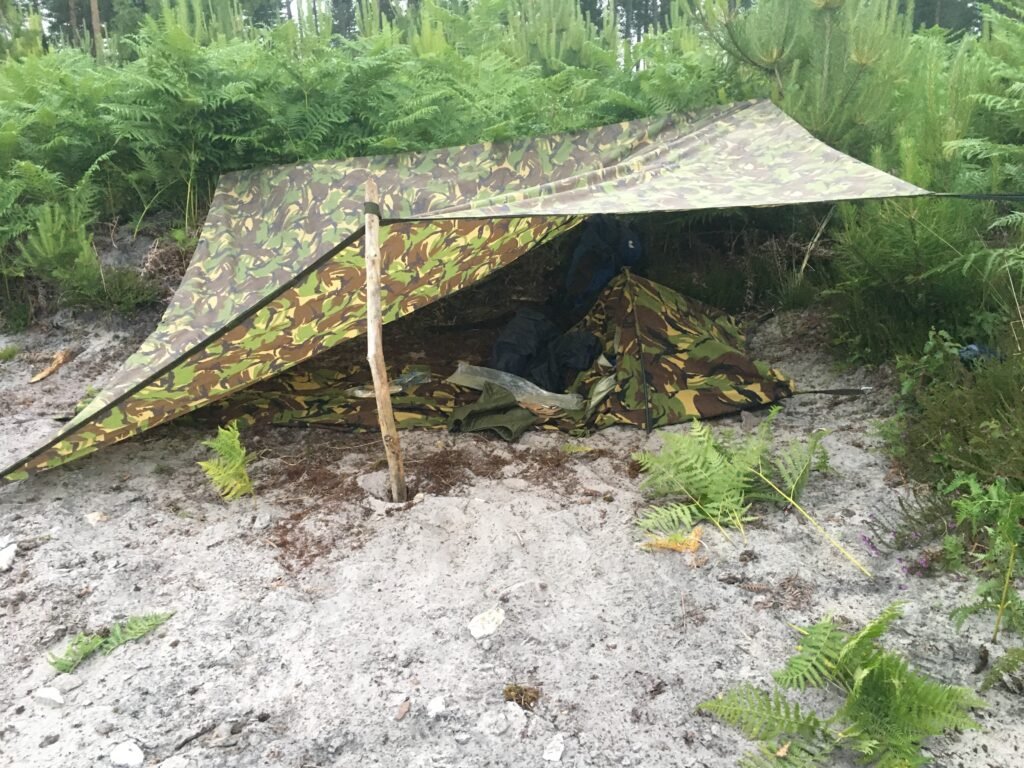
Having been a bivis for many years, I’m not bottered by one of the biggest grumbles people have with bivvis- and that is that you can’t sit up in it. If I want to use a bivi and sit up, , I’ll bring a tarp. You don’t miss something you’ve never had.
Why Bivis Still Suit My Camping Lifestyle
Bivvis suit my style and approach to camping in the great outdoors. They’re simple, quiet and get the job done. Not that I have anything against brightly coloured tents. If I was on an expedition or camping on a secluded mountain without fear of being disturbed, I’d definitely be using two-person tent.
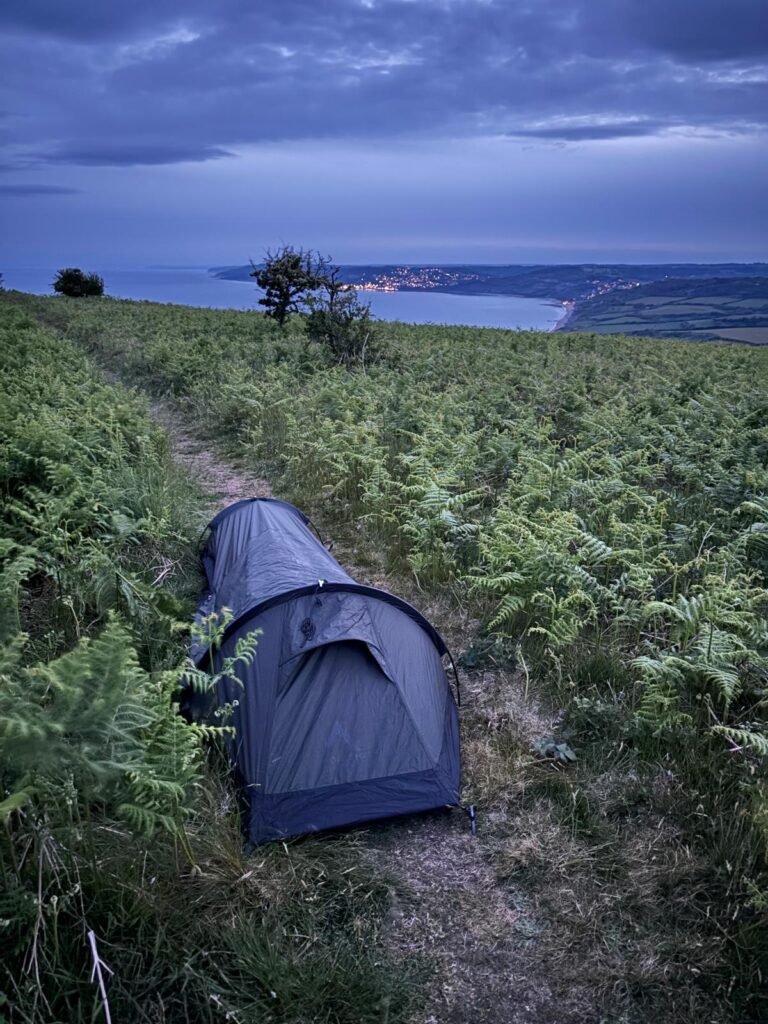
But if you follow my camping, you’ll know I tend to pick small woodlands or exposed hilltops where I want to remain hidden. Where I live doesn’t have the luxury of high mountains and empty wilderness.
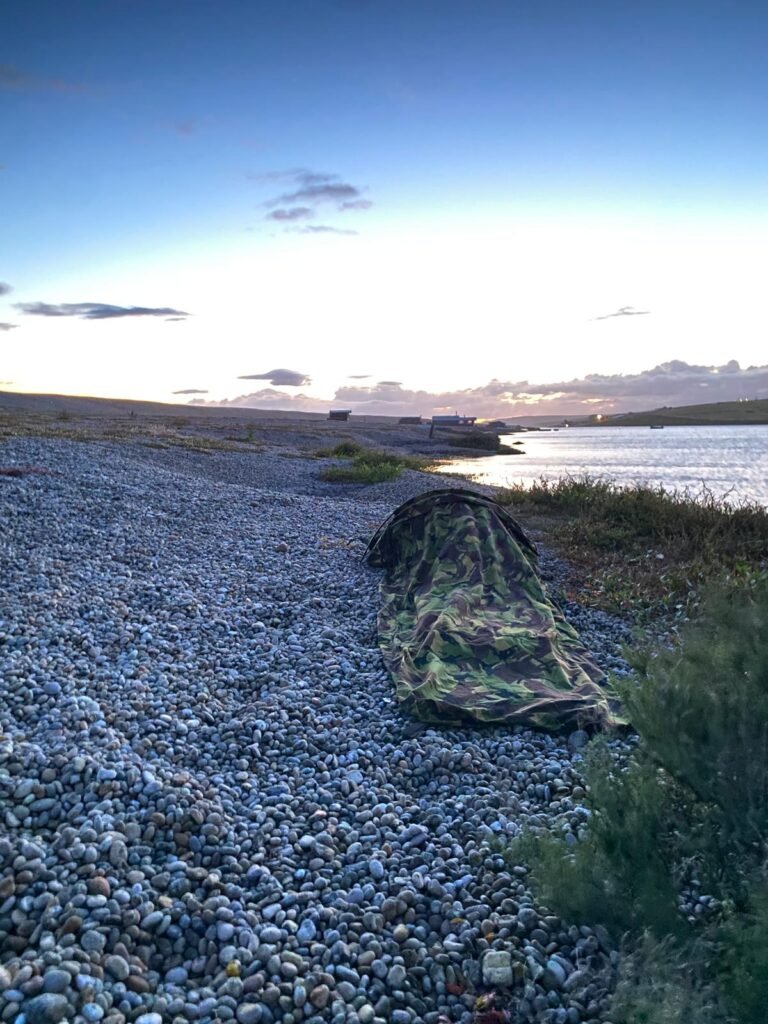
The bivvi set up, tucked away on a the pebbles of Chesil Beach Dorset
I’ll continue to enjoy my nights out sleeping in a stealthily bivi that can squeeze into places other shelters can’t.
If you enjoy bivvy camping, you may like how I approach it here: The Way I Wild Camp – Quiet, Stealth and Low Impact
If you’ve ever been curious about bivi camping but put off by how it looks or sounds, I’ll just say one thing. Bivi camping is not about roughing or going without the comforts. It’s just another way of camping.
I understand it won’t work for some people. But for others, especially those who want to keep things simple and low profile, it’s worth giving it a go and trying once. Don’t knock it until you’ve tried it. And you never know – you may actually enjoy it.
If you have any questions, please don’t hesitate to contact me via social media or the contact form which can be found on the contact page.
Your feedback is important. Let me know if you enjoyed the blog – and even if you didn’t, I’d love to hear your thoughts.
Thanks for taking the time to read the article.
Many thanks
Dan

[…] If you’re wondering why I lean towards bivvi camping, read Where It All Began: My Love Affair With Bivis. […]
[…] In fact, those early trips through Spain and France are what started my long relationship with bivvis, which I wrote about in Where It All Began: My Love Affair With Bivis. […]
[…] Where It All Began: My Love Affair With Bivis […]
[…] These days I tend to use small, low-profile shelters that suit this quieter approach, and I explain why in Where It All Began: My Love Affair With Bivis. […]